
Pruning
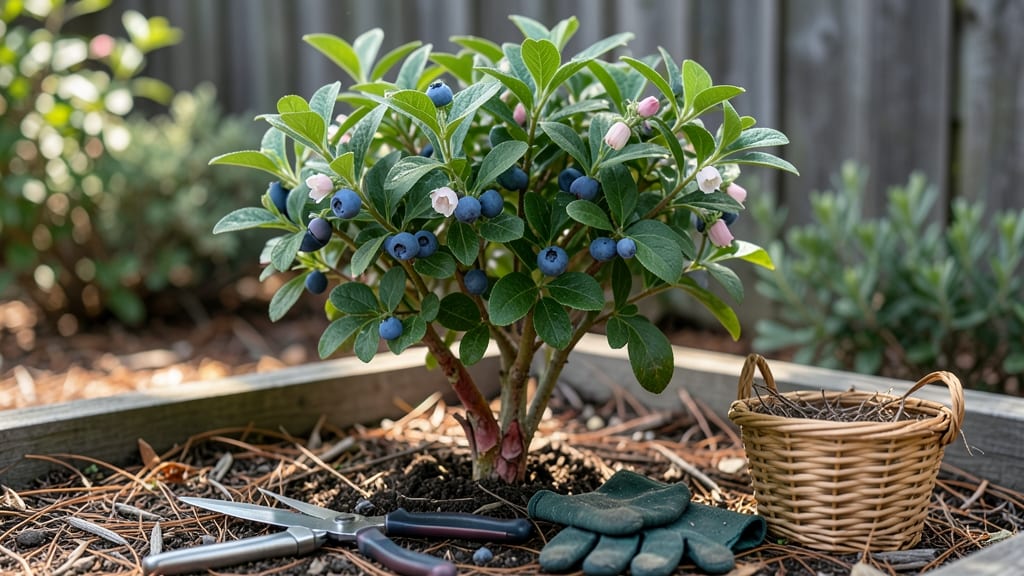
Pruning blueberry bushes in spring is the secret to bigger harvests and healthier plants—if you do it right. 🌿 I learned the hard way that waiting until summer means sacrificing next year’s fruit, while cutting too early risks frost damage.
The key is timing: prune right after the last frost when new growth starts but before flowers appear.
You’ll need just three tools: sharp pruning shears, loppers for thicker branches, and gloves to protect from thorns. The goal is simple—remove dead wood, thin crowded stems, and shape the bush to let sunlight reach the center.
I’ve seen bushes go from tangled messes to sunlit, fruit-loaded canopies in just one season.
After pruning, water deeply to help recovery, and avoid fertilizing until new growth appears. The first year might feel brutal, but by year two, you’ll notice thicker canes, more flowers, and berries the size of marbles. Even in cold climates, this method works—just adjust timing to avoid late frosts.
Common mistakes? Over-pruning (keep ⅔ of last year’s growth) or cutting too close to buds. My first attempt left stubs that rotted—now I aim for clean cuts just above a bud. The payoff? A bush that produces for decades with minimal effort.
📚 In This Guide
- What you need
- Instructions
- Tips and common mistakes
- Wrapping up and next steps
What you need
- ○ Pruning shears: Bypass pruners (sharp, 5-7" blades) for clean cuts on smaller branches. Anvil pruners (for thicker branches) are optional but handy for stubborn growth.
- ● Loppers: 8-10" long with bypass blades for branches up to 1.5" thick.
- ● Pruning saw: Curved-tooth saw (for branches thicker than 2")—avoid anvil-style saws to prevent crushing.
- ● Disinfectant: 70% isopropyl alcohol or a 10% bleach solution (1 part bleach to 9 parts water) to sterilize tools between cuts and prevent disease spread.
- ● Gloves: Heavy-duty gardening gloves (nitrile-coated for grip and protection against thorns).
- ● Work boots or closed-toe shoes: Sturdy footwear to protect against thorns and uneven terrain.
- ● Bucket or bag: For collecting pruned branches (a 5-gallon bucket or heavy-duty trash bag works well).
- ● Hand sanitizer or wipes: For quick cleanups between bushes.
- ● Knee pads: If you’re working on larger bushes or have joint concerns.
- ● Marking twine or flags: To tag branches for future reference (e.g., identifying new canes to keep).
- ● Compost bin or mulch: For repurposing pruned branches into nutrient-rich compost.
- ● Know your blueberry variety: Rabbiteye, southern highbush, or northern highbush—pruning techniques vary slightly by type.
- ● Check the weather: Prune on a dry, overcast day (avoid pruning when branches are wet to reduce disease risk).
- ● Review last year’s pruning notes: If you kept records, reference them to identify canes that need removal.
- ● Clear the area: Remove weeds, leaves, or debris around the bush for easier access and visibility.
Step-by-step guide to pruning blueberry bushes in spring
Here’s my go-to method for keeping blueberry bushes productive and healthy—no guesswork, just clean cuts.
✂️ Step 1: Remove Last Year’s Fruit Wood
Start by identifying last year’s fruiting branches—they’re the ones that bore berries. These stems are woody, thicker, and often brownish. Cut them back to the ground completely. This might seem drastic, but it’s crucial for redirecting the plant’s energy toward new growth and next year’s harvest.
I like to use sharp pruning shears to make clean cuts just above the soil line. Avoid leaving stubs—this prevents disease and encourages strong regrowth. If you’re unsure which branches fruited last year, look for the thicker stems with smaller buds along their length.
✂️ Step 2: Thin Out Crowded or Weak Growth
Next, focus on the interior of the bush. Remove any branches that are crossing, rubbing against each other, or growing inward. These compete for sunlight and air circulation, which can lead to fungal issues. Aim to open up the center so light reaches all parts of the bush.
You’ll also want to thin out any weak, spindly growth—these branches rarely produce well and take energy away from stronger stems. Cut these back to a healthy bud or side branch. A good rule of thumb is to leave about 6-8 strong, outward-facing branches per bush to maintain balance.
✂️ Step 3: Shape the Bush for Airflow and Sunlight
Now it’s time to shape the bush. Blueberries thrive when they get plenty of sunlight and airflow, so prune to create an open, vase-like shape. Start by cutting back any branches that are growing too close together or blocking light from the center.
I focus on the outer branches first, trimming them back by about one-third to encourage bushier growth. For younger bushes, you can be a bit more aggressive with pruning to establish a strong framework. Always cut just above a bud or lateral branch—this ensures the plant knows where to grow next.
🌿 Step 4: Prune for Disease Prevention
Sterilize your pruning tools with rubbing alcohol between cuts to prevent spreading disease. Remove any dead, diseased, or damaged branches immediately—these are entry points for pests and pathogens. If you notice any branches with signs of fungal infection (like black spots or mold), bag and dispose of them off-site.
After pruning, I like to give the bush a light raking to remove any fallen leaves or debris. This keeps the base of the plant clean and reduces the risk of mold or rot. A quick application of mulch around the base helps retain moisture and keeps weeds at bay.
⏰ Step 5: Monitor and Adjust as Needed
Once you’ve finished pruning, step back and assess the bush. You should see an open center with branches spaced evenly apart. If the bush looks too dense, go back and thin out a few more branches. The goal is to create a structure that allows sunlight to reach all parts of the plant.
Water deeply after pruning to help the bush recover. Over the next few weeks, keep an eye out for new growth. If you notice any signs of stress—like yellowing leaves or wilting—adjust your watering or provide some shade until the bush stabilizes. With proper pruning, your blueberry bushes will reward you with bigger, healthier berries all season long.
Tips & tricks for pruning blueberry bushes in spring
Here's what nobody tells you about pruning—these tricks will transform your bushes into productive powerhouses.
Timing is Everything: Prune in late winter or early spring, just before new growth begins. This gives your bushes time to recover before summer heat. I wait until after the last frost but before buds swell—usually between mid-February and early March in my zone. If you prune too early, you risk encouraging new growth that could be damaged by late frosts.
Tool Technique: Use sharp, clean pruning shears to make angled cuts just above a bud or lateral branch. The angle helps water run off, preventing rot. I sterilize my tools with rubbing alcohol between cuts to avoid spreading disease—this is especially important when working with multiple bushes. For thicker branches, I use loppers for cleaner cuts that heal better.
Visual Pruning Guide: When shaping in Step 3, imagine your bush as an open vase. The center should be completely clear, with branches spaced about 6-8 inches apart. Look for branches growing toward the center—these are the first to cut. For younger bushes, don't be afraid to be aggressive; you're establishing a strong framework that will pay off for years.
Post-Pruning Care: After you're done, give your bushes a deep watering to help them recover. I like to add a 2-3 inch layer of organic mulch around the base to retain moisture and suppress weeds. This also helps regulate soil temperature, which is crucial for root health. Avoid piling mulch against the stems to prevent rot.
Pro Tips for Pruning Blueberry Bushes In Spring
- Here's what nobody tells you about pruning—these tricks will transform your bushes into productive powerhouses.
- Timing is Everything: Prune in late winter or early spring, just before new growth begins.
- Tool Technique: Use sharp, clean pruning shears to make angled cuts just above a bud or lateral branch.
Frequently asked questions
Got questions about pruning your blueberry bushes? You’re not alone! Here are answers to the most common concerns—so you can prune with confidence and keep those berries coming.
When is the exact best time to prune blueberry bushes in spring?
Prune your bushes after the last frost but before new growth starts—typically late March to early May in most regions. Avoid pruning during active blooming or fruit set, as this can reduce your harvest. If you missed the window, wait until fall (after harvest) for a second chance!
How much can I cut back? Should I remove old wood entirely?
Remove 1/3 of the oldest canes (they’re woody and non-productive) and any dead, diseased, or crossing branches. Leave the younger, vibrant canes—they’ll bear fruit! Over-pruning (more than 25% of the bush) can stress the plant. Think of it like a haircut: shape, not shear!
What if I see mold or pests after pruning? Did I do it wrong?
Not necessarily! Pruning opens the bush to airflow, which reduces mold risk—but if you spot issues, act fast. Remove infected canes immediately, sterilize tools with rubbing alcohol, and apply organic fungicide (like copper spray) if needed. Pests? Neem oil or insecticidal soap can help. Prevention is key—prune in dry weather!
Can I prune blueberries in containers the same way?
Yes! Container-grown blueberries follow the same rules, but with a twist: size matters. Trim back up to 1/3 of the oldest canes, but avoid overcrowding—containers limit root space. Repot every 2–3 years if roots circle the pot. Dwarf varieties (like ‘Top Hat’) need less aggressive pruning.
What if I skip pruning this year? Will my bushes still produce?
They’ll survive (blueberries are resilient!), but yields may drop, and the bush could get too dense, leading to fewer berries and more pests/disease. Think of pruning as a spring spa day for your plant—it rewards you with bigger, sweeter berries! Even light maintenance (removing dead wood) helps.
Wrapping up and next steps
Pruning your blueberry bushes in spring isn’t just about shaping—it’s the secret to bountiful harvests and healthier plants year after year! 🌱 By removing dead wood, thinning crowded branches, and encouraging airflow, you’re setting the stage for juicier berries and stronger growth.
Now that you’re armed with the right tools and techniques, there’s no better time to roll up your sleeves and give your bushes the TLC they deserve.
Ready to take the next step? Mark your calendar for late winter or early spring—when buds swell but haven’t yet burst—and grab your pruners! With a little patience and practice, you’ll master the art of pruning in no time. Happy clipping—and here’s to your sweetest blueberry crop yet! 🫐✨