
Pruning
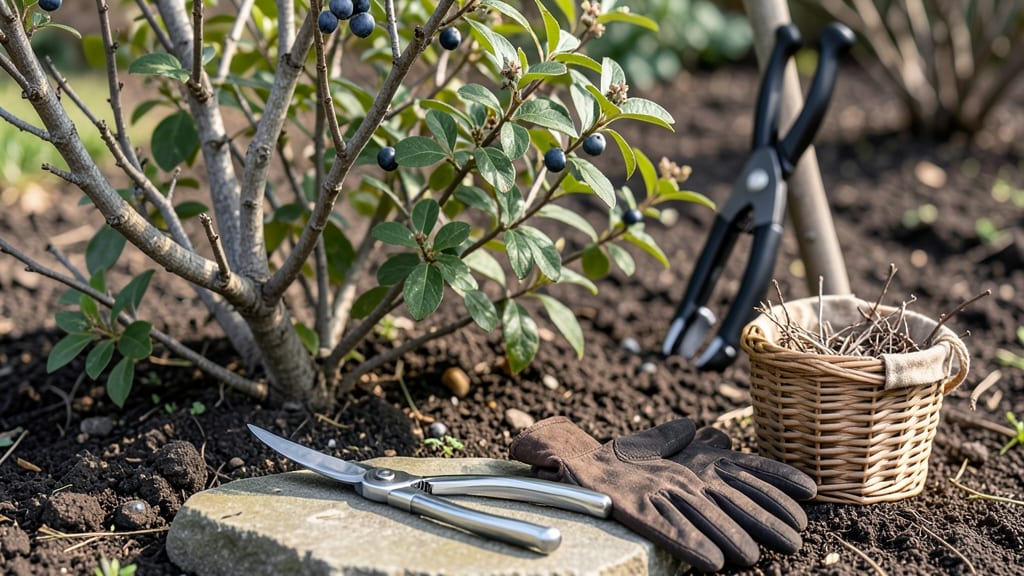
Winter's the perfect time to give your blueberry bushes a clean slate—sharp cuts now mean stronger spring blooms and bigger harvests next summer. 🌿 I used to dread pruning mine, but once I learned the dormant-season rules, my bushes went from scraggly to productive in just one season.
The key is timing: prune when the ground's frozen but before new growth starts, usually between late winter and early spring.
You'll need just three tools: sharp pruning shears, loppers for thicker branches, and a bucket for clippings. The goal is to remove dead, crossing, or weak wood while shaping the bush to let sunlight reach the center.
I cut back last year's growth by about a third, always making clean cuts just above a bud or branch collar—never leaving stubs. This opens up airflow, which keeps diseases like botrytis at bay.
After pruning, your bushes will reward you with fresh, red growth by spring and berries that ripen earlier in the season. The plants look tidier, produce more fruit, and handle pests better too.
Just avoid pruning in extreme cold or when buds are already swelling—that's a rookie mistake I made my first year, and it set back my harvest by weeks.
Works for all blueberry varieties, from highbush to rabbiteye, and adapts to zones 3 through 9. Once you've mastered winter pruning, you'll see why gardeners swear by this seasonal reset—it's the difference between a bush struggling to produce and one that feeds your family for years.
Ready to sharpen those shears?
📚 In This Guide
- What you need
- Instructions
- Tips and common mistakes
- Wrapping up and next steps
What you need
- ● Pruning shears or loppers – Choose bypass pruners (sharp, clean cuts) or loppers (for thicker branches, 1.5–2.5 inches in diameter). Quantity: 1 pair (or 1 pair + 1 loppers if needed).
- ● Hand pruners (secateurs) – For smaller branches (up to 0.5 inches thick). Quantity: 1 pair.
- ○ Garden saw – For stubborn, thick branches (2+ inches). Quantity: 1 (optional but helpful).
- ● Disinfectant (70% isopropyl alcohol or bleach solution) – To sterilize tools between cuts and prevent disease spread. Quantity: Small spray bottle or wipe.
- ● Heavy-duty gloves – Protect your hands from thorns and sharp tools. Recommendation: Leather or reinforced gardening gloves.
- ○ Pruning sealant (optional) – Helps larger cuts heal faster (e.g., Tree Seal or pruning wax). Quantity: Small jar or brush-on applicator.
- ● Buckets or bags – For collecting pruned branches. Quantity: 1–2 (depending on bush size).
- ● Notebook & pen – To sketch the bush’s shape or note cuts for reference.
- ● Timing: Prune after the first hard frost but before new growth starts (typically late winter, January–February in most U.S. zones).
- ● Weather: Choose a dry, calm day (no rain forecast for 24 hours).
- ● Bush readiness: Ensure branches are dormant (no leaves or buds).
- ● Safety: Wear long sleeves/pants to avoid scratches from thorns.
Instructions for pruning blueberry bushes in winter
Winter's the perfect time to shape your blueberry bushes—clean cuts now mean bigger harvests next summer.
✂️ Step 1: Time Your Pruning for Dormancy
Wait until late winter after the worst cold snaps but before buds swell—typically February through early March in most zones. I always check my local frost dates first. Pruning too early risks frost damage to fresh cuts, while waiting too long encourages new growth that can't survive spring freezes.
Look for dormant branches with no green tips or buds. If you see even a tiny bud starting to plump up, hold off for a week. The goal is to work when the plant is completely at rest but before spring's energy kicks in.
✂️ Step 2: Remove Dead, Diseased, and Crossing Branches
Start with dead wood—branches that are completely brown inside and out when you cut them. Then remove any diseased branches showing black spots, mold, or unusual growths. I use sterilized pruners (wipe blades with rubbing alcohol between cuts) to prevent spreading any issues to healthy parts of the bush.
Next tackle crossing branches—these rub against each other, creating wounds that invite disease. Choose the weaker of the two branches at each intersection and cut it out completely at the base. You'll see a cleaner structure emerge as you work.
✂️ Step 3: Thin Out Overcrowded Branches
Blueberries need good airflow, so aim to keep 6-8 main branches on mature bushes. Remove any branches growing inward toward the center of the plant—these create shaded, damp areas that promote mold. I like to step back every few minutes to visualize the bush's shape from all sides.
For each branch you remove, make your cut at the base where it meets the main stem. No stubs! Cut at a 45-degree angle about 1/4 inch above a bud facing outward. This encourages new growth in the right direction and prevents water from pooling on the cut.
✂️ Step 4: Shape for Light Penetration
Open up the center of the bush by removing 20-30% of the oldest wood—these are the branches that produce the smallest berries. Focus on semi-mature wood (1-3 years old) for best fruiting next season. I always leave the youngest, most vigorous branches to carry the harvest.
Step back again and check for even light distribution. You should see sunlight reaching all the way to the center. If you spot any branches growing straight up like a Christmas tree, cut them back by half—they'll bush out more next year and produce better fruit.
⏰ Step 5: Clean Up and Protect for Spring
After pruning, sterilize your tools again and clean up all debris from around the bush. I rake up fallen leaves and small branches to prevent fungal spores from overwintering. For extra protection, apply a 2-3 inch layer of mulch around the base (but not touching the stem) to insulate roots.
Water deeply if your winter has been dry, then wait for spring to show its first green leaves before fertilizing. The fresh cuts will heal best with consistent moisture but no soggy soil. Mark your calendar for early spring—that's when you'll see your pruning pay off with strong new growth.
Tips & tricks for pruning blueberry bushes in winter
These sharp insights will help you prune with confidence—because the right cuts now mean a bountiful harvest next summer.
Timing is Everything: The February through early March window is non-negotiable for most zones. I check my local frost dates online and mark my calendar—pruning too early risks frost damage to fresh cuts, while waiting too long lets buds wake up prematurely. If you're in a warmer climate, aim for late January instead. The key is working when branches are completely dormant but before any green shows.
The Technique That Changed Everything: When removing branches in Step 3, I've learned to cut at a 45-degree angle about 1/4 inch above an outward-facing bud. This creates a natural shield that protects the bud from rain and prevents water from pooling on the cut. Use sharp pruners—dull blades crush stems instead of making clean cuts, which stresses the plant. I keep a small bottle of rubbing alcohol handy to sterilize between cuts, especially when dealing with diseased branches.
Visualizing the Perfect Structure: Step back every 10-15 minutes to check your progress—you should see sunlight reaching all the way to the center of the bush. I imagine the bush as an open umbrella with branches radiating outward. If you spot branches growing straight up like a Christmas tree, cut them back by half. These vertical growers create crowded centers where air can't circulate, leading to mold and smaller berries. The goal is to create an open, airy structure that lets sunlight and air flow freely.
Cleanup Prevents Future Problems: After pruning, I don't just toss the debris—I rake up all fallen leaves and small branches from around the base. This removes overwintering fungal spores that could infect your bush next season. For extra protection, I apply a 2-3 inch layer of mulch around the base (but not touching the stem) to insulate roots. This winter insulation helps roots stay warm while protecting against spring temperature swings.
Pro Tips for Pruning Blueberry Bushes In Winter
- These sharp insights will help you prune with confidence—because the right cuts now mean a bountiful harvest next summer.
- Timing is Everything: The February through early March window is non-negotiable for most zones.
- The Technique That Changed Everything: When removing branches in Step 3, I've learned to cut at a 45-degree angle about 1/4 inch above an outward-facing bud.
Frequently asked questions
Got questions about winter pruning? Here are answers to the most common ones—so you can tackle your blueberry bushes like a pro!
When is the exact best time to prune blueberry bushes in winter?
Prune after the ground freezes (late fall) but before heavy snow or extreme cold (late winter). Aim for January–February in most climates. This timing balances dormancy with frost protection, ensuring clean cuts without stressing the plant. Avoid pruning in freezing temps—bushes are more vulnerable to disease.
Can I prune blueberry bushes in winter if I missed the window?
Yes, but adjust your approach! If you miss late winter, wait until early spring (just as buds swell) to prune. Skip winter pruning only if your area has unpredictable freeze-thaw cycles—pruning too early can expose tender growth. In mild climates, prune in dry, calm conditions anytime between late fall and early spring.
Do I need special tools for winter pruning?
Not necessarily! Use sharp, clean pruners or loppers (disinfect with rubbing alcohol between cuts). For larger branches, a pruning saw works best. Avoid dull tools—they tear bark, inviting pests. Sterilize tools between bushes to prevent spreading fungal diseases like mummy berry.
Will pruning in winter reduce my blueberry harvest next year?
No—done correctly, winter pruning boosts next year’s harvest! Removing dead, crossing, or overcrowded branches improves airflow and sunlight, leading to healthier growth and more berries. Just avoid over-pruning: never remove more than 1/3 of the bush’s canopy in one season.
What if I see bee activity during winter pruning?
Blueberries are not a bee magnet in winter—any bees you see are likely overwintering or scouting early. Prune early in the day (before 10 AM) when bees are less active. If you spot hives, relocate them gently with a bee vacuum or contact a local beekeeper. Never prune near active hives!
Wrapping up and next steps
Pruning your blueberry bushes in winter isn’t just a chore—it’s a power move for next year’s harvest! 🌱 By removing dead wood, thinning crowded branches, and encouraging airflow, you’re setting the stage for healthier growth and plump, juicy berries.
Remember, sharp tools and a patient hand make all the difference.
Now that you’re armed with the know-how, grab those shears and get pruning! Start small if you’re new to it, and soon you’ll be a blueberry-pruning pro. Happy gardening—and may your bushes reward you with bountiful spring blooms! 🍇✨