
Pruning
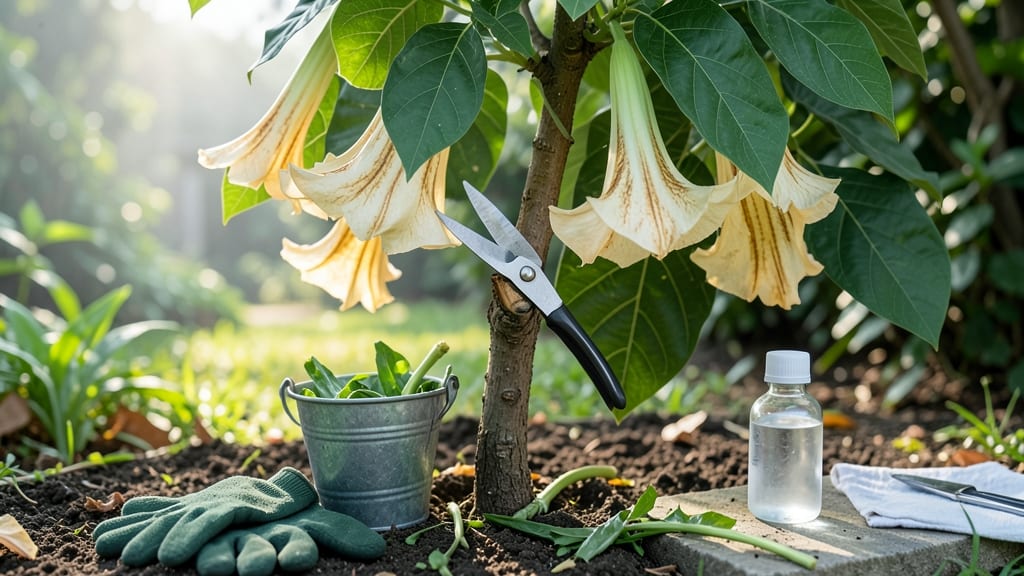
Strategic pruning turns your Brugmansia Angel Trumpet into a blooming powerhouse. ✂️ I’ve learned the hard way—skipping this step means fewer flowers and weaker growth, but the right cuts in late winter transform everything. The key is timing, technique, and knowing which canes to keep (or cut).
You’ll need sharp pruners, rubbing alcohol for sterilization, and a clear day to assess your plant. Look for woody canes over 3 years old—these are the first to go. Newer growth produces more blooms, so prune back to a healthy bud or lateral branch, never leaving stubs.
Think of it as sculpting: you’re shaping the plant’s energy toward flowers, not just leaves. By spring, you’ll see fresh, vibrant growth shooting up from those cuts, and the blooms will come thicker than ever. The plant stays compact, easier to manage, and resists disease better.
Just avoid pruning in fall—it stresses the plant before winter dormancy. For tropical climates, adjust timing to avoid frost. And never prune after blooms appear—you’ll cut off next year’s flowers. Patience here pays off in summer perfume and showstopping trumpet-shaped blooms.
📚 In This Guide
- What you need
- Instructions
- Tips and common mistakes
- Wrapping up and next steps
What you need
- ● Pruning shears or loppers: Bypass pruners (for clean cuts) or loppers (for thicker canes, up to 1-inch diameter). Must be sharp and sterilized!
- ● Gloves: Heavy-duty gardening gloves (nitrile-coated for protection against sap and thorns).
- ● Disinfectant: Rubbing alcohol (70%+ isopropyl) or hydrogen peroxide (3%) to clean tools between cuts.
- ○ Sealing compound (optional but helpful): Pruning sealant (like Tanglefoot Tree Wound Pruning Seal) to prevent disease entry on larger cuts.
- ● Bucket or bag: A 5-gallon bucket or heavy-duty trash bag for collecting pruned branches.
- ● Ladder or step stool: A stable 6–8 ft ladder (if your plant is tall) or a foldable step stool for safety.
- ● Hand saw: For very thick canes (over 1.5 inches). A pruning saw with a curved blade works best.
- ● Sharpie or marker: To label cuts if you’re experimenting with propagation.
- ● Rooting hormone: Cloning gel or powder (like Rootone) if you plan to propagate cuttings.
- ● Safety glasses: Just in case—Brugmansia sap can be irritating to sensitive eyes!
How to prune brugmansia Angel Trumpet for healthier growth
Here's the simple, foolproof method I use to keep my angel trumpets blooming abundantly year after year.
✂️ Step 1: Time Your Pruning for Maximum Bloom Potential
Prune your brugmansia in early spring after the last frost date but before new growth begins. This timing ensures you're cutting back just as the plant awakens from dormancy. Avoid pruning in fall or winter—you'll remove next year's flower buds along with dead growth. I always wait until I see new leaf buds swelling on the canes, which signals it's safe to start shaping.
If you missed spring, the next best window is right after blooming season in late summer. Just be prepared for fewer flowers that year. Brugmansia blooms on new wood, so strategic cuts now encourage stronger canes for next season's spectacular trumpet-shaped flowers.
🌿 Step 2: Identify and Remove Dead or Weak Wood First
Start by examining each cane from base to tip. Look for dry, brown stems that snap easily when bent—these are dead and should be cut completely to the main trunk. Next, identify thin, spindly canes that never developed properly. These won't support blooms well and should be removed at their base. I like to make these cuts with clean, sharp pruners at a 45-degree angle about ¼ inch above a leaf node or outward-facing bud.
Don't worry about making perfect cuts—what matters most is removing anything that competes with healthy growth. You'll know you're on the right track when you see strong, green canes remaining with multiple leaf nodes. These are your plant's foundation for next year's blooms.
✂️ Step 3: Shape the Plant with Strategic Cuts
Now focus on shaping your brugmansia into a balanced, open structure. Start by cutting back last year's flower stems to about 6-8 inches above the ground. This encourages new growth from the base where blooms tend to be most abundant. For remaining canes, trim back by one-third to encourage bushier growth. Always cut just above a leaf node or outward-facing bud—this is where new growth will emerge.
Here's the thing—brugmansia naturally grows in a v-shaped habit, so avoid cutting too aggressively. You want to maintain that natural form while opening up the center for better airflow. After pruning, your plant should look like a multi-branched vase shape with plenty of space between canes. This prevents disease and makes future pruning easier.
💧 Step 4: Clean Up and Promote New Growth
After making all your cuts, sterilize your pruners with rubbing alcohol to prevent spreading disease between cuts. Remove all pruned material from the area immediately—don't leave it at the base where it can harbor pests or fungus. I like to compost the healthy-looking wood, but burn any diseased stems to be safe.
Once pruning is complete, give your brugmansia a light application of balanced fertilizer (10-10-10) to encourage new growth. Water deeply but not excessively—you want the soil to stay evenly moist but not soggy. Within 2-3 weeks, you should see new leaf buds emerging from the pruned areas. This is your signal that the plant is responding well to the cuts.
☀️ Step 5: Provide Ideal Conditions for Recovery
Place your pruned brugmansia in a location with morning sun and afternoon shade during its recovery period. Too much direct sun can stress the plant while it's putting out new growth. Keep the soil consistently moist but never waterlogged—brugmansia roots rot easily when sitting in wet soil. You'll know you're doing it right when you see healthy new leaves emerging with a vibrant green color and firm texture.
As new growth appears, you can gradually introduce more sunlight. Brugmansia needs at least 6 hours of sun daily to produce those spectacular blooms. The stronger the new canes, the more dramatic next year's flowers will be. I always make a note of which canes produced the best blooms last year—these are the ones I'll protect most carefully during future pruning.
Tips & tricks for pruning angel trumpets
Here's what nobody tells you about getting the most out of your pruning effort.
Timing is Everything: The early spring window is critical because that's when your brugmansia is naturally preparing to grow. If you prune too early, you risk cutting off next year's flower buds that are already forming. I've learned this the hard way—after pruning in late winter once, I got almost no blooms the following season. Always wait until you see those tiny leaf buds swelling before making any cuts. In late summer, you can prune after blooming, but be prepared for fewer flowers that year.
Tool Prep Matters: Sterilizing your pruners between cuts might seem like overkill, but it's one of the simplest ways to prevent disease spread. I keep rubbing alcohol in a small spray bottle near my gardening tools—just a quick spray between each cut keeps everything clean. For stubborn cuts, I dip the blades in alcohol and let them dry before making the next cut. This small step has saved my plants from multiple fungal infections over the years.
Shape with Purpose: When shaping your plant, think about airflow and sunlight penetration. The goal is that vase-like shape with plenty of space between canes. I like to visualize how sunlight will filter through—you want every part of the plant to get some direct light eventually. If you see canes growing inward, make a note to trim them next time. This prevents crowded centers where diseases thrive and flowers struggle to develop properly.
Recovery Conditions: The 2-3 weeks after pruning are crucial for new growth. I've found that placing plants in morning sun with afternoon shade during this period gives them the best chance to recover without stress. Too much direct sun can scorch new leaves, while too little light means weak stems that won't support blooms. Brugmansia needs that balance—start with 4-5 hours of morning sun and gradually increase as new growth appears.
Pro Tips for Pruning Brugmansia Angel Trumpet
- Here's what nobody tells you about getting the most out of your pruning effort.
- Timing is Everything: The early spring window is critical because that's when your brugmansia is naturally preparing to grow.
- Tool Prep Matters: Sterilizing your pruners between cuts might seem like overkill, but it's one of the simplest ways to prevent disease spread.
Frequently asked questions
about pruning Brugmansia (Angel Trumpet) can save you time and stress. Here are answers to common concerns from gardeners—whether you're a beginner or a seasoned pro.When is the best time to prune Brugmansia for blooms?
Prune Brugmansia in early spring (before new growth starts) or after blooming (late summer). Avoid heavy cuts in fall—this plant needs time to harden off for winter. Light shaping in spring encourages lush, flowering canes by redirecting energy to new growth.
How much can I trim without harming the plant?
You can safely remove up to 1/3 of the plant’s height in one session. Focus on dead, diseased, or crossing branches first. For mature plants, aim for 3–4 feet of height to maintain balance. Over-pruning reduces flowering—think "less is more" for Angel Trumpets!
What if my Brugmansia doesn’t bloom after pruning?
Poor blooming often stems from over-pruning or lack of sunlight (6+ hours daily). Ensure you’re leaving healthy canes (not just leafy stems) and fertilize with phosphorus-rich food (like 10-20-10) in spring. If it’s still struggling, check for pests or root issues.
Can I propagate Brugmansia from pruned cuttings?
Take 4–6 inch cuttings from healthy, non-flowering stems. Dip in rooting hormone and plant in moist perlite or sand. Keep humidity high (use a plastic bag) and place in bright, indirect light. Roots form in 4–8 weeks—perfect for expanding your collection!
Do I need to prune Brugmansia before winter?
Only if it’s not cold-hardy in your zone (Zones 9–11 typically). For colder climates, cut back by 50% in late fall, mulch heavily, and protect with burlap. In mild winters, minimal pruning suffices—focus on removing dead wood. Always wait until after the first frost.
Pro tip: Label your pruned cuttings if propagating—Brugmansia varieties (like ‘Pink Tutu’ or ‘Snowbelle’) can look alike until they flower!
Wrapping up and next steps
Pruning your Brugmansia Angel Trumpet isn’t just about shaping—it’s about unlocking healthier blooms and sturdier growth! 🌿 By mastering the right timing, tools, and techniques, you’ll encourage safer flowers, stronger canes, and a plant that thrives year after year.
Whether you’re trimming for aesthetics or safety, remember: consistency is key.
Ready to see your Angel Trumpet flourish? Grab your shears and schedule that next pruning session! Start small, observe your plant’s response, and soon, you’ll be a pruning pro with a stunning, vibrant centerpiece. Happy gardening! 🌸✂️