
Pruning
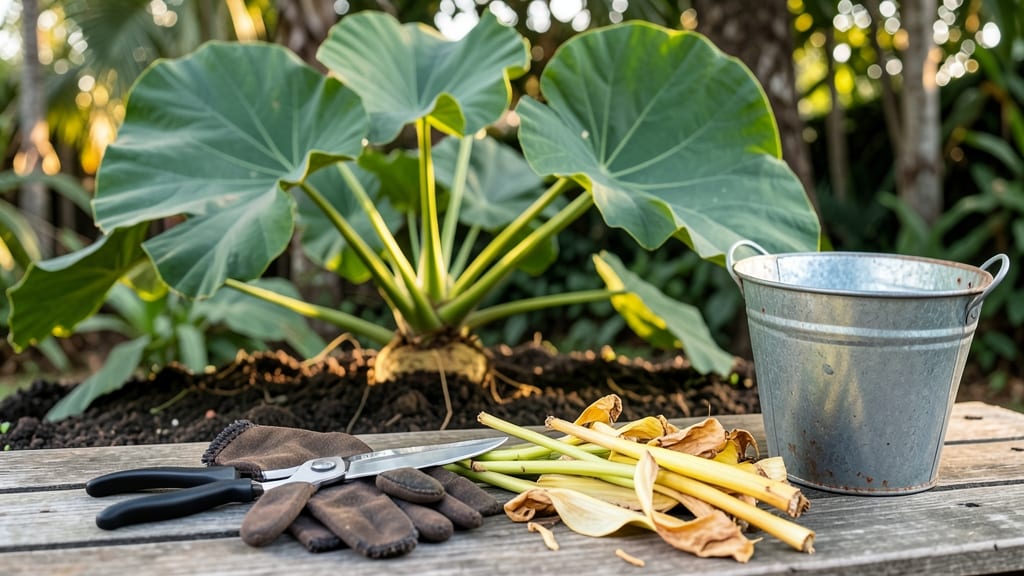
Late-winter pruning transforms elephant ears from leggy survivors into showstopping summer giants. 🌿 I’ve seen these dramatic plants go from sad, bare stems to lush, 5-foot-tall foliage in just a few months—all thanks to a few sharp cuts at the right time.
The key? Timing it after the first hard frost but before new growth appears, when the plant’s energy is dormant but ready to rebound.
You’ll need just three things: clean pruners, gloves (those leaves can be abrasive), and a clear day to assess the plant. Look for dead stems—those are brown, brittle, and hollow when cut open—while live stems stay firm and greenish inside.
Cut those dead ones back to the ground, but leave the healthy stems intact; they’ll push out fresh foliage faster than you’d expect.
The payoff is immediate: by early summer, your elephant ears will be dense, velvety, and thriving, with leaves that block sunlight like living umbrellas. The secret’s in the timing—prune too early, and you risk encouraging new growth that won’t survive frost.
Too late, and you’ll miss the window for that explosive spring rebound.
Works for both tropical and subtropical climates, though zone 8+ gardeners can prune slightly later. If your winters are mild, wait until late February to avoid any lingering cold snaps. Here’s how to do it right the first time—no more scraggly stems ruining your garden’s drama.
📚 In This Guide
- What you need
- Instructions
- Tips and common mistakes
- Wrapping up and next steps
What you need
- ● Sharp bypass pruners – Choose a pair with clean, stainless-steel blades (4- to 6-inch size) to avoid crushing stems and spreading disease.
- ● Heavy-duty gloves – Opt for gardening gloves with reinforced palms to protect against jagged edges and sap irritation.
- ● Disinfectant (70% isopropyl alcohol or bleach solution) – 1 part bleach to 9 parts water to sterilize tools between cuts and prevent bacterial/fungal spread.
- ○ Pruning saw (optional but helpful) – A folding pruning saw with fine teeth for thicker stems (over 1-inch diameter).
- ● Garden twine or zip ties – For supporting heavy foliage post-pruning if needed.
- ● Compost bin or trash bag – To dispose of pruned material (avoid composting if disease is suspected).
- ● Timing – Prune in late winter or early spring (just before new growth begins) for optimal regrowth.
- ● Weather check – Wait for a dry, calm day to minimize sap splatter and reduce stress on the plant.
- ● Plant health assessment – Remove only dead, damaged, or crossing stems—avoid over-pruning healthy foliage.
- ● Hand lens or magnifying glass – For spotting early signs of pests/disease on stems.
- ● Plant-based fungicide (copper-based) – If your region has a history of leaf spot or blight.
- ● Mulch (straw or shredded leaves) – To protect the crown after pruning from frost or foot traffic.
Step-by-Step guide for pruning elephant ears in late winter
Here’s how to give your elephant ears a fresh start—just in time for their explosive summer growth.
✂️ Step 1: Time Your Pruning for Late Winter
Prune elephant ears in late winter, just as new growth begins but before active shoots emerge. This is typically 4-6 weeks before your last frost date, when temperatures hover around 50-60°F. The goal is to remove dead foliage while stimulating fresh, vigorous growth without risking cold damage.
Look for brown, brittle stems—these are dead and should be cut back completely. Healthy stems feel firm and green underneath the dried leaves. If you’re unsure, gently scratch the stem with your fingernail: if it’s soft and green, leave it; if it’s dry and crumbly, prune it.
✂️ Step 2: Cut Back to the Ground or Healthy Buds
Use clean, sharp pruners to make cuts at a 45-degree angle, about ¼ inch above a healthy bud or node. For severely damaged stems, cut all the way to the ground—elephant ears are tough and regrow easily. Avoid leaving stubs; they trap moisture and invite rot.
If your plant is overgrown or leggy, you can trim back even healthy stems by ⅓ to ½ to encourage bushier growth. Just avoid cutting into the thick, woody base—this is the plant’s energy reserve and shouldn’t be disturbed unless absolutely necessary.
☀️ Step 3: Clean Up Debris and Inspect for Pests
Remove all pruned stems and dead leaves from the area. Pile them in a sealed trash bag (not compost)—elephant ears can harbor fungal spores or pests like scale insects. While you’re at it, sterilize your pruners with rubbing alcohol to prevent spreading disease between cuts.
Inspect the remaining stems for sap-sucking insects (like aphids) or black spots (a sign of fungal issues). If you spot pests, spray the plant with neem oil or insecticidal soap before storing it for the season. Healthy foliage should be deep green and free of blemishes—if you see yellowing or spots, address those first.
💧 Step 4: Prep for Spring Planting (If Needed)
If you’re overwintering your elephant ears in pots, move them to a bright, cool spot (like a garage or shed) where temps stay 40-50°F. Water sparingly—only enough to keep the soil slightly moist, not soggy. Overwatering in dormancy leads to root rot.
For in-ground plants, mulch heavily with 2-3 inches of organic mulch (like shredded leaves or straw) to protect roots from freezing. Avoid fresh mulch, which can draw moisture away from the soil. Once spring arrives, you’ll see new shoots within 2-3 weeks—that’s your sign the pruning worked!
⏰ Step 5: Fertilize and Monitor New Growth
Wait 4-6 weeks after pruning before fertilizing—this gives the plant time to recover. Use a balanced, slow-release fertilizer (like 10-10-10) at half strength to avoid burning tender new growth. Apply it 2-3 inches away from the base and water deeply afterward.
Watch for new leaves unfurling—these should be bright green and upright. If growth is slow or stems are weak, your plant may need more sunlight or warmer temperatures. Elephant ears thrive in full sun (6+ hours daily), so adjust their location if needed. With proper care, you’ll have towering, dramatic foliage by summer!
Tips & tricks for pruning elephant ears
These simple tricks will help you prune like a pro and set your elephant ears up for a stunning summer display.
Timing Secret: The 4-6 week window before your last frost is your sweet spot for pruning. I always check my local frost date calendar and mark the date 4 weeks out—this gives me a buffer if cold snaps linger. If you miss this window, wait until temperatures consistently stay above 50°F to avoid shocking the plant. Real talk: I’ve pruned too early and watched new growth freeze back—don’t make my mistake!
Healthy Stem Test: That fingernail scratch test in Step 1 is your best friend. If the stem feels firm and green underneath, leave it alone—it’s still alive! For brown, brittle stems, cut all the way back to the ground. Pro tip: Use your pruners to make a small test cut on questionable stems first. If it’s dry and crumbly, it’s dead—no second-guessing needed.
Pruning Angle Matters: The 45-degree angle in Step 2 isn’t just for looks—it prevents water from pooling on the cut surface, which can lead to rot. I always visualize a slice of pizza when making these cuts: the angle should be steep enough to shed water but not so steep it weakens the stem. For thick stems, take your time—rushing leads to jagged cuts that invite pests.
Pest Prevention: After pruning, I always give my tools a quick wipe-down with rubbing alcohol between cuts, just like the instructions say. But here’s what nobody tells you—store your pruners in a small container with a few drops of mineral oil when you’re done. This keeps them sharp and prevents rust, making next year’s pruning even easier.
Pro Tips for Pruning Elephant Ears
- These simple tricks will help you prune like a pro and set your elephant ears up for a stunning summer display.
- Timing Secret: The 4-6 week window before your last frost is your sweet spot for pruning.
- Healthy Stem Test: That fingernail scratch test in Step 1 is your best friend.
Frequently asked questions
Got questions about pruning your elephant ears (Colocasia spp.)? You’re not alone! Here are some of the most common queries—and straightforward answers—to help you tackle late-winter pruning with confidence.
When is the exact best time to prune elephant ears?
The ideal window is late winter to early spring—right after the last frost but before new growth emerges. In warmer climates (Zones 8-11), prune in January or February. In colder zones (Zones 5-7), wait until March or April when soil temps rise above 50°F (10°C).
Should I cut back all the foliage, or just some?
For healthy, vigorous regrowth, cut back all dead or damaged leaves to 1-2 inches above the ground. This encourages fresh shoots from the rhizomes. Never leave stubby stems—they waste energy and attract pests. Pro tip: Wear gloves! Elephant ear sap can irritate skin.
What if my elephant ears didn’t die back in winter?
If leaves survived winter (common in mild climates), prune them back by ⅓ to remove yellowed or ragged foliage. This improves airflow and redirects energy to new, lush growth. Wait until spring to fully assess—some varieties (like Colocasia ‘Black Magic’) may hold onto leaves longer.
Can I prune elephant ears in fall instead?
Pruning in fall is risky—it signals the plant to stop growing when it should be storing energy for winter. If you must, lightly trim only dead leaves after the first frost, but avoid heavy cuts. Best practice: Save major pruning for late winter to avoid stressing the rhizomes.
What if my plant isn’t growing back after pruning?
Check these first:
- Rhizome health: Dig up a small section to ensure the tuber is firm, not mushy or shriveled.
- Light/sun: Elephant ears need partial shade (4-6 hours of sun). Too much sun = crispy leaves.
- Soil: Amend with organic matter (compost or peat moss) for moisture retention.
- Patience: Some varieties (like Alocasia) are slower to regrow—wait 4-6 weeks.
Wrapping up and next steps
Pruning your elephant ears (Colocasia) in late winter isn’t just about tidying up—it’s the key to vibrant, healthy growth all season long! 🌱 With the right tools, timing, and technique, you’ll set your plants up for lush foliage and even bigger blooms.
Remember: patience and precision pay off in summer’s stunning display.
Ready to transform your garden? Grab your gloves, sharpen those shears, and get pruning—your elephant ears will thank you with showstopping foliage! For extra confidence, review the FAQs or double-check your tools before diving in. Happy gardening! ✂️🌿