
Pruning
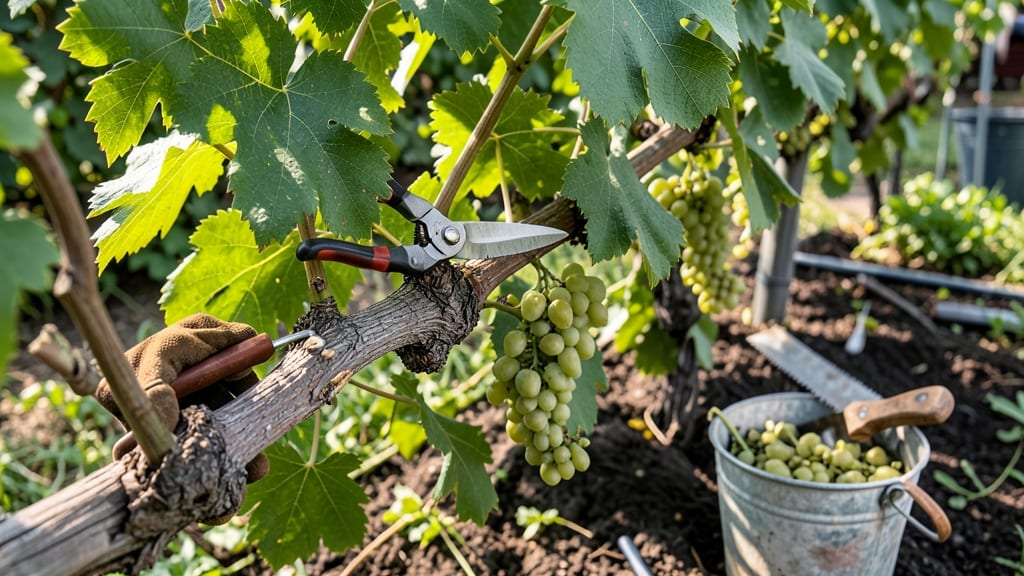
Pruning grapevines in spring encourages vigorous growth by eliminating winter-damaged canes and directing energy to new shoots, with the ideal window being just as buds begin to swell—cutting too soon risks frost damage while waiting too long stresses the vine.
Spring pruning isn't just about trimming—it's about setting up your grapevine for a productive season. 🌱 The key is balancing aggression with precision: aggressive enough to remove last year's fruit-bearing canes (which should be cut back to 2-4 buds) while preserving the vine's structure.
I've found that using sharp pruners at a 45-degree angle just above a bud prevents disease entry points and encourages faster healing. The timing window—typically 2-4 weeks before bud break—varies by climate, so check your local frost dates to avoid cutting too early.
What many gardeners overlook is the vine's natural growth pattern. 🌿 Grapevines grow in spur-and-cordons, where spurs (short canes with 2-3 buds) produce fruit while cordons (longer canes) support next year's growth.
Proper pruning maintains this balance, ensuring energy goes where it counts. If you're unsure which canes to keep, look for those with thick, healthy buds—these will become your fruit-bearing spurs next season.
💡 In This Article
- Best Spring Pruning Timeline for Grapevine Health
- Grapevine Pruning Techniques for Beginners
Best spring pruning timeline for grapevine health
The perfect spring pruning window hinges on your vine's dormancy stage and local climate. In most USDA zones (5-9), this falls between late February and early April, when buds are still tight but sap begins flowing—typically 2-4 weeks before bud break.
For example, in Zone 7, I've found mid-March works best, while Zone 9 vines often wait until late February due to milder winters. The goal is to prune just as the vine wakes up but before buds swell beyond 1/4 inch—this prevents stress and disease entry points.
Timing affects everything from cane strength to fruit quality. Pruning too early (before 50°F temperatures consistently) risks exposing fresh cuts to frost, which can kill buds and weaken the vine. Conversely, cutting too late (after buds swell) stresses the plant by forcing it to heal while growing.
The ideal moment occurs when buds are plump but unopened, signaling the vine's energy will soon focus on new growth rather than defending against winter damage. This 3-5 day window is critical—miss it, and you might trigger fungal issues like botrytis.
Weather conditions also play a role. Avoid pruning during rain or high humidity (above 70% humidity) to prevent fungal infections. I always check the 5-day forecast for dry, cool days (50-60°F) with minimal wind.
In my experience, pruning on a bright but cloudy morning reduces stress on the vine compared to hot afternoons. The vine's sap flow is slower in cooler temps, meaning less bleeding (that sticky sap) and faster healing of cuts.
Different grape varieties have slight variations in their pruning windows. For example, Concord grapes (common in cooler climates) tolerate earlier pruning than Cabernet Sauvignon, which needs warmer soil temps to wake up. Always observe your vine's specific buds—they're the best indicator.
If you see green tips emerging, it's past the ideal window. The vine's natural defense mechanisms weaken as buds open, making it more vulnerable to diseases like black rot.
Here's what happens if you time it wrong: Pruning too early can leave canes vulnerable to late frost (common in Zone 6), while late pruning forces the vine to grow new shoots that may not harden off before winter. The result? Weak canes, fewer buds, and reduced fruit production.
Think of spring pruning as a growth reset button—it tells the vine, "Focus your energy here, not there." The right timing ensures that energy goes into strong canes, abundant buds, and healthy fruit rather than wasted on damaged or stressed growth.
Pro tip: Mark your calendar based on your last frost date. A general rule is to prune 4-6 weeks before your average last frost date. For example, if your last frost is April 15, aim for mid-March.
This gives the vine time to heal before new growth faces potential cold snaps. 🌱