
Pruning
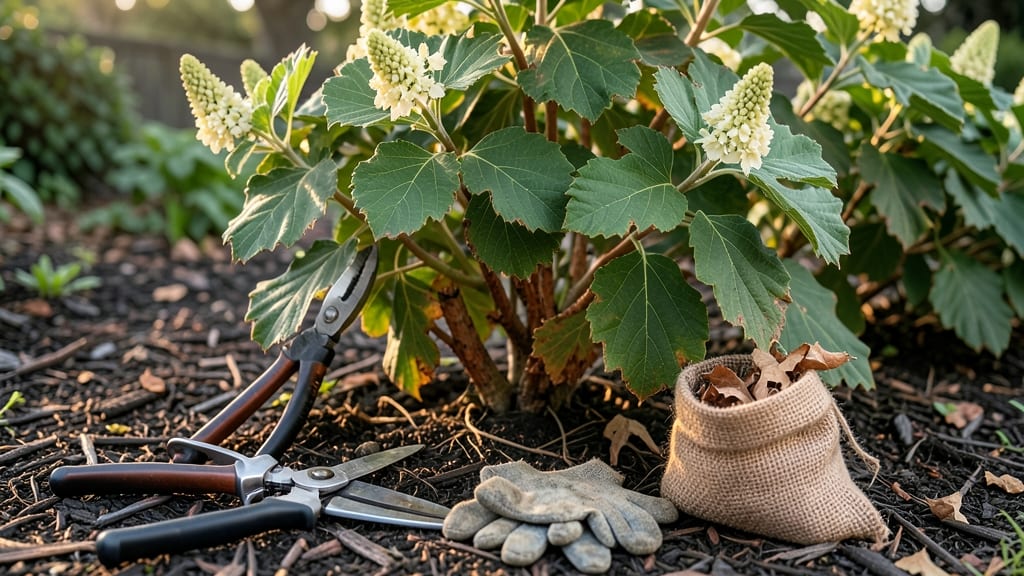
Pruning oakleaf hydrangeas in late winter transforms them from leggy shrubs into showstopping specimens with bold blooms and fiery fall foliage.
I’ve pruned mine for five years now, and the difference between a well-shaped plant and one that’s been neglected is night and day—especially when those 3-inch blooms appear in summer. The key is timing and technique, not brute force.
You’ll need just a few tools: sharp bypass pruners, loppers for thicker stems, and gloves to protect from those rough-edged leaves. The real magic happens in late winter (February-March in most zones), when the plant is dormant but you can still see its natural shape.
Start by removing any dead or crossing branches first—this opens up the center for better airflow and sunlight.
For rejuvenation, cut back up to ⅓ of the oldest stems to the ground. These are the ones with thick bark and fewer leaves—they’ve outlived their purpose. The plant will respond by sending out fresh growth from the base, which produces the most vibrant flowers.
Think of it like giving your hydrangea a haircut that highlights its best features.
Here’s the secret most gardeners miss: oakleaf hydrangeas bloom on new and old wood, so you won’t sacrifice flowers by pruning now. The result? A bush that’s easier to maintain, with longer stems and bigger clusters come summer.
And those fall leaves? They’ll turn shades of burgundy and orange that make every pruning session worth it.
📚 In This Guide
- What you need
- Instructions
- Tips and common mistakes
- Wrapping up and next steps
What you need
- ● Pruning shears or secateurs – Choose bypass pruners (sharp, clean blades) for clean cuts. A 5- to 8-inch pair works best for most branches.
- ● Loppers – For thicker stems (½ inch or larger), opt for bypass loppers with a 10- to 14-inch reach.
- ● Hand pruners (for fine-tuning) – A 4-inch pair for delicate trimming near the base.
- ● Garden gloves – Heavy-duty, cut-resistant gloves (e.g., mechanized or leather) to protect against thorns and sharp edges.
- ● Disinfectant (70% isopropyl alcohol or bleach solution) – 1 part bleach to 9 parts water to sterilize tools between cuts and prevent disease.
- ● Rag or paper towels – For wiping down tools and hands.
- ● Pruning saw – For thick, woody stems (if your hydrangea has stubborn branches).
- ● Extension pole pruners – If your hydrangea is tall or hard to reach.
- ● Marking spray or tape – To tag branches for removal before cutting (great for large shrubs!).
- ● Compost bin or bag – For disposing of pruned branches (or repurpose them as mulch!).
- ● Check the last frost date in your zone—prune oakleaf hydrangeas in late winter (Feb–March) after the worst cold has passed.
- ● Gather weather updates—avoid pruning if rain or frost is forecasted within 24 hours.
- ● Have a clear workspace—lay down a tarp or old blanket to catch debris.
Instructions for pruning oakleaf hydrangea in late winter
Here's my proven approach to rejuvenate your oakleaf hydrangea and encourage stronger blooms next season.
Identify Last Year's Blooms and Dormant Buds
Start by examining your oakleaf hydrangea while it's still dormant. Look for the swollen buds along the stems—these are where next year's flowers will emerge. Oakleaf hydrangeas bloom on old wood, meaning last year's growth will produce this year's flowers. These buds typically form in clusters near the base of stems or along the main branches.
Use sharp pruning shears to make a clean cut just above a bud that points outward from the center of the plant. This ensures better air circulation and sunlight penetration. If you're unsure which buds are viable, focus on the healthiest stems—those with no signs of disease or damage. Avoid cutting back into the center of the plant, as this can create a dense, shaded interior that discourages blooming.
Remove Dead, Weak, or Crossing Branches
Next, remove any branches that are dead, diseased, or crossing over others. Dead branches are easy to spot—they're brown, brittle, and won't bend when you test them. Diseased branches may have blackened or discolored areas, and crossing branches create unnecessary congestion. Cut these back to the main stem or a healthy bud using a 45-degree angle to encourage faster healing.
Pay special attention to branches that rub against each other. These can create wounds that invite pests or disease. If a branch is too small to support itself, trim it back to a stronger stem. Remember, oakleaf hydrangeas have a natural, layered growth habit, so avoid over-pruning. Your goal is to open up the plant while maintaining its shape and structure.
Thin Out Overcrowded Areas for Better Airflow
Now, focus on thinning out the plant to improve airflow and sunlight exposure. Look for areas where branches are too close together, creating a dense canopy. Select the weakest or smallest branches in these clusters and cut them back to the main stem or a healthy bud. This step is crucial for preventing fungal diseases and ensuring your hydrangea stays healthy.
As you work, step back occasionally to assess the plant's overall shape. Oakleaf hydrangeas have striking foliage, so aim to maintain a balanced, open structure. Avoid cutting back more than one-third of the plant in a single season—this can stress the hydrangea and reduce next year's blooms. If you're unsure, err on the side of caution and leave more branches intact.
Shape the Plant for Optimal Growth
Finally, shape the hydrangea to encourage larger, longer blooms next season. Start by identifying the strongest, most vigorous branches—these will support the heaviest flowers. Trim back any overly long or leggy stems to a bud or lateral branch that points in the direction you want the plant to fill out. This helps create a fuller, more compact shape.
For a more natural look, avoid making cuts that are too precise or geometric. Instead, follow the plant's natural growth patterns. If you notice any water sprouts—those fast-growing, vertical shoots—remove them entirely, as they divert energy from flower production. Once you've finished shaping, clean your pruning tools with rubbing alcohol to prevent the spread of disease.
Apply Mulch and Fertilize for Recovery
After pruning, spread a 2-3 inch layer of mulch around the base of the plant, keeping it 3-4 inches away from the stem to prevent rot. Mulch helps retain moisture, regulate soil temperature, and suppress weeds. Choose a well-draining mulch, such as shredded bark or pine straw, to avoid compacting the soil.
In early spring, once new growth begins, apply a balanced, slow-release fertilizer to encourage strong root and stem development. Oakleaf hydrangeas benefit from acidic soil, so consider using a fertilizer formulated for azaleas or rhododendrons. Water deeply after fertilizing to help nutrients penetrate the soil. With proper care, your hydrangea will reward you with vibrant blooms and lush foliage next season.
Tips & tricks for pruning oakleaf hydrangeas
These key strategies will help you transform your oakleaf hydrangea into a blooming powerhouse while avoiding common mistakes that can stress your plant.
Bud Identification Made Easy: When examining swollen buds in Step 1, look for plump, firm buds that feel slightly resistant when gently squeezed. These are your future blooms. If you're still unsure, check for tiny green tips emerging from the bud—this confirms viability. I've learned to mark questionable buds with a small piece of colored tape before cutting, so I can revisit them later if needed. This visual cue prevents accidental removal of potential flower sites.
The 45-Degree Angle Secret: In Step 2, when making cuts to remove dead or crossing branches, the 45-degree angle isn't just about aesthetics—it's about plant health. This angle creates a larger surface area for the wound to heal while directing water away from the cut. Always make your cut just above a bud or lateral branch, and angle it downward to prevent water accumulation. I've seen many gardeners skip this detail, leading to slow recovery and potential disease entry points.
One-Third Rule for Stress Reduction: The instructions mention avoiding cutting back more than one-third of the plant, but here's why this matters: Oakleaf hydrangeas store energy in their roots and stems. When you remove too much foliage at once, the plant must redirect all its resources to support remaining growth, often at the expense of flower production. Think of it like a budget—you want to maintain enough income (leaves) to cover expenses (growth and blooming) without over-extending.
Tool Maintenance Matters: After completing Step 4, take an extra minute to clean your pruning shears with rubbing alcohol. This simple step prevents the spread of bacterial and fungal diseases between cuts. I've seen gardeners reuse dirty tools without cleaning, only to have their carefully pruned hydrangeas develop infections later. Keep a small bottle of rubbing alcohol in your gardening toolkit for quick sanitization between plants.
Pro Tips for Pruning Oakleaf Hydrangea
- These key strategies will help you transform your oakleaf hydrangea into a blooming powerhouse while avoiding common ...
- Bud Identification Made Easy: When examining swollen buds in Step 1, look for plump, firm buds that feel slightly res...
- The 45-Degree Angle Secret: In Step 2, when making cuts to remove dead or crossing branches, the 45-degree angle isn'...
Frequently asked questions
Got questions about pruning your oakleaf hydrangea? You’re not alone! Here are some of the most common concerns—and straightforward answers—to help you prune like a pro.
When is the absolute latest I can prune my oakleaf hydrangea?
The ideal window is late winter (after the last frost but before buds swell), but oakleaf hydrangeas are forgiving. You can prune up to early spring without risking blooms—just avoid cutting after buds open. If you miss the window, wait until after flowering in late summer.
Do I need to sterilize my pruners after each cut?
Yes! Sterilizing tools (with rubbing alcohol or a 10% bleach solution) prevents bacterial or fungal spread, especially if your hydrangea has had issues like leaf spot. Wipe blades before and after pruning to keep your plant healthy. Pro tip: Keep a small bottle of isopropyl alcohol nearby for quick cleanups!
Will pruning now make my hydrangea bloom less?
Not if you do it right! Oakleaf hydrangeas bloom on old wood and new growth, so strategic cuts (removing dead wood and thinning crowded stems) actually encourages bigger, longer-lasting blooms. Just avoid over-pruning—never remove more than 1/3 of the plant in one session.
Can I prune my oakleaf hydrangea the same way as a bigleaf hydrangea?
Nope! Bigleaf hydrangeas bloom on new wood, so they’re pruned after flowering. Oakleaf hydrangeas are different—they need late-winter cuts to shape and rejuvenate. Mixing up the timing can delay or reduce blooms. Think of it like training for a marathon—timing matters!
My oakleaf hydrangea isn’t blooming after pruning. What went wrong?
Check these common culprits:
- Pruned too late: Buds may have already formed.
- Over-pruned: Removed too many stems (aim for 3-5 strong canes per plant).
- Poor growing conditions: Shade, over/under-watering, or nutrient deficiencies can stress the plant.
Wrapping up and next steps
Pruning your oakleaf hydrangea in late winter isn’t just about tidying up—it’s your secret weapon for bigger, showier blooms all season! 🌸 By following the right techniques, you’ll encourage healthy growth, prevent disease, and keep your shrub thriving for years.
Now that you’re armed with the when, how, and why of pruning, there’s nothing left to do but roll up your sleeves and get clipping!
Ready to see the transformation? Mark your calendar for late winter or early spring, gather your tools, and give your oakleaf hydrangea the care it deserves. Watch as it rewards you with lush foliage and stunning flowers—you’ve got this!