
Pruning
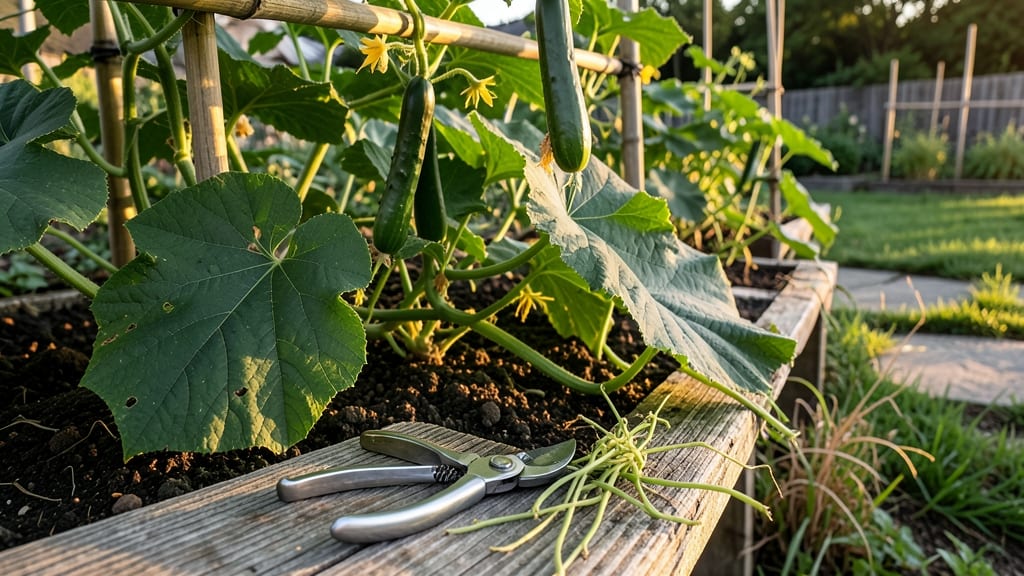
Pruning the parts of a cucumber plant isn’t just about cutting—it’s about directing energy where it matters most. ✂️ I’ve learned the hard way that skipping this step leads to tangled vines, fewer fruits, and powdery mildew taking over.
The right cuts transform a wild, sprawling mess into a productive, bushier plant that yields more cucumbers with less effort.
Focus on three key areas: main vines, side shoots, and lower leaves. Pinch off the first few leaves near the soil to encourage upward growth, then trim any side shoots growing below the first flower cluster—these sap-suckers drain energy from fruit production.
Use clean, sharp pruners to avoid tearing the plant, and always cut just above a leaf node to promote healing.
Timing matters too: start when vines hit 6-8 inches tall, then repeat every 7-10 days as the plant grows. This method boosts air circulation, reducing disease risk, and ensures your plant puts energy into larger, straighter cucumbers instead of extra foliage.
The payoff? A cleaner, healthier plant that keeps producing all season.
For organic gardeners, this approach also minimizes chemical needs—better airflow means fewer fungal issues. And if you’re growing in containers, pruning keeps vines manageable without sacrificing yield. Ready to turn those wild vines into a neat, high-producing machine? Let’s get started.
📚 In This Guide
- What you need
- Instructions
- Tips and common mistakes
- Wrapping up and next steps
What you need
- ● Clean, sharp pruning shears – Bypass pruners (4-6 inches) work best for precision cuts without crushing stems. Sterilize with rubbing alcohol before and after use to prevent disease spread.
- ● Gloves – Garden or nitrile gloves (medium thickness) to protect hands from thorns and sap.
- ○ Disinfectant (optional but recommended) – 70% isopropyl alcohol or a 10% bleach solution (1 part bleach to 9 parts water) for sterilizing tools.
- ● Small bucket or bag – For collecting pruned vines and debris. A 5-gallon bucket or compostable pruning bag works well.
- ● Water spray bottle – 16-ounce misting bottle filled with water to dampen cuts and reduce stress on the plant.
- ○ Sharpie or permanent marker – Fine-tip marker for labeling vines (optional, if you’re experimenting with training techniques).
- ● Hand pruners – For smaller stems or tight spaces (ergonomic designs reduce hand fatigue).
- ● Garden twine or soft ties – 1/4-inch wide twine to gently guide vines along trellises or supports.
- ○ Plant growth regulator (optional) – Hydrogen peroxide (3%) or copper fungicide to treat cuts and prevent infection.
- ● Pruning saw (for large plants) – Only needed if your cucumber plant has thick, woody stems (rare for most varieties).
- ● Notebook or app – To track pruning dates, plant responses, or sketch vine growth patterns.
Step-by-step guide to pruning cucumber plants for healthier growth
Here's how to transform leggy cucumber vines into bushy, productive powerhouses using proven pruning techniques.
🌿 Step 1: Identify and Remove Suckers for Stronger Structure
Cucumber plants develop small shoots called suckers in the leaf axils—those little side branches growing between the main stem and leaves. These compete with your main fruit-bearing vines for energy. Use your thumb and forefinger to gently pinch off suckers when they're still less than 2 inches long. This prevents them from draining energy from your primary vines.
Focus on the lower third of the plant first, where suckers appear most frequently. I like to work in the morning when the plant is turgid—it's easier to spot new growth before the heat of the day. If you miss a sucker, it will grow into a full branch that steals nutrients from your main cucumbers.
✂️ Step 2: Prune Leggy Growth and Encourage Bushier Habit
When cucumber vines grow too tall and spindly, they produce fewer fruits and struggle to support heavy cucumbers. Use clean pruning shears to trim back overly elongated vines to a stronger lateral branch or leaf node. This redirects the plant's energy toward bushier growth with more fruit-bearing nodes.
Look for vines that have grown more than 12 inches beyond the last leaf node. Cut just above a leaf with a small stem (a node) to encourage new growth. Avoid cutting into the main stem—this weakens the plant. I typically prune every 7-10 days during peak growing season to maintain shape and productivity.
🌱 Step 3: Thin Fruit Clusters for Larger, Healthier Cucumbers
When cucumbers form in clusters, the plant divides its energy among too many fruits, resulting in smaller, lower-quality produce. Leave only 1-2 cucumbers per cluster, removing the smaller or weaker ones first. Twist gently to avoid damaging the main vine. This ensures your remaining cucumbers get maximum nutrients and sunlight.
Watch for clusters where one cucumber is significantly larger than its neighbors—this is a sign the plant is already favoring it. Thin aggressively during the first 4-6 weeks of flowering when clusters form most rapidly. I always keep a small pair of scissors handy while harvesting to make quick, clean cuts without crushing stems.
☀️ Step 4: Maintain Airflow and Prevent Disease Through Strategic Pruning
Cucumber plants benefit from good airflow, which reduces humidity around leaves and prevents fungal diseases like powdery mildew. Prune any yellowing or diseased leaves immediately, cutting back to healthy tissue. Also remove any crossed or tangled vines that block sunlight or create damp pockets where spores can thrive.
Pay special attention to the bottom third of the plant, where leaves often touch the soil and stay damp. If you see leaves with brown spots or white powder, prune them immediately and dispose of them in the trash—not the compost. I make it a habit to prune diseased leaves in the morning so the plant has the afternoon to recover and dry out.
⏰ Step 5: Time Your Pruning for Maximum Impact
Prune cucumber plants early in the morning when temperatures are cooler and the plants are less stressed. Avoid pruning during hot afternoons or when the plant is already under stress from drought or pests. The plant needs 24-48 hours to recover before another pruning session.
During the first 4 weeks of growth, focus on removing suckers and encouraging bushier structure. Once flowering begins, shift your attention to fruit thinning and maintaining airflow. I always stop heavy pruning 2 weeks before the first frost to let the plant mature its remaining fruits. Regular pruning keeps cucumbers producing until late fall in many climates.
Tips & tricks for pruning cucumber plants
Here's what nobody tells you about transforming those wild cucumber vines into productive powerhouses.
Timing Secret: The 24-48 hour recovery period after pruning is non-negotiable—this gives your plant time to heal and redirect energy. I've learned the hard way that skipping this recovery window leads to stressed plants that produce fewer cucumbers. Prune in the morning when the plant is hydrated, and avoid any major pruning sessions during heatwaves or drought conditions.
Visual Cue for Suckers: Those little suckers (less than 2 inches long) look like tiny shoots growing from the leaf axils. Run your fingers along the main stem—you'll feel tiny bumps where suckers form. Pinch them off early, before they grow into full branches that compete with your main cucumbers. I use my thumb and forefinger for precision, avoiding any damage to the main vine.
Pruning Technique: When trimming elongated vines (more than 12 inches beyond the last leaf node), always cut just above a leaf node—not in the middle of a stem. This creates a natural growth point for new branches. I use clean pruning shears for larger cuts to prevent disease transmission, and always sterilize my tools with rubbing alcohol between plants.
Disease Prevention: The bottom third of your cucumber plant is the most vulnerable to fungal diseases. Remove any yellowing or spotted leaves immediately, cutting back to healthy tissue. I make it a habit to dispose of diseased leaves in the trash (not compost) and avoid overhead watering, which keeps foliage dry and reduces humidity around the plant.
Pro Tips for Pruning Parts Of A Cucumber Plant
- Here's what nobody tells you about transforming those wild cucumber vines into productive powerhouses.
- Timing Secret: The 24-48 hour recovery period after pruning is non-negotiable—this gives your plant time to heal and redirect energy.
- Visual Cue for Suckers: Those little suckers (less than 2 inches long) look like tiny shoots growing from the leaf axils.
Frequently asked questions
Got questions about pruning your cucumber plants? You’re not alone! Here are some of the most common queries—plus straightforward answers to keep your vines thriving.
When is the best time to start pruning cucumber plants?
Start pruning when your cucumber plants are about 6–12 inches tall and have 4–6 true leaves. This encourages bushier growth and better fruit production. For vining varieties, continue pruning throughout the growing season to manage size and airflow. Avoid heavy pruning too late in the season—focus on harvesting instead!
Do I really need to prune cucumbers, or can I just let them grow wild?
While cucumbers can grow without pruning, it’s highly recommended! Pruning improves airflow (reducing disease risk), directs energy to fruit production, and keeps vines manageable. Unpruned plants may sprawl uncontrollably, produce smaller cucumbers, and attract pests. Think of it as a must-do for a bountiful harvest!
Will pruning my cucumber plant reduce my yield?
Not if done correctly! Pruning actually boosts yields by focusing the plant’s energy on producing larger, healthier cucumbers. However, avoid over-pruning—never remove more than 1/3 of the plant’s foliage at once. The key is balance: trim excess vines and leaves while leaving enough to photosynthesize and support fruit.
What should I do if my cucumber plant looks stressed after pruning?
Stress is normal after pruning, but you can help your plant recover! Water deeply before and after pruning to reduce shock, and avoid fertilizing for a week. If leaves yellow or wilt excessively, check for pests or disease. Most plants bounce back in 3–5 days—just give them time and keep an eye on their progress!
Can I prune cucumber plants in containers or small gardens?
Container-grown cucumbers benefit even more from pruning since space is limited. Use the pinch-and-prune method to control vine growth and redirect energy to fruit. For small gardens, opt for bush varieties (like ‘Bush Champion’) or train vines vertically with trellises to save space and improve yields.
Wrapping up and next steps
Pruning your cucumber plants isn’t just about keeping them tidy—it’s a game-changer for bigger harvests and healthier vines! 🌱 By mastering the pinch-and-prune method, you’ll encourage bushier growth, better airflow, and fewer pests. Whether you’re a seasoned gardener or just starting, these techniques make the process simple and rewarding.
Ready to put your new skills to work? Grab your pruners and head to the garden—your next crop of cucumbers is waiting! 🌿 Start small, observe your plant’s response, and soon you’ll be a pruning pro!