
Pruning
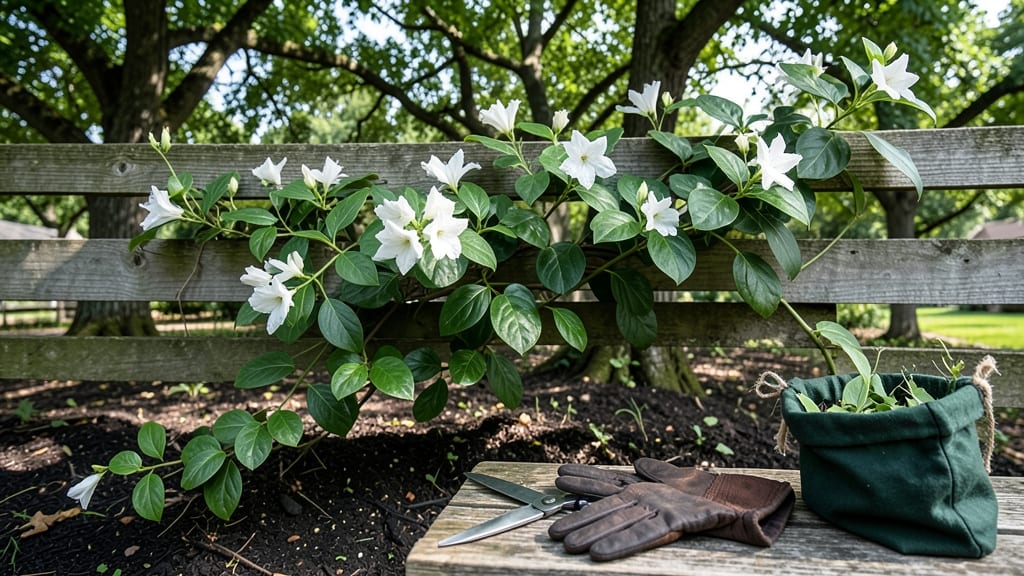
Late winter is the perfect time to prune star jasmine—when those sharp thorns disappear and fragrant blooms are just weeks away. 🌿 I’ve pruned mine for years, and the difference between a tangled mess and a lush, thorn-free canopy comes down to a few sharp cuts at the right time.
The key? Timing your cuts to encourage new growth while keeping the plant healthy and blooming like crazy.
Grab your pruners and gloves—you’ll need clean, sharp shears and a clear day when the plant isn’t stressed by cold. The goal is to shape the plant into an open, airy form, which not only looks better but also lets sunlight reach the center for more blooms.
Start by removing any dead or crossing branches first; these are the easy wins that make the rest of the job smoother.
What you’ll end up with is a star jasmine that’s easier to maintain, produces more fragrant flowers, and stays thorn-free enough to enjoy without gloves. The best part? You’ll see fresh green growth within weeks, and by summer, your plant will be a fragrant, bushy masterpiece.
Just remember: less is more—over-pruning can stress the plant and reduce blooms.
Works for both container-grown plants and those climbing trellises or fences. The same principles apply whether you’re shaping a small bush or a sprawling vine. Ready to transform yours?
📚 In This Guide
- What you need
- Instructions
- Tips and common mistakes
- Wrapping up and next steps
What you need
- ● Pruning shears: Bypass pruners (for small branches, 4-6 inches in diameter) – 1 pair (look for sharp, stainless steel blades for clean cuts).
- ● Loppers: Bypass or anvil type (for medium branches, 6-12 inches in diameter) – 1 pair (extendable handles help with taller plants).
- ● Hand pruners: For precision cuts (if your plant has dense foliage) – 1 pair (ergonomic grips reduce hand fatigue).
- ● Gloves: Garden gloves (cut-resistant, 12-14 inches long) – 1 pair (protects hands from thorns and debris).
- ● Disinfectant: Rubbing alcohol (70% isopropyl) or pruning sealant – small bottle (prevents disease spread between cuts).
- ● Bucket or bag: For trimmings – 1 large container (10+ gallons, with a lid to contain mess).
- ● Ladder: Sturdy, extendable ladder – 1 (if your plant exceeds 6 feet in height).
- ○ Safety goggles: – 1 pair (optional but recommended for debris protection).
- ● Sharpener: Pruner blade sharpener – keeps tools in top condition for clean cuts.
- ● Marking twine or tape: – helps map out pruning zones before cutting.
- ● Hose or spray bottle: – rinses off sap residue for easier cleanup.
- ● Compost bin access: – Recycle trimmings as nutrient-rich compost.
Step-by-step guide to pruning star jasmine for a lush, fragrant canopy
Late winter is the perfect time to shape your star jasmine—here’s how to encourage abundant blooms and a thorn-free framework.
✂️ Step 1: Remove Dead or Weak Growth First
Start by scanning your plant for branches that are completely brown, brittle, or showing no signs of life. These dead stems won’t regrow and only take energy from healthy growth. Use sharp pruning shears to cut these back to the main stem or a healthy bud. I always make my cuts at a 45-degree angle, about ¼ inch above a leaf node—this encourages new growth to sprout from that spot.
If you’re unsure whether a branch is dead, gently scratch the bark with your thumbnail. Green underneath? It’s alive. Brown and dry? Cut it off. This step keeps your plant focused on producing fragrant flowers instead of wasted energy on deadwood.
✂️ Step 2: Thin Out Crowded or Crossing Branches
Next, look for branches that are rubbing against each other or growing inward toward the center of the plant. These compete for sunlight and nutrients, and their thorns can damage the plant over time. Remove one-third of the oldest, thickest stems at the base, cutting just above a leaf node or outward-facing bud. This opens up the canopy for better airflow and sunlight penetration.
I like to step back every few cuts to visualize the shape. Star jasmine naturally grows in a rounded form, so aim for an open, vase-like structure. Avoid cutting back more than 25% of the plant’s total growth in one session—this prevents shock and encourages vigorous regrowth.
✂️ Step 3: Shape for Airflow and Light Exposure
Now focus on the outer branches to encourage a full, bushy shape. Trim back the tips of long, leggy stems to just above a leaf node or bud that faces outward. This redirects energy toward lateral branches, which produce more flowers. For every 6 inches of growth, I aim to leave 2-3 buds—this balance keeps the plant dense but not overcrowded.
Pay special attention to the lower third of the plant. If it’s bare, cut back some of the taller branches to half their length at the base. This forces new growth lower down, creating a fuller, more balanced plant. Avoid cutting into old wood—star jasmine blooms on new growth, so focus on current season’s stems.
✂️ Step 4: Clean Up and Sanitize Tools
After pruning, step back and assess your work. The plant should look open, with light able to reach all branches. Remove any small twigs or debris from the base—these can harbor pests or diseases. Once you’re satisfied, wipe down your pruning shears with rubbing alcohol to prevent spreading bacteria or fungi between cuts.
Here’s the thing—star jasmine responds beautifully to pruning, but timing matters. If you prune too late in spring, you might cut off potential blooms. Finish up by early March in most climates, and your plant will reward you with fragrant white flowers by late spring.
Tips & tricks for pruning star jasmine
These simple tricks will help you shape your star jasmine like a pro—without sacrificing next season's blooms.
Test for Dead Branches: The thumbnail scratch test is foolproof—green underneath means life, brown means it's time to cut. I've made the mistake of leaving dead wood thinking it might revive, only to watch the plant waste energy trying to heal it. Always cut these back to the main stem or a healthy bud at a 45-degree angle—this prevents water from pooling and causing rot.
Visualize the Shape: Step back every few cuts to check your progress. Star jasmine naturally grows in a rounded form, so aim for an open, vase-like structure where light can reach all branches. I like to imagine a dome—this helps me avoid over-thinning one side while leaving another too dense. The goal is airflow and sunlight penetration, not just random cuts.
Focus on New Growth: Star jasmine blooms on new growth, so always cut back to outward-facing buds or leaf nodes. In Step 3, when shaping leggy stems, leave 2-3 buds for every 6 inches of growth. This creates a bushy shape while ensuring plenty of new stems for flowers. Avoid cutting into old wood—it won't produce new blooms.
Tool Sanitization Matters: Wiping down your pruning shears with rubbing alcohol between cuts prevents spreading bacteria or fungi. I keep a small bottle of 70% isopropyl alcohol in my gardening toolkit specifically for this purpose. Clean tools mean healthier plants and fewer disease issues down the line.
Pro Tips for Pruning Star Jasmine
- These simple tricks will help you shape your star jasmine like a pro—without sacrificing next season's blooms.
- Test for Dead Branches: The thumbnail scratch test is foolproof—green underneath means life, brown means it's time to cut.
- Visualize the Shape: Step back every few cuts to check your progress.
Frequently asked questions
Got questions about pruning star jasmine?
You’re not alone! Here are answers to the most common concerns—from timing to troubleshooting—to help you keep your fragrant climber thriving.
When is the best time to prune star jasmine for late-winter cuts?
Late winter (just before new growth starts, typically February–March in most climates) is ideal. This timing encourages vigorous spring blooms and prevents frost damage. Avoid pruning in fall—it can stimulate tender growth that won’t survive winter. Pro tip: If you missed late winter, wait until early spring, but don’t delay past bud break!
How much can I cut back star jasmine without harming it?
Star jasmine is hardy—you can safely prune up to ⅓ of the plant’s total growth per year. For established vines, aim to remove old, leggy stems and thin dense areas to improve airflow. Avoid over-pruning (<50% of the plant), as it may stress the vine and reduce flowering. Pro tip: Look for thick, woody stems—these are safe to cut back to a healthy bud or branch.
Why isn’t my star jasmine flowering after pruning?
Star jasmine blooms on new wood, so late-winter pruning (when done correctly) should encourage flowers. If you’re seeing no blooms, check these fixes:
- Pruned too late: Wait until early spring if you missed late winter.
- Over-pruned: Leave at least ⅓ of the plant uncut.
- Poor sunlight: Ensure it gets 6+ hours of sun daily—partial shade reduces blooms.
- Nutrient deficiency: Feed with a balanced fertilizer (10-10-10) in spring.
Can I prune star jasmine in containers or small spaces?
Container-grown star jasmine benefits from regular pruning to control size and shape. Use the same late-winter timing, but trim more frequently (every 4–6 weeks in growing season) to keep it compact. For small spaces, train it along a trellis or wall—prune to encourage horizontal growth. Pro tip: Use hand pruners for precision in tight areas, and remove any stems rubbing against the container.
Will pruning star jasmine attract more pests or diseases?
Pruning correctly actually reduces pest/disease risks by improving airflow and sunlight penetration. However, poor cuts (like jagged edges or leaving stubs) can invite issues. To prevent problems:
- Use sterilized tools (rubbing alcohol or bleach wipe).
- Avoid pruning when the plant is wet (wait for dry weather).
- Remove only dead/diseased stems immediately.
What’s a good alternative if I don’t want to prune star jasmine?
If pruning feels overwhelming, star jasmine is low-maintenance—you can skip it entirely! However, light shaping (removing only dead or crossing branches) keeps it healthy. For zero-prune options, consider these fragrant climbers:
- Clematis (needs seasonal pruning based on type).
- Honeysuckle (self-cleaning, minimal trimming).
- Jasmine (Trachelospermum) (similar care, but slower growth).
Wrapping up and next steps
Pruning your star jasmine in late winter isn’t just about shaping—it’s about unlocking its full potential for lush, fragrant blooms and a thorn-free canopy. With the right tools, timing, and technique, you’ll encourage vibrant growth and years of effortless beauty. 🌿✨
Ready to transform your garden? Grab your pruners, mark those branches, and get cutting! After pruning, keep an eye on your plant’s recovery—water lightly and watch as it rewards you with scented perfection all season long.