
Pruning
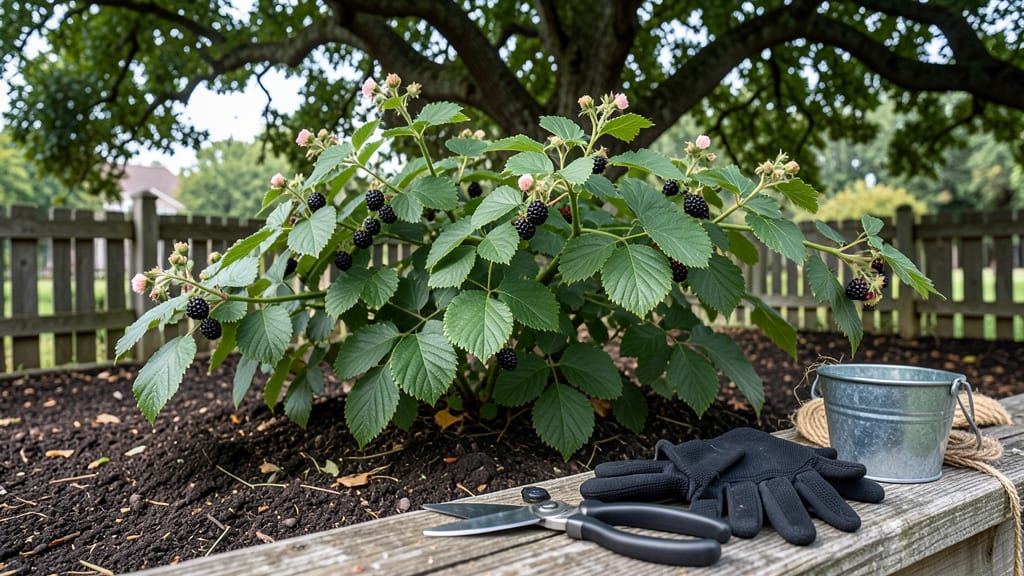
Pruning thornless blackberry plants turns a tangle of canes into a productive, manageable thicket—here’s how to do it right. 🌱 I’ve spent years wrestling with blackberry bushes, and the difference between a pruning disaster and a thriving harvest comes down to timing, technique, and knowing which canes to keep (and which to cut).
The best time to prune is late winter or early spring before new growth starts, but you can also do light maintenance pruning in summer to control size. You’ll need sharp pruners, heavy-duty gloves (thornless doesn’t mean painless), and a clear day to work.
The goal? Remove old canes that fruited last year—they’re done for good—and shape the plant to encourage strong, new growth. After pruning, your blackberries will reward you with bigger berries and more canes next season.
Just fertilize lightly with compost or a balanced 10-10-10 mix, mulch to retain moisture, and keep an eye out for pests like spider mites. Avoid cutting back too aggressively—you want to leave enough canes to keep the plant productive. Common mistakes?
Pruning at the wrong time (like mid-summer) or removing too many canes at once. Stick to the rule: cut out old canes at the base, and you’ll have a bush that’s easier to manage and more productive than ever.
📚 In This Guide
- What you need
- Instructions
- Tips and common mistakes
- Wrapping up and next steps
What you need
- ○ Pruning shears or loppers – Sharp, bypass-style blades (4–6 inches long) for clean cuts. 🌟 Optional: Sanitize with rubbing alcohol between cuts to prevent disease.
- ● Gloves – Heavy-duty, thorn-resistant (e.g., Mechanix or leather gardening gloves).
- ● Disposable pruning bags or bucket – For collecting pruned canes (helps reduce garden clutter).
- ● Garden twine or zip ties – To secure trellises or support new growth (if needed).
- ● Hose or water sprayer – For rinsing tools and cleaning up sap/residue.
- ● Hand pruners (felco or similar) – For smaller, precise cuts.
- ● Lime sulfur or copper fungicide – To sterilize tools if disease is present.
- ● Labeling tags – For marking new plantings or varieties.
- ● Knee pads or stool – For comfort during long pruning sessions.
Step-by-Step instructions for pruning thornless blackberry plants
Here's my foolproof method to keep your thornless blackberries thriving year after year.
✂️ Step 1: Identify and Remove Dead or Weak Canes
Start in late winter or early spring before new growth begins. Look for canes that are completely brown, brittle, or hollow—these won’t produce fruit and should go first. I run my fingers along the length of each cane to check for any remaining moisture or green tissue. If it snaps easily with no resistance, it’s dead and ready for the compost bin.
For canes that are still green but clearly weak (thin stems, no buds), cut them at the base with clean, sharp pruners. The goal here is to open up the center of the plant so light and air can reach the remaining canes. This prevents fungal diseases and encourages stronger growth. I always disinfect my pruners with rubbing alcohol between cuts to avoid spreading any hidden pathogens.
✂️ Step 2: Prune Last Year’s Fruit-Producing Canes
Thornless blackberries produce fruit on second-year canes, so any canes that fruited last season should be cut down to the ground this year. These canes are usually thicker and have visible scars where fruit grew. I mark them with a bright ribbon during harvest season so I don’t accidentally prune them too early.
Use sharp pruners to make a clean cut just above the crown of the plant. Avoid leaving stubs—this prevents disease from settling in. After cutting, I gather these canes and use them as mulch around the base of younger canes. This adds nutrients back into the soil and reduces waste.
✂️ Step 3: Thin the Remaining Canes for Airflow
Healthy thornless blackberry plants should have about 5-7 strong, vigorous canes after pruning. If you have more, thin them out by cutting the weakest ones at the base. Look for canes that are growing inward or crossing over others—these compete for sunlight and nutrients. I always leave the straightest, healthiest canes to maximize fruit production.
This is also the time to shape the plant. I step back and visualize how the canes are growing, making sure they’re spaced evenly around the center. If any canes are growing too close together, I remove one to give the others room to breathe. Good airflow reduces humidity around the canes, which keeps fungal diseases like botrytis away.
🌱 Step 4: Encourage New Growth with Summer Pruning
Mid-summer is the time to do light maintenance pruning. Look for any canes that are growing too vigorously and becoming leggy. These canes often produce smaller berries and are more prone to disease. I trim them back by about one-third to encourage bushier growth and more fruit production next season.
Also, watch for any suckers growing from the base of the plant. These are new canes that haven’t fruited yet, and they can drain energy from the established plant. If you have space, leave a few of the strongest suckers to replace older canes next year. Otherwise, remove them completely. I use a small trowel to dig out any suckers that are just starting to emerge, making sure to get the roots.
⏰ Step 5: Prepare for Winter with Final Trimming
In late fall, after the leaves have dropped but before the first hard frost, do a final check for any canes that have developed diseases or pests. Cut these out immediately and dispose of them in the trash—not the compost—to prevent reinfection next season.
I also like to wrap the crown of the plant with a thick layer of mulch (about 3-4 inches) to protect the roots from freezing temperatures. This helps insulate the plant and keeps the soil temperature stable. After mulching, I give the plant a deep watering to ensure it’s hydrated going into winter. This extra care pays off with stronger, more productive canes in spring.
Tips & tricks for pruning thornless blackberry plants
Real talk: Pruning can make or break your blackberry harvest. These are the tricks I wish I knew years ago that'll keep your plants thriving.
Timing Secret: Late winter or early spring is your perfect window for the main pruning—right before new growth starts. I can’t stress enough how important this is: if you prune too early, you risk damaging dormant buds, and if you wait too long, you’ll be cutting off potential fruit canes. Look for the first signs of swelling buds on your canes as your cue to start.
Tool Technique: Your pruners are your best friend, but only if they’re sharp and clean. I’ve learned the hard way that dull blades crush stems instead of making clean cuts, which invites disease. After every 3-4 cuts, wipe down your pruners with rubbing alcohol—this prevents spreading any hidden pathogens between canes. I keep a small bottle of alcohol right by my pruning station for quick disinfecting.
Visual Cue for Healthy Canes: When thinning in Step 3, look for canes that are growing outward from the center rather than inward. These are your winners—they’ll get the most sunlight and air circulation. I like to imagine the plant as a wheel with spokes: each cane should radiate outward like a spoke. This simple visualization helps me make better decisions about which canes to keep.
Summer Maintenance Hack: That one-third trim in Step 4? Don’t just cut randomly—look for canes that are growing taller than the others or have leaves that are too far apart. These leggy canes often produce smaller berries. I use my hand as a guide: if I can’t easily wrap my fingers around the cane, it’s probably too thick and needs trimming back to encourage bushier growth.
Pro Tips for Pruning Thornless Blackberry Plants
- Real talk: Pruning can make or break your blackberry harvest.
- Timing Secret: Late winter or early spring is your perfect window for the main pruning—right before new growth starts.
- Tool Technique: Your pruners are your best friend, but only if they’re sharp and clean.
Frequently asked questions
Got questions about keeping your thornless blackberry plants thriving with the right pruning? You’re not alone! Here are answers to the most common queries—so you can grow like a pro.
When is the best time to prune thornless blackberry plants?
Prune floricanes (last year’s canes that fruited) in late winter or early spring (before new growth starts) to avoid frost damage. For primocanes (current season’s growth), prune lightly in summer to encourage fruit production next year. Avoid heavy pruning after harvest—let plants recover!
Do I need to remove all the old canes every year?
Yes! Floricanes (last year’s fruiting canes) should be cut to the ground after harvest to redirect energy to new primocanes. However, leave 1-2 healthy primocanes per plant to ensure next year’s crop. Over-pruning can stress plants—balance is key!
What if my thornless blackberries aren’t fruiting well after pruning?
Check these fixes:
- Light exposure: Ensure plants get 6+ hours of sunlight daily.
- Fertilizer: Use a balanced 10-10-10 or high-potassium fertilizer in spring.
- Watering: Keep soil consistently moist (1-2 inches deep) but not soggy.
- Age: Young plants (1-2 years) may need 1 more season to establish.
Can I prune thornless blackberries in fall instead of spring?
Fall pruning is risky—new growth after pruning can be damaged by frost. If you must prune in fall, do it 6+ weeks before first frost and avoid heavy cuts. Focus on removing dead/diseased canes only. Spring pruning is always safer for thornless varieties!
What’s the difference between “pruning” and “thinning” blackberry canes?
Pruning
= Cutting back entire canes (e.g., removing floricanes after harvest). Thinning = Selectively removing weak or crowded canes to improve airflow and fruit quality. For thornless blackberries, thin to 6–8 strong primocanes per plant in summer to boost next year’s yield.
Still stumped? Drop your question in the comments—we’re happy to help your berries flourish!
Wrapping up and next steps
Pruning thornless blackberry plants is your secret weapon for bountiful harvests and healthier canes—no thorns, no fuss! 🌱 By mastering seasonal trims, you’ll encourage strong growth, better fruit production, and easier maintenance. Whether you’re a beginner or a seasoned gardener, these hacks make the process simple and rewarding.
Ready to transform your patch? Grab your pruners and start today! For extra confidence, bookmark this guide or jot down your notes before diving in. Happy pruning—your future berries will thank you! 🍇✨