
Trees
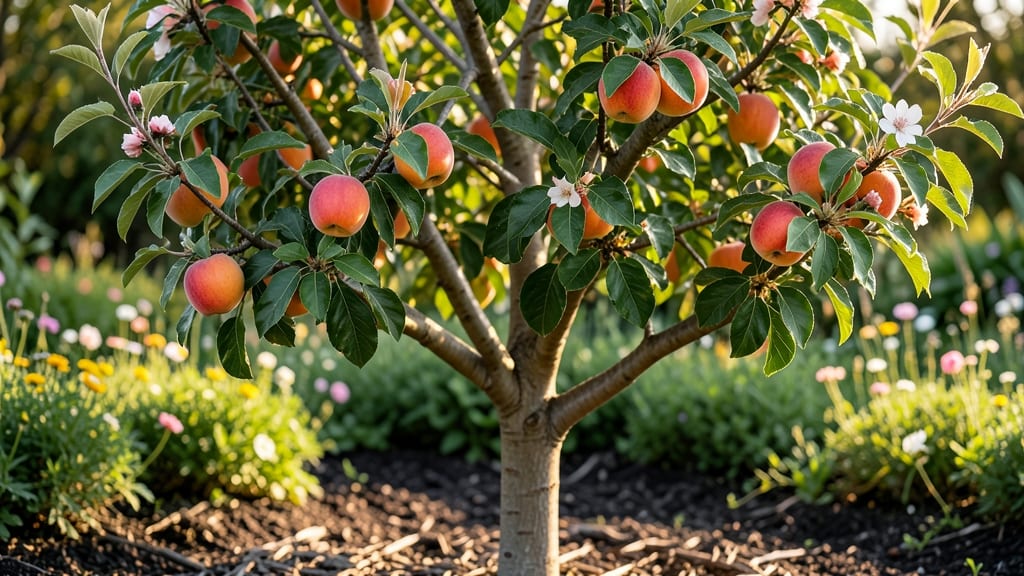
Late-winter pruning transforms your Prunus persica 'Bonfire' peach tree into a summer fruit powerhouse. ✂️ I’ve seen this variety go from tangled branches to a tidy, productive tree in just three cuts—when done right.
The key is timing: prune when the tree is still dormant but buds are swelling, usually in February or early March in most climates.
This peach thrives in full sun and well-draining soil, but its real magic happens during pruning. Focus on removing dead, crossing, or crowded branches first, then open the center to let light and air circulate.
'Bonfire' responds well to this—you’ll see fresh green growth within 2-3 weeks of pruning, signaling it’s ready for fruit production.
By summer, you’ll be rewarded with bright orange-yellow fruit that’s sweeter than most store-bought peaches. The tree’s compact size (12-15 feet tall) makes it perfect for small yards or containers, but it still delivers heavy harvests when pruned correctly.
The secret? Prune aggressively enough to shape the tree but leave enough branches to support fruit.
Works in USDA zones 5-9, though it needs winter protection in colder areas. For container growing, choose a 15-gallon pot with drainage—just be ready to move it indoors if frost threatens. Here’s how to make it work without the guesswork.
📚 In This Guide
- What you need
- Instructions
- Tips and common mistakes
- Wrapping up and next steps
What you need
- ● Pruning shears: Bypass pruners (sharp, clean, and sterilized with rubbing alcohol to prevent disease).
- ● Loppers: For thicker branches (1.5"–2" diameter).
- ● Hand saw: For stubborn, larger limbs (avoid bolt cutters—they crush wood).
- ● Disinfectant: 70% isopropyl alcohol or a 10% bleach solution (1 part bleach to 9 parts water).
- ● Rubbing alcohol or hydrogen peroxide: For cleaning cuts (3% solution).
- ○ Pruning sealant (optional but recommended): Pruning paint or tree wound dressing (e.g., Tanglefoot Tree Wound Pruning Seal).
- ● Garden gloves: Heavy-duty, cut-resistant (peach thorns are no joke!).
- ● Bucket or bag: For collecting pruned branches (line with a plastic bag for easy disposal).
- ● Ladder or step stool: If your tree is over 6 feet tall (safety first!).
- ● Notebook & pencil: To sketch your pruning plan (trust us, it helps!).
- ● Timing: Prune in late winter (just before bud break, typically February–March in most U.S. zones).
- ● Weather: Choose a dry, calm day (no rain for 24 hours before/after pruning).
- ● Tree health check: Inspect for pests (aphids, scale) or disease (brown spots, oozing sap). Treat if needed before pruning.
- ● Safety gear: Long sleeves/pants (thorns!) and closed-toe shoes.
- ● Tree growth regulator: Like Bonide Fruit Tree Spray (apply post-pruning to boost fruit set).
- ● Mulch: Shredded bark or straw (2–3 inches deep) to retain moisture and suppress weeds.
- ● Stake & twine: If your tree is young and needs support after heavy pruning.
- ● Camera or phone: Snap before/after pics—you’ll want to track progress!
Step-by-step late-winter pruning for your Prunus persica 'Bonfire' peach tree
Here’s how to shape your tree for maximum fruit production—timing and technique matter most.
✂️ Step 1: Time Your Pruning for Optimal Growth
Prune your 'Bonfire' peach tree during late winter, specifically when the tree is fully dormant but before buds begin to swell—typically 3-4 weeks before last frost. This timing ensures the tree heals quickly and avoids disease entry points. The goal is to remove dead, damaged, or crossing branches while maintaining an open canopy for sunlight penetration.
Check your local frost dates and prune on a dry, sunny day when temperatures are above 40°F. Avoid pruning if rain is forecasted within 24 hours—wet conditions promote fungal infections. If you miss the late-winter window, wait until early spring, but don’t delay beyond bud break.
✂️ Step 2: Remove Dead, Diseased, and Weak Branches First
Start by inspecting the tree for dead wood—branches that are brittle, lack bark, or have hollow centers. Cut these out completely at the branch collar, the swollen area where the branch meets the trunk. Use clean, sharp pruning shears or a pruning saw for branches thicker than ½ inch in diameter.
Next, identify suckers (vigorous shoots growing from the base or roots) and water sprouts (vertical shoots with no lateral branches). Remove these entirely—they compete with fruit-bearing wood for energy. For diseased branches, sterilize your tools with rubbing alcohol between cuts to prevent spreading pathogens.
✂️ Step 3: Thin Out Crossing and Rubbing Branches
Look for branches that cross or rub against each other—these create wounds that invite disease and limit airflow. Choose the healthier of the two branches (thicker, straighter, or more vigorous) and cut the weaker one back to the branch collar. This step improves air circulation and reduces humidity within the canopy, which is critical for peach trees prone to brown rot and leaf curl.
Pay special attention to the center of the tree. Remove up to 20% of the oldest, inward-growing branches to open the center. This encourages sunlight to reach the inner branches, where fruit often develops. Avoid over-thinning—leave enough foliage to maintain photosynthesis.
☀️ Step 4: Shape for Fruit Production and Airflow
Peach trees thrive with an open-center or modified central leader structure. For 'Bonfire', aim to create a vase-like shape with 5-7 main scaffold branches spaced evenly around the trunk. These branches should emerge at 45-60° angles—never cut back to a lateral branch that grows straight out.
Shorten last year’s growth by one-third on the scaffold branches to encourage fruit spur development. For example, if a scaffold branch grew 24 inches last year, cut it back to 16 inches. This pruning stimulates new growth that will bear fruit next season. Avoid heavy heading cuts—peach trees respond poorly to drastic reductions in branch length.
🌿 Step 5: Clean Up and Apply Protective Measures
After pruning, collect and dispose of all debris—burn or trash it, never compost, to prevent disease spread. Sterilize your tools with bleach or rubbing alcohol to kill any lingering pathogens. If your tree is in a humid climate, apply a copper fungicide spray to protect fresh cuts from fungal infections.
Finally, water deeply at the base of the tree to help it recover. Mulch with 2-3 inches of organic mulch (like wood chips) to retain moisture and regulate soil temperature. Avoid piling mulch against the trunk—keep it 2-3 inches away to prevent rot. Your 'Bonfire' peach tree is now ready to burst into growth and set fruit for a bountiful summer harvest.
Tips & tricks for pruning your 'Bonfire' peach tree
Here's what I've learned after years of pruning peach trees—these details make all the difference for your 'Bonfire' variety.
Timing is Everything: The 3-4 weeks before last frost window is non-negotiable for 'Bonfire' peaches. I've seen trees pruned too early struggle with late frost damage, while those pruned too late miss the optimal healing period. Check your local frost dates and mark your calendar—this timing gives your tree's wounds time to seal before spring growth begins. If you're unsure, err on the earlier side of the window.
Tool Prep Prevents Problems: Sterilizing your tools between cuts is more important than you might think, especially for peach trees prone to brown rot. I keep a small bottle of rubbing alcohol in my tool pouch and wipe down shears after every diseased branch. For larger cuts, I use a 10% bleach solution (1 part bleach to 9 parts water) to fully sanitize tools between trees. This simple step can mean the difference between a healthy tree and one struggling with fungal infections.
Branch Angle Matters: When shaping your 'Bonfire's scaffold branches, pay close attention to their angles. Aim for 45-60° angles—branches growing straight out (less than 30°) are more prone to breaking under fruit weight. I use a small carpenter's level to check angles on larger branches. For the vase shape, you'll want these main branches to emerge evenly around the trunk, creating that perfect open center that peaches love. This structural integrity translates directly to better fruit production.
Post-Pruning Care: After you've finished pruning, don't just walk away! Water deeply at the base to help the tree recover from the stress. I've found that applying a 2-3 inch layer of organic mulch (like wood chips) right after pruning helps maintain moisture and regulate soil temperature. The key is keeping that mulch 2-3 inches away from the trunk—piling it against the bark creates a perfect environment for rot. This final step sets your tree up for that explosive spring growth we all want to see.
Pro Tips for Prunus Persica Bonfire
- Here's what I've learned after years of pruning peach trees—these details make all the difference for your 'Bonfire' variety.
- Timing is Everything: The 3-4 weeks before last frost window is non-negotiable for 'Bonfire' peaches.
- Tool Prep Prevents Problems: Sterilizing your tools between cuts is more important than you might think, especially for peach trees prone to brown rot.
Frequently asked questions
Got questions about growing Prunus persica 'Bonfire' peaches and maximizing your harvest?
Here are answers to the most common ones—so you can prune with confidence and enjoy juicy fruit all summer!
When is the best time to prune 'Bonfire' peach trees?
The ideal window is late winter to early spring (just before buds swell but before new growth starts). For most regions, this means February to March. Pruning too early risks frost damage, while waiting too long may stress the tree or encourage pests. Check your local frost dates for precision!
How much should I cut back 'Bonfire' peach branches?
Aim to remove 20–30% of the tree’s total growth from the previous year. Focus on:
- Dead, diseased, or crossing branches ( always remove these first)
- Suckers (shoots from the base) and water sprouts (vertical shoots)
- Thinning out crowded branches to improve airflow ( reduces fungal risks)
Can I prune 'Bonfire' peaches in fall or winter?
Fall pruning (September–November) is risky because it can stimulate new growth that’s vulnerable to frost. Winter pruning (December–January) is only safe in mild climates—otherwise, wait until late winter. If you must prune in cold months, do so on a dry, above-freezing day and avoid heavy cuts.
Why aren’t my 'Bonfire' peaches fruiting well after pruning?
Several factors could be at play:
- Over-pruning: Too aggressive cuts reduce flowering sites. Stick to 20–30% removal.
- Age of the tree: Young trees (<3 years) focus on growth, not fruit. Be patient!
- Nutrient deficiency: Peaches need nitrogen (N) and zinc. Test soil and amend if needed.
- Pollination issues: Plant a second variety (like 'Redhaven') within 50 feet for cross-pollination.
What can I do with the pruned branches?
Don’t toss those cuts! Try these eco-friendly ideas:
- Mulch: Chop small branches into wood chips for garden beds (adds potassium over time).
- Firewood: Dry branches thoroughly for seasoned firewood (peach wood burns hot!).
- Compost: Shred larger branches and mix into compost piles (avoid diseased wood).
- DIY stakes: Use straight branches to support vines or trellises.
Wrapping up and next steps
Late-winter pruning your Prunus persica 'Bonfire' peach tree isn’t just about shaping—it’s your secret weapon for a burst of summer fruit! 🌿 By removing dead wood, thinning crowded branches, and opening the canopy, you’re setting the stage for stronger growth, better airflow, and juicier, sweeter peaches.
Remember, timing and technique matter, but with the right tools and a little patience, you’ll be rewarded with a tree that thrives.
Ready to take action? Grab your pruners and head outside—your Bonfire peach tree is waiting for its big break! For extra confidence, bookmark this guide or snap a photo of your pruning plan before you start. Happy pruning, and here’s to a fruit-filled summer ahead! 🍑✨