
Pruning
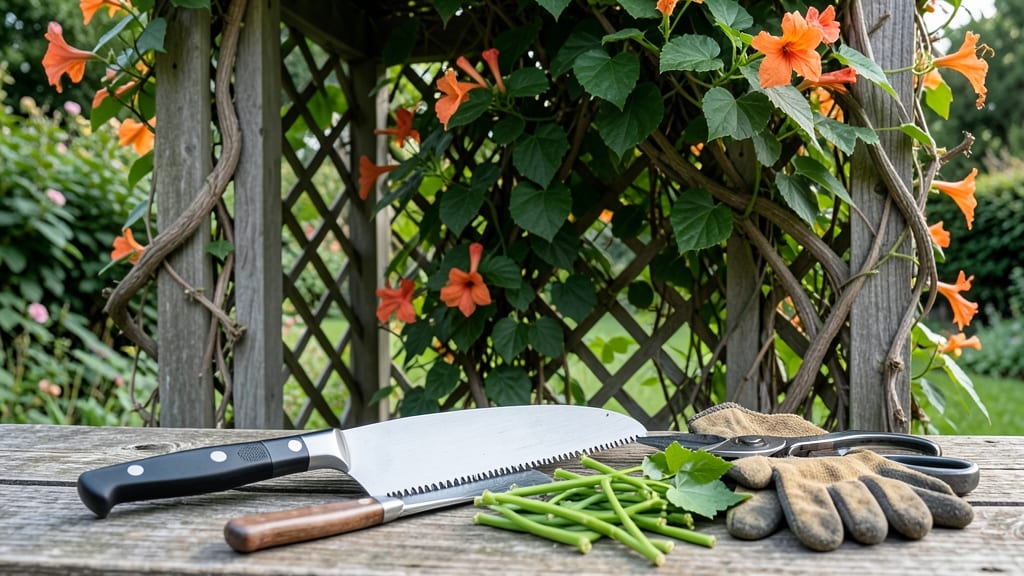
Dormant season pruning transforms your trumpet vine from a tangled mess into a nonstop summer bloom machine. 🌿 I've learned that the right cuts in late winter or early spring—before buds swell—mean vibrant orange-red flowers from June to frost, not a leggy, sparse vine that barely flowers.
The key is timing, technique, and a little strategic cutting to encourage new growth where you want it.
You'll need just three tools: sharp pruning shears for clean cuts, gloves (trumpet vines have thorns), and disinfectant to prevent disease spread between cuts. The process takes about 30 minutes for an established vine, and the payoff is immediate—thicker stems, more blooms, and better air circulation to keep pests away.
I always prune on a dry day when the plant is dormant but the ground isn't frozen yet.
Start by removing dead, diseased, or crossing branches first—they're the easiest to spot and the most important to eliminate. Then cut back last year's flower stems to just above a leaf node, which encourages new growth from that point.
For overly vigorous vines, you can even reduce the main stems by one-third to focus energy on flowering rather than sprawling. The goal is to shape the vine while keeping it strong.
Here's the secret: trumpet vines bloom on new wood, so aggressive pruning in winter won't hurt your flowers—it'll actually improve them. Just avoid cutting into old, woody stems that feel rock-hard, as those won't regrow.
With proper pruning, you'll see fresh green shoots within 4-6 weeks, and by midsummer, your vine will be covered in blooms. The best part? This method works for both ground covers and trellised vines alike.
📚 In This Guide
- What you need
- Instructions
- Tips and common mistakes
- Wrapping up and next steps
What you need
- ● Pruning shears: Bypass pruners (sharp, 6-8" blades) for clean cuts on smaller stems. Anvil pruners (avoid for trumpet vines—they crush stems). Quantity: 1 pair.
- ● Loppers: Bypass loppers (20-24" handles) for thicker stems (½"–1.5" diameter). Quantity: 1 pair.
- ● Pruning saw: Curved-tooth handsaw (for stems >1.5" thick). Quantity: 1.
- ● Gloves: Heavy-duty gardening gloves (cut-resistant, long cuffs) to protect from thorns and sap. Quantity: 1 pair.
- ● Disinfectant: 70% isopropyl alcohol or bleach solution (1 part bleach to 9 parts water) to sterilize tools between cuts. Quantity: Small spray bottle or rag.
- ● Trash bags: Heavy-duty contractor bags (30+ gallon) for debris. Quantity: 2–3.
- ● Ladder: Sturdy aluminum or fiberglass ladder (extendable if vine is tall). Quantity: 1 (if needed).
- ● Rubbing alcohol: For cleaning sap off tools and skin.
- ○ Pruning sealant: Optional for large cuts (e.g., Tanglefoot Tree Wound Pruning Seal), but not required for trumpet vines.
- ● Marking twine: To flag stems for removal (if planning a complex prune).
- ● Safety glasses: Protect your eyes from debris.
Step-by-step guide to pruning trumpet vines in dormant season
Here's how I transform vigorous trumpet vines into a lush, blooming powerhouse—no guesswork involved.
✂️ Step 1: Time Your Pruning for Maximum Regrowth
Prune trumpet vines (Campsis radicans) during late winter to early spring, just as new buds begin to swell but before active growth starts. This timing ensures you remove dead wood while stimulating fresh, vigorous growth for the coming season. I wait until after the last frost in my zone (around mid-March)—cold snaps can damage tender new shoots.
Look for shriveled, brown stems that died back last year and plump, green buds signaling new growth. Cut back one-third to one-half of the plant's total volume in the first year, then gradually reduce by 10-15% annually to maintain shape. Never prune into old wood—you'll sacrifice next year's blooms.
🪴 Step 2: Use the Right Tools and Technique
Grab clean, sharp pruning shears (sterilized with rubbing alcohol) and loppers for thicker stems. Trumpet vines develop woody, thick branches over time, so loppers prevent crushing. I make 45-degree cuts just above a bud or lateral branch—this encourages outward growth rather than a single dominant stem.
Remove dead, diseased, or crossing branches first. Crossed branches compete for nutrients and create weak points where pests can enter. For thick stems, cut 1-2 inches above a bud and avoid leaving stubs—they rot and attract insects. If a branch is completely dead, cut it back to the main trunk or a healthy lateral.
☀️ Step 3: Shape for Airflow and Sunlight Access
Trumpet vines thrive with full sun (6+ hours daily) and good airflow to prevent fungal diseases like powdery mildew. Step back after pruning and visualize sunlight paths—remove any inward-growing branches that block light from reaching the center of the plant. Aim for an open, vase-like shape that lets air circulate freely.
I focus on three main structural branches as the plant's backbone. These should radiate outward from the base at wide angles (45-60 degrees). Thin out suckers (shoots growing from the base) unless you're propagating—these drain energy from the main plant. Use your shears to trim back long, leggy growth by one-third to encourage bushier flowering.
💧 Step 4: Post-Pruning Care for Strong Recovery
Water deeply right after pruning to help the plant recover. Trumpet vines have deep taproots, so soak the soil to 12 inches deep—this encourages root growth before new shoots emerge. Avoid fertilizing immediately; the plant needs 4-6 weeks to heal before it can efficiently use nutrients.
Monitor for new growth in 3-4 weeks. Healthy shoots will be bright green and firm to the touch. If you see yellowing leaves or wilting, reduce watering slightly—overwatering after pruning can lead to root rot. Mulch around the base with 2-3 inches of organic mulch (like shredded bark) to retain moisture and regulate soil temperature.
⏰ Step 5: Maintain Through the Growing Season
Once blooms appear, deadhead spent flowers by cutting back to the nearest leaf or bud. This redirects the plant's energy into more flowers rather than seed production. I repeat this every 2-3 weeks throughout the summer to keep the vine in peak bloom mode.
Watch for new suckers at the base—these are the vine's way of spreading. If you want to contain the plant, snip them off at the base with clean shears. By late fall, let the vine go dormant naturally. You'll know it's ready when leaves turn yellow and drop. No winter pruning—wait until next dormant season to repeat the process.
Tips & tricks for perfect trumpet vine pruning
These pro strategies will help you transform your trumpet vine into a blooming beauty without the guesswork.
Timing is Everything: The late winter to early spring window is critical—this is when trumpet vines are dormant but just beginning to show life. I've learned the hard way that pruning too early (before buds swell) removes potential growth, while waiting too late risks encouraging new shoots that can't survive late frosts. Check your local frost dates and aim for that mid-March sweet spot in most zones. If you miss this window, wait until after the last frost before attempting any cuts.
Tool Selection Matters: Don't underestimate the importance of sharp tools! Dull pruning shears create jagged cuts that heal poorly and invite disease. I sterilize my tools with rubbing alcohol between cuts on different plants to prevent spreading pathogens. For thicker stems, loppers are a game-changer—they prevent crushing and give you the leverage needed for clean cuts. Remember, the 45-degree angle above a bud isn't just aesthetic—it directs growth outward rather than inward.
Visual Cues for Proper Pruning: When cutting back that one-third to one-half of the plant's volume in the first year, look for the plant's natural growth pattern. Healthy buds are plump and green, while dead wood is shriveled and brown. For thick stems, make your cut 1-2 inches above a bud—this ensures new growth emerges from a strong point. If you're unsure whether a branch is dead or dormant, make a small scratch with your thumbnail. Dead wood won't have any green underneath, while dormant wood might show a thin green layer.
Post-Pruning Recovery Strategy: That deep watering right after pruning isn't just about hydration—it's about signaling to the plant that it's safe to begin new growth. The 12-inch deep soak encourages root expansion before shoots appear. I've found that adding 2-3 inches of organic mulch after watering helps maintain consistent soil moisture and temperature, which is especially important during those first 3-4 weeks of new growth. This mulch layer also suppresses weeds that compete with your vine for nutrients.
Pro Tips for Trumpet Vine Pruning
- These pro strategies will help you transform your trumpet vine into a blooming beauty without the guesswork.
- Timing is Everything: The late winter to early spring window is critical—this is when trumpet vines are dormant but j...
- Tool Selection Matters: Don't underestimate the importance of sharp tools! Dull pruning shears create jagged cuts tha...
Frequently asked questions
Got questions about keeping your trumpet vine in top shape?
Here are answers to the most common concerns—so you can prune with confidence and enjoy those vibrant blooms all season long!
When is the best time to prune a trumpet vine?
The ideal time is late winter or early spring before new growth starts (dormant season). This encourages strong, healthy blooms for summer. Avoid pruning in fall—it can stimulate tender growth that won’t survive winter frost. For aggressive vines, a light summer trim (after flowering) can help control sprawl.
Can I prune trumpet vine in winter if it’s already dormant?
Yes! Dormant season (when the vine has no leaves and before buds swell) is the perfect window for pruning. Cold snaps won’t harm the plant, but avoid cutting back too aggressively—never remove more than ⅓ of the vine in one go. Wait until temps stabilize above freezing for cleaner cuts.
What if my trumpet vine doesn’t bloom after pruning?
Missing blooms often mean over-pruning or cutting back too late in spring. Focus on removing only dead, diseased, or crossing branches—never trim flower buds! If the vine is young, give it a year to establish roots before expecting heavy blooms. Fertilize in early spring to boost growth.
Do trumpet vines need pruning every year?
Not always! Mature, healthy vines can go 2–3 years between prunes, but light maintenance (removing deadwood or leggy growth) helps. Overly vigorous vines may need annual pruning to prevent them from smothering nearby plants. Observe your vine’s growth—if it’s thriving, skip the shears!
What if my trumpet vine grows too aggressively?
Trumpet vines are fast growers, so regular pruning keeps them in check. Trim back long, unruly stems in late winter or summer to redirect energy. For container-grown vines, prune more frequently to control size. Pro tip: Train the vine on a trellis or fence to guide its growth naturally!
Wrapping up and next steps
Pruning your trumpet vine during dormancy isn’t just about tidying up—it’s the secret to vibrant, long-lasting blooms all summer long! 🌸 By following the right techniques, you’ll encourage healthier growth, better airflow, and a showstopping display of flowers.
Now that you’re armed with the know-how, grab those pruners and get to work!
Ready to transform your vine into a lush, blooming masterpiece? Start by marking your calendar for next year’s dormant season cuts—consistency is key! And if you’re eager to dive deeper, explore advanced pruning tips or join gardening forums to swap stories with fellow plant enthusiasts. Happy pruning!