
Pruning
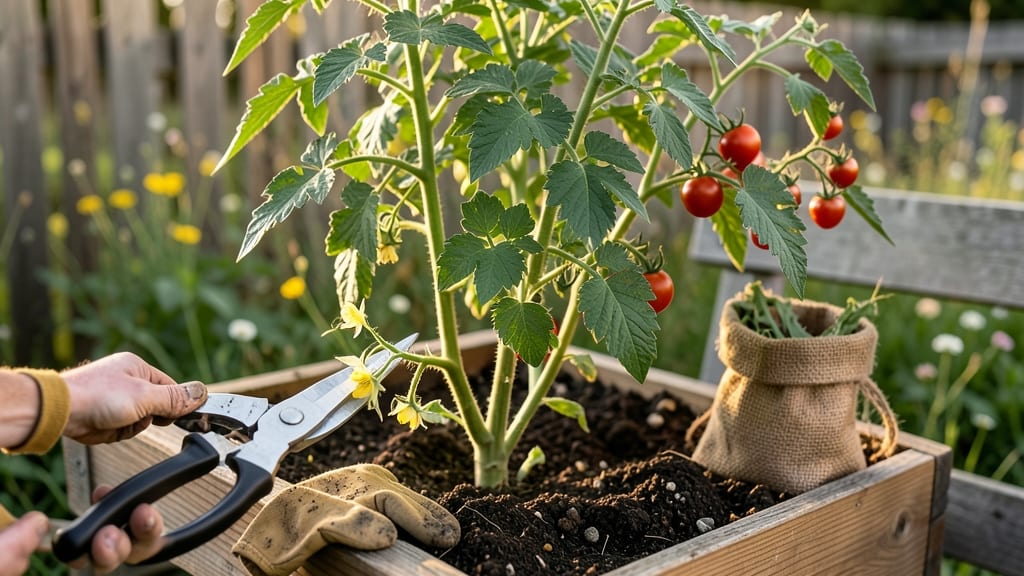
Pruning tomato plants transforms a tangled mess into a harvest machine—just watch a video of pruning tomato plants for proof. ✂️ I used to skip it—until I saw my neighbor’s plants sagging under 50-pound tomatoes while mine barely ripened. The difference? Strategic cuts that redirect energy to fruit, not leaves.
You’ll need sharp bypass pruners, gloves (tomato sap stains!), and a sunny morning for best visibility. Focus on three key cuts: removing suckers, thinning crowded stems, and opening the plant’s center for airflow. Each cut takes seconds but adds weeks to your harvest season.
By summer’s end, you’ll have beefier stems, fewer diseases, and tomatoes so heavy they’ll need stakes. The plants won’t just survive—they’ll thrive, producing fruit until frost. No more sad, spindly vines struggling to support a single tomato.
Works for indeterminate varieties (like ‘Sungold’) and even small-space growers. Here’s exactly where—and when—to make each cut for maximum impact.
📚 In This Guide
- What you need
- Instructions
- Tips and common mistakes
- Wrapping up and next steps
What you need
- ● Pruning shears (bypass or anvil type) – Choose sharp, sterilized shears (7- to 10-inch blades) to avoid damaging stems or spreading disease. (1 pair)
- ● Garden gloves – Opt for durable, nitrile-coated gloves (size medium/large) to protect your hands from thorns and dirt. (1 pair)
- ● Disinfectant (rubbing alcohol or bleach solution) – Clean shears between cuts to prevent bacterial/fungal spread. (small bottle)
- ● Tomato cages or stakes – If your plants aren’t already supported, use 5- to 6-foot tall cages or stakes (2-3 per plant) to train vines upward. (as needed)
- ● Twine or plant ties – 3- to 4-foot lengths of soft twine or Velcro ties to secure vines to supports. (1-2 rolls)
- ● Hand pruners (smaller than shears) – For delicate trimming in tight spaces. (1 pair)
- ● Garden spray bottle – Fill with water or a copper fungicide to mist cuts and deter disease. (8-16 oz)
- ● Mulch (straw or shredded leaves) – Spread around the base to retain moisture and suppress weeds. (1-2 bags)
- ● Camera or smartphone – Capture your pruning progress for a before-and-after video! (1 device)
Step-by-step guide to pruning tomato plants for maximum yield
Here’s how I prune tomatoes to boost fruit production—no guesswork, just proven techniques.
✂️ Step 1: Identify and Remove Suckers Early
Suckers are the small shoots that grow in the "V" between the main stem and a branch. These compete with your fruit for energy, so I remove them every 5-7 days starting when plants reach 12-18 inches tall. Use clean, sharp pruners or your fingers to pinch them off at the base—don’t leave a stub, or it’ll regrow.
I focus on the lower third of the plant first, where suckers appear most aggressively. If you wait too long, those little shoots turn into thick stems that steal nutrients from your tomatoes. Watch for new growth in the leaf axils—those are your next targets.
☀️ Step 2: Prune for Airflow and Sun Exposure
Once plants hit 3-4 feet tall, I step back to assess sunlight penetration. Remove any leaves shading the fruit clusters, especially on the lower stem where early tomatoes form. Aim to keep the plant’s interior open, with 6-12 inches between leaves on the main stem.
Never remove more than 25% of the foliage at once. You’ll see new growth slow temporarily, but the plant redirects energy to fruit production. I always leave a few leaves above each cluster to protect developing tomatoes from sun scald.
🌿 Step 3: Train the Main Stem and Lateral Branches
Determinate tomatoes stop growing at a set height, but indeterminate varieties keep climbing. For these, I tie the main stem to a sturdy stake or trellis and prune all side shoots below the first flower cluster. This forces energy upward to produce more fruit.
For determinate types, I let them bush out naturally but still remove suckers. The key is balance—too much pruning stresses the plant, while too little leads to crowded, disease-prone foliage. I stop pruning when plants reach 5-6 feet tall or when flowers appear on new growth.
⏰ Step 4: Adjust Pruning as Fruit Develops
When tomatoes start forming, I shift focus to protecting the fruit. Remove any leaves touching the soil to prevent rot, and trim back foliage that shades clusters. I also pinch off the terminal bud (the topmost growth point) on indeterminate plants when they reach 6 feet tall—this triggers more flowering on lower stems.
Watch for signs of stress: yellowing leaves signal over-pruning, while excessive new growth means you’re not aggressive enough. The goal is to keep the plant’s energy flowing to the fruit, not its leaves. I always prune in the morning so wounds have time to heal before evening moisture.
🪴 Step 5: Clean Up and Prevent Disease
After harvest season, I cut back all remaining foliage to 6 inches above ground level and remove all plant debris. This prevents fungal spores from overwintering and infecting next year’s crop. I sterilize my pruners with rubbing alcohol between cuts to avoid spreading disease.
For container-grown tomatoes, I also remove any roots circling the pot’s edge—these compete with the main stem. The cleaner the plant, the healthier it stays. I compost all pruned material unless it shows signs of disease, in which case I burn it.
Tips & tricks for pruning tomato plants like a pro
Tomato pruning isn't just about cutting back—it's about strategic growth management. Here's what I've learned after years of trial and error in my garden.
Timing is Everything: The 5-7 day interval for removing suckers is non-negotiable for indeterminate varieties. I've found that waiting longer than a week lets those little shoots grow into thick stems that compete with your fruit for nutrients. For determinate types, focus on suckers until they reach 3-4 feet tall—after that, they'll naturally stop growing.
Visual Cues for Pruning: When assessing sunlight penetration in Step 2, look for shadows cast by leaves onto fruit clusters. If you see any shading, those leaves need to go. I also check for leaf spacing—aim for about 6-12 inches between leaves on the main stem. This spacing creates that perfect airflow we need for healthy plants. Think of it like creating a mini greenhouse environment for your tomatoes.
Equipment Matters: Never use dull pruners—clean, sharp tools make all the difference. I sterilize my pruners with rubbing alcohol between cuts to prevent disease spread. For container-grown tomatoes, I also keep a small pair of scissors handy to trim any roots circling the pot's edge. This simple habit has saved my container plants from root-bound stress multiple times.
Seasonal Adjustments: In hot climates, you might need to prune more aggressively to prevent disease, while cooler climates can handle slightly more foliage. I adjust my pruning schedule based on local conditions—always erring on the side of caution when humidity is high. The goal is to keep your plant healthy enough to produce fruit without becoming stressed.
Pro Tips for Video Of Pruning Tomato Plants
- Tomato pruning isn't just about cutting back—it's about strategic growth management. Here's what I've learned after y...
- Timing is Everything: The 5-7 day interval for removing suckers is non-negotiable for indeterminate varieties. I've f...
- Visual Cues for Pruning: When assessing sunlight penetration in Step 2, look for shadows cast by leaves onto fruit cl...
Frequently asked questions
Got questions about pruning tomato plants? You’re not alone! Here are answers to the most common queries—whether you're a first-time gardener or just looking for a refresher.
When is the best time to start pruning tomato plants?
Prune indeterminate tomato plants (like cherry or beefsteak varieties) when they’re 6–12 inches tall, focusing on removing suckers (side shoots in the leaf axils). For determinate varieties (bush tomatoes), pruning is usually unnecessary—they produce fruit without shaping. Start early to encourage strong vine growth!
What if I accidentally prune too much?
Don’t panic! Over-pruning can stress plants, but they’re often resilient. If you’ve trimmed too aggressively, stop immediately and water deeply. Focus on healthy leaves (avoid yellow or spotted ones) and let the plant recover. Over time, it’ll bounce back—just slow down next time!
Do I need to prune determinate tomato plants?
Not usually! Determinate tomatoes (like Roma or Early Girl) grow in a compact shape and produce fruit along the stem. Pruning them can reduce yield. However, you can lightly remove suckers or dead/diseased leaves to improve airflow. Think of them as “low-maintenance” compared to indeterminate varieties.
What’s the deal with suckers—should I always remove them?
Yes, but with a strategy! Suckers are the small shoots growing between the main stem and branches. Removing them redirects energy to fruit production and prevents overcrowding. Pinch them off early (when they’re pea-sized) for cleaner cuts. Pro tip: Use your thumb and forefinger for a quick snap—no tools needed!
Can I prune tomato plants too late in the season?
Pruning too late (within 4–6 weeks of harvest) can stunt fruit development since the plant focuses on new growth instead of ripening. If you’re behind, stop pruning and prioritize watering and fertilizing. Late-season pruning is only for removing dead or diseased foliage—never healthy branches.
Wrapping up and next steps
Pruning your tomato plants might seem intimidating at first, but with the right technique—like the step-by-step cuts shown in the video—you’re well on your way to a bountiful, healthier harvest! 🌱 Remember, consistency is key, and even small adjustments can make a big difference.
Now that you’re armed with knowledge, grab those shears and give your plants the TLC they deserve.
Ready to take it further? Experiment with different pruning styles or even try growing heirloom varieties next season—your garden (and taste buds) will thank you! 🍅