
Pruning
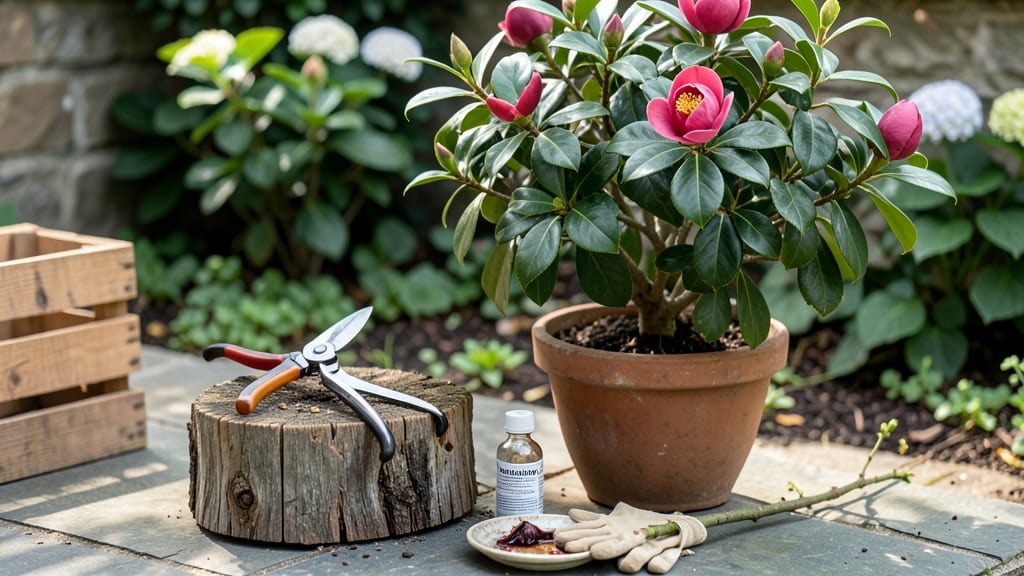
To prune a camellia bush, do it right after blooming in late spring or early summer, as cutting too early can remove next year's flower buds. Light shaping is possible in late summer, but avoid heavy pruning during dormancy or active growth periods.
Timing matters because camellias form flower buds on old wood, meaning last year's growth produces this year's blooms. 🌸 Cutting back too soon after winter risks removing those buds before they open, while pruning in late summer allows for minor adjustments without disrupting the flowering cycle.
I've seen many gardeners accidentally prune in late winter and end up with sparse blooms the following season—always wait until after the flowers fade completely.
For best results, use sharp bypass pruners and make cuts at a 45-degree angle just above a leaf node or outward-facing bud. This encourages healthy regrowth and maintains the bush's natural shape. Different camellia varieties have slight variations in bloom times, so observe your specific plant's cycle before pruning.
💡 In This Article
- Camellia Flowering Cycle and Pruning Timing
- Step-by-Step Pruning Guide for Camellia Bushes
Camellia flowering cycle and pruning timing
Camellias are unique because they form flower buds on old wood—meaning last year's branches produce this year's blooms. This biological quirk explains why timing matters so much. When you prune in late winter or early spring, you risk cutting off next year's flower buds before they even open.
The buds typically appear in late summer or early fall after the current season's blooms fade, so pruning too early disrupts this natural cycle.
The ideal window is late spring to early summer, right after the flowers have fully bloomed and begun to fade. For most varieties, this falls between May and June in temperate climates.
At this stage, the plant has already set its buds for next season, and you can safely remove spent flowers and shape the bush without harming future blooms. Camellias like Camellia japonica and Camellia sasanqua follow slightly different bloom cycles, so observe your specific plant's pattern.
Improper timing can lead to several problems. Pruning during dormancy (winter) or active growth (early spring) stresses the plant and may result in fewer blooms or stunted growth.
The buds that form in late summer need those old branches to thrive, so cutting them back too soon removes the plant's foundation for next year's flowers.
Even light pruning in late summer is better than heavy cuts during the wrong season—it allows the plant to recover and set buds without major disruption.
What most gardeners don't realize is how temperature and daylight influence bud formation. Camellias respond to shorter daylight hours in late summer, triggering bud development. If you prune heavily during this period, you delay or reduce the number of buds that form.
The plant's energy shifts from growth to recovery, leaving fewer resources for flower production. This is why even minor pruning should be done with care—every cut affects the plant's ability to bloom.
Consider this example: A Camellia japonica bush in full bloom in April will set its buds for next year by July. If you prune in March, you might remove up to 50% of next year's potential blooms.
That's why waiting until after the flowers fade—usually 6-8 weeks post-bloom—gives the plant time to complete its natural cycle before any shaping occurs.
For varieties like Camellia sasanqua, which bloom in late fall or winter, the timing shifts slightly. These plants often bloom on new wood, so they can tolerate light pruning in late winter without severe consequences.
However, even these varieties benefit from post-bloom pruning in early spring to maintain shape and encourage healthy growth for the next cycle.