
Pruning
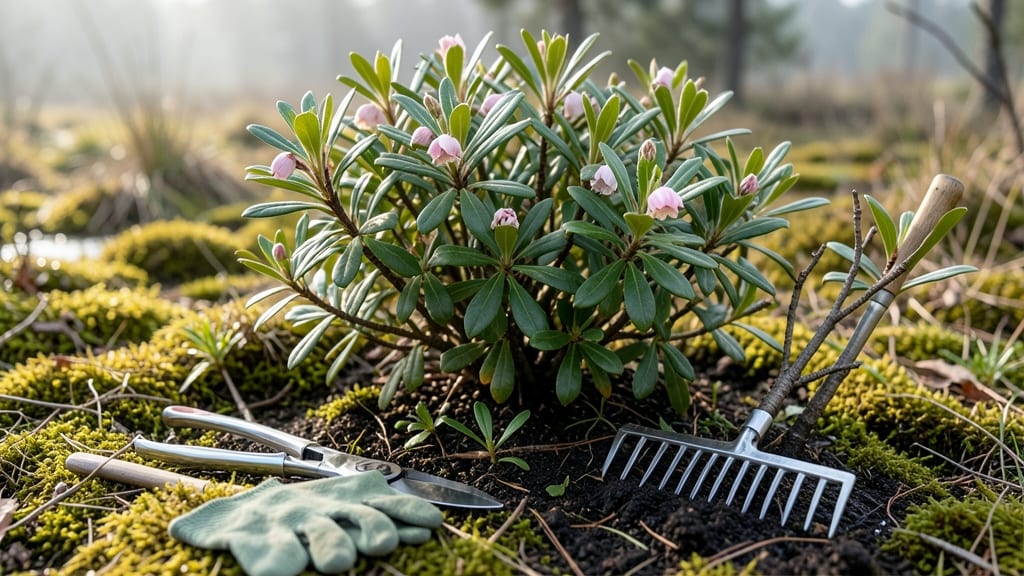
To prune Andromeda bushes, time it right after flowering in late spring to early summer, cutting back up to one-third of the old growth. Avoid winter pruning to prevent cold damage, and only do light shaping in early spring if necessary.
Andromeda bushes bloom in late spring, and pruning right after flowering gives them the best chance to recover before winter. 🌿 This timing aligns with their natural growth cycle, encouraging fresh foliage and vibrant blooms for next season.
The key is to avoid heavy cuts in winter, as the plant's dormant buds are vulnerable to cold stress, which can lead to dieback. Light shaping in early spring helps maintain the bush's shape without disrupting its growth pattern.
When you prune at the right time, you're essentially giving your Andromeda a fresh start. The plant will respond by producing new growth from the base, resulting in a fuller, healthier appearance.
Always use clean, sharp pruners to make precise cuts just above a leaf node or bud. This encourages the plant to direct its energy toward new growth rather than healing ragged cuts.
💡 In This Article
- Andromeda Pruning Timing Explained
- Step-by-Step Andromeda Pruning Guide
Andromeda pruning timing explained
Andromeda bushes follow a precise growth cycle that dictates the best pruning window. After their stunning late spring blooms (typically May-June), the plant enters a recovery phase where it prepares for new growth.
Pruning at this stage—right after flowering—removes spent blooms and up to one-third of old growth while leaving the plant with enough energy reserves to regenerate. This timing aligns with the plant's natural hormonal shifts, where auxin production (a growth hormone) peaks to stimulate new shoots from the base.
The biological reason behind avoiding winter pruning is rooted in cold stress. Andromeda bushes are evergreen but still vulnerable to dieback when cut during dormancy (December-February). Cold temperatures cause the plant's vascular system to slow down, making it difficult to heal wounds.
Heavy cuts in winter can expose tender new growth to freezing air, leading to brown, crispy foliage that never recovers. The plant's buds are also most sensitive during this period, as they're preparing to break dormancy in spring.
Seasonal temperature shifts play a critical role in recovery. Spring pruning (March-April) is only for light shaping because the plant is still recovering from winter. By late spring, soil temperatures typically reach 55-60°F, signaling the plant to ramp up photosynthesis and new growth.
This warmer environment helps the plant heal cuts faster and directs energy toward producing fresh foliage and next year's flower buds. The contrast between winter's dormancy and spring's active growth explains why timing matters so much.
Here's what happens if you prune at the wrong time: Cutting in summer (July-August) stresses the plant by removing foliage it needs for photosynthesis during peak growth. Winter cuts, as mentioned, risk dieback.
The ideal window—immediately after flowering—gives the plant just enough time to recover before winter sets in, creating a balanced growth cycle that prevents overgrowth or sparse blooms.
Consider this comparison: A well-timed prune in late spring is like giving your Andromeda a haircut right after a workout—it removes the old, tired growth while leaving room for fresh, strong regrowth.
In contrast, pruning in winter is like cutting hair during a cold snap; the plant can't heal properly, and the results are often patchy or dead. The key is working with the plant's natural rhythms, not against them. 🌱
For visual cues, look for the plant's natural growth patterns. Healthy Andromeda branches grow outward from the center, creating a dense, rounded shape. After flowering, you'll notice some stems becoming woody or sparse—these are prime candidates for removal.
The goal is to maintain that lush, compact form while encouraging new growth from the base rather than the tips.