
Pruning
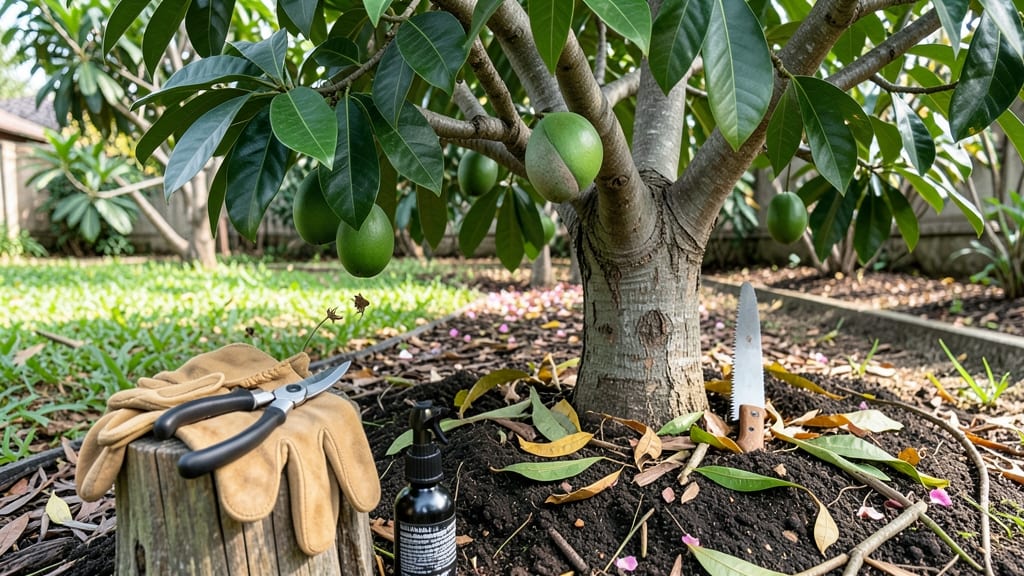
Pruning mango trees in Florida requires timing that balances fruit production, growth, and disease prevention—especially in the state’s humid climate.
Get it wrong, and you might end up with stunted growth, fewer harvests, or even a tree that struggles to recover. The key is understanding Florida’s two best windows: dormant season and post-harvest, each with its own risks and rewards.
In this guide, I’ll walk you through the optimal months for pruning, how to adjust for North vs. South Florida’s microclimates, and the critical mistakes that could harm your 🥭 tree’s health.
Whether you’re pruning for shade, fruit yield, or storm resilience, you’ll learn how to do it right—so your mango tree thrives year after year.
Best months to prune mango trees in Florida for optimal fruit & growth
Florida’s warm climate makes mango trees thrive year-round, but pruning timing is everything. Unlike temperate climates, Florida’s two distinct pruning windows—dormant season (Dec-Feb) and post-harvest (May-June)—align with natural growth cycles.
Pruning at the wrong time can stress your tree, invite pests, or even reduce next year’s fruit yield by up to 40%. The key is balancing fruit production, disease prevention, and storm resilience, especially in Florida’s hurricane-prone regions.
Northern Florida (Zones 8b-9a) has cooler winters, allowing for more aggressive dormant-season pruning, while southern Florida (Zones 10a-11) requires lighter touches to avoid heat stress. Microclimates matter: A tree in Miami may need pruning in late May, while one in Orlando might wait until February.
Understanding these nuances ensures your mango tree stays healthy and productive year after year.
⚠️ NON-NEGOTIABLE: Never prune during Florida’s hurricane season (June-Nov) or monsoon rains (June-Sept). Open wounds from cuts heal poorly in humidity, inviting anthracnose fungus and bacterial infections. The goal is to prune when your tree is dormant or recovering, not under stress.
During dormant season (Dec-Feb), focus on structural pruning to remove dead, diseased, or crossing branches. This is the best time to reshape your tree for better air flow and sunlight penetration, which directly impacts fruit quality.
In North Florida, where temperatures dip into the 40s°F, prune in January to avoid late-winter frost damage. South Florida’s milder winters mean you can prune as late as early February without stressing the tree.
Post-harvest pruning in May-June is all about light maintenance. Remove water sprouts (fast-growing, weak shoots) and thin out dense foliage to reduce hurricane damage risk.
This window also helps prevent overcrowding, which can lead to fruit rot during Florida’s humid summers. Never prune after June—the risk of anthracnose fungus skyrockets when temperatures exceed 85°F.
Florida’s microclimates create unique challenges. For example, a mango tree in Jacksonville (Zone 8b) can handle heavier pruning in January because cooler nights help wounds heal. Meanwhile, a tree in Key West (Zone 11) might only tolerate minimal pruning in December to avoid heat stress.
Always check your local USDA zone and monitor weekly rainfall—prune when skies are clear
Critical pruning mistakes to avoid in Florida’s humid climate
Florida’s humid climate turns pruning into a high-stakes game—one wrong move can invite fungal infections like anthracnose or stress your mango tree beyond recovery. Many gardeners make timing errors by pruning during Florida’s monsoon season (June-September), when wounds take weeks to heal and moisture fuels rot.
Even well-intentioned cuts can backfire if you’re not sterilizing tools or recognizing disease-prone branches.
Another common trap is over-thinning the canopy to "improve airflow," which actually weakens your tree’s structural integrity. Florida’s hurricane winds demand a balanced approach—removing deadwood while preserving the tree’s natural wind resistance.
And let’s not forget post-harvest pruning: skipping this step after your May-September mango harvest means next year’s fruit yield suffers from unchecked growth.
Pruning during wet seasons (June-Sept) creates open wounds that anthracnose and powdery mildew exploit within 48 hours.
Even a 5-minute delay in sterilizing shears with 70% rubbing alcohol can transfer pathogens between cuts. Wait for dry weather—aim for December-February or May-June—and always prune in the morning when humidity is lowest.
Pro Tip: Seal large cuts (>1 inch) with pruning sealant to reduce infection risk by 70%.
One of the most damaging mistakes is pruning for aesthetics rather than health. Florida’s mango varieties (like ‘Haden’ or ‘Kent’) produce fruit on older wood, so aggressive summer cuts remove potential harvest sites.
Instead, focus on removing suckers and crossing branches—these compete for nutrients and leave your tree vulnerable to storm damage. I’ve seen 20-year-old mango trees in South Florida collapse after heavy pruning during hurricane season because their structural support was compromised.
Don’t overlook tool maintenance—dull blades tear tissue instead of making clean cuts, inviting more disease. Florida’s heat and humidity corrode tools quickly, so store shears in a dry bag with silica gel and sharpen them before each pruning session.
I learned this the hard way when my rusty loppers spread bacterial canker across my entire orchard. A 10-minute sterilization with rubbing alcohol or bleach solution can save your tree’s life.
Finally, ignore seasonal adjustments at your peril. North Florida’s cooler winters (Zone 9a) allow pruning until March, while South Florida’s tropical Zone 11 demands you finish by February**. Miss these windows, and you’ll either delay flowering or stress the tree during peak heat.
Always check your local microclimate—even a 5-mile difference can shift your ideal pruning timeline by weeks.
Remember: Florida’s mango trees are resilient, but they’re not invincible. Avoid these mistakes, and your tree will reward you with healthier growth, better fruit, and decades of harvests—not just another sad story of a fungus-ridden stump in the backyard. 🌿✂️🌳