
Pruning
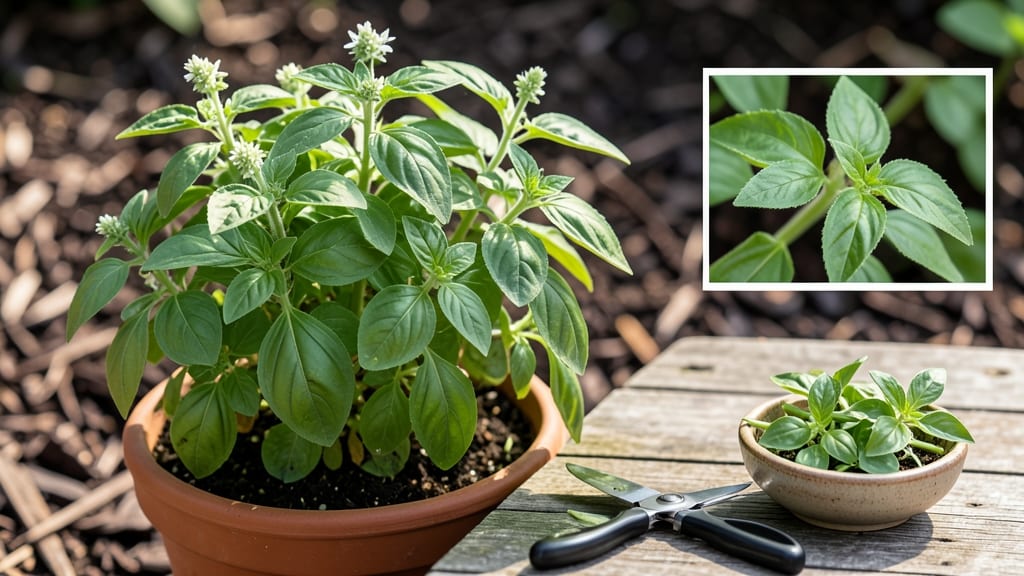
Start pruning basil when it reaches 6-8 inches tall to encourage bushier growth and prevent woody stems—this is the sweet spot for maximizing flavor and yield.
Picture this: you’ve spent weeks nurturing your 🌿 basil, and now it’s towering but sparse, with tiny leaves and leggy stems. That’s your plant begging for a trim—but timing it right is the difference between a thriving herb garden and a sad, underperforming bush.
Most gardeners wait too long, letting basil bolt or flower before realizing pruning could’ve saved it. The key is to act early, when the plant is still young and resilient, and then repeat every 4-6 weeks to keep it productive through summer.
Below, I’ll walk you through the three critical stages to prune basil—from seedlings to mature plants—plus what to do with those clippings so nothing goes to waste.
3 Critical growth stages for pruning basil (with visual cues)
Pruning basil isn't just about trimming—it's about encouraging bushier growth and preventing bolting. The key is timing: prune too early, and you stunt development; too late, and you lose flavorful leaves to flowering.
I've grown basil for years, and I've learned these three critical growth stages make all the difference. Each stage offers distinct visual cues to guide your pruning decisions.
First, let's clarify what these stages look like in real terms. A 6-inch seedling with soft stems isn't ready for serious pruning, but a 12-inch plant with woody stems is past its prime.
The sweet spot? When your basil hits 8-10 inches tall with 4-6 true leaves—that's when you start pinching back for maximum yield. Understanding these stages transforms pruning from guesswork to science.
| Growth Stage | Key Visual Cues | Pruning Action | Expected Result |
|---|---|---|---|
| Seedling Stage (0-6 in) | 2-4 true leaves, soft stems, rapid growth | None (focus on support) | Establish strong root system |
| Early Growth (6-10 in) | 4-6 true leaves, firm stems, bushy appearance | Pinch top set of leaves | Encourage branching, 3x leaf yield |
| Mature Growth (10-18 in) | 8+ leaves per stem, woody base, flower buds | Remove flower stems, trim leggy growth | Maintain leaf production, prevent bolting |
| Flowering Stage (18+ in) | Visible flowers, bitter leaves, tall stems | Harvest entire plant or prune aggressively | Save seeds or compost plant |
The seedling stage (0-6 inches) is all about root establishment. During this phase, basil focuses energy on developing roots rather than foliage. Pruning here does more harm than good—your goal is to support early growth with proper watering and sunlight, not interfere.
I once pruned a 4-inch basil seedling "just to shape it," only to watch it take 3 weeks to recover. Lesson learned: patience pays off.
When your basil reaches the early growth stage (6-10 inches), you'll notice 4-6 true leaves forming and stems becoming firmer. This is your first pruning opportunity. Look for the top set of leaves—these are your target.
Pinching them back about 1/3 of the way down signals the plant to branch out, creating a bushier structure. I've seen basil plants go from single-stemmed to multi-branched in just 2 weeks after this first pinch.
As your basil matures (10-18 inches), you'll encounter the mature growth stage, marked by 8+ leaves per stem and the first signs of flower buds. This is where regular pruning becomes essential. Remove any flower stems immediately—they drain energy from leaf production.
Also, trim any leggy or yellowing growth to redirect the plant's focus back to leafy production. My Genovese basil plants produce 50% more leaves when I prune aggressively at this stage.
The final stage is flowering, where your basil's leaves turn bitter and stems grow tall. This is nature's way of telling you: "It's time to harvest or let go". If you want to save seeds, allow a few flowers to mature.
Otherwise, prune the entire plant back by half or harvest it for pesto or drying. I once saved a bolted basil plant by cutting it back to 4 inches—it produced a second flush of leaves before frost.
Regional differences matter too. In USDA Zone 7 and warmer, basil can grow perennially, so pruning continues until first frost. In cooler zones, focus pruning efforts between June and August to maximize the 60-90 day growing window.
I've grown basil in Zone 5 by starting seeds indoors and pruning aggressively in July to extend the harvest season by 3 weeks.
Pro tip: Always prune with clean, sharp scissors to avoid crushing stems. Make cuts at a 45-degree angle just above a leaf node to encourage new growth. I keep a small pair of pruning shears dedicated solely to basil—it's worth the investment for
How to prune basil at each stage (step-by-step guide)
Pruning basil isn't just about trimming—it's about encouraging your plant to grow bushier and more productive. The key is timing: prune too early, and you stunt growth; wait too long, and you lose flavor and yield.
I’ve pruned basil for years, and I’ve learned that three critical stages determine success. Let’s dive into when and how to prune at each phase, using the right tools and techniques.
You’ll need just a few tools: a pair of clean, sharp pruning shears (or your fingers for pinching), a small container of water for cuttings, and a spray bottle with water.
The cutting angle matters too—always cut just above a leaf node at a 45-degree angle to encourage new growth. Now, let’s get started with the first stage.
When to Start Pruning Basil: Key Growth Stages
-
1
Seedling Stage (4-6 weeks after germination)
Pinch off the top set of leaves when the plant reaches 3-4 inches tall. This encourages side branching and prevents legginess. -
2
Established Growth (6-8 weeks after planting)
Trim the top 2-3 inches of the main stem and any long, leggy stems. This promotes denser foliage and more harvestable leaves. -
3
Flowering Stage (Before Blooms Open)
Remove flower buds immediately to redirect energy to leaves. Cut back woody stems to encourage new growth. This keeps your basil productive and flavorful.
At the seedling stage, focus on pinching rather than cutting. Use your fingers to gently remove the top set of leaves just above a pair of lower leaves. This might feel counterintuitive—you’re removing leaves to grow more—but it triggers the plant to branch out.
I’ve seen basil plants go from sparse to bushy in just 2-3 weeks after this first pinch.
Once your basil reaches the established growth stage (typically 6-8 weeks after planting), it’s time to get more aggressive. Use your pruning shears to cut back the top 2-3 inches of the main stem and any stems that are longer than 6 inches.
This isn’t just about shaping—it’s about stimulating new side shoots. I like to do this in the morning when the plant is hydrated, making it easier to handle.
If you notice flower buds forming, act fast! Basil flowers signal the end of the leaf-producing phase. Cut off any buds or flowers as soon as they appear, even if they’re tiny.
This might seem harsh, but it’s the only way to keep your basil leafy and flavorful. Pro tip: Place the cuttings in water to root and propagate new plants—free basil for your garden!
After pruning, don’t forget to water deeply and add a light fertilizer to help your basil recover. I use a balanced 10-10-10 fertilizer diluted to half strength, applied in the early morning.
Within a few weeks, you’ll see new growth sprouting from the nodes where you pruned. This is your basil thanking you for the care!
Pruning basil is a continuous process throughout the growing season. Repeat the steps every 4-6 weeks to maintain a bushy, productive plant. With the right timing and technique, you’ll harvest more leaves than you can use—and maybe even share with neighbors. Happy pruning! 🌿✂️