
Pruning
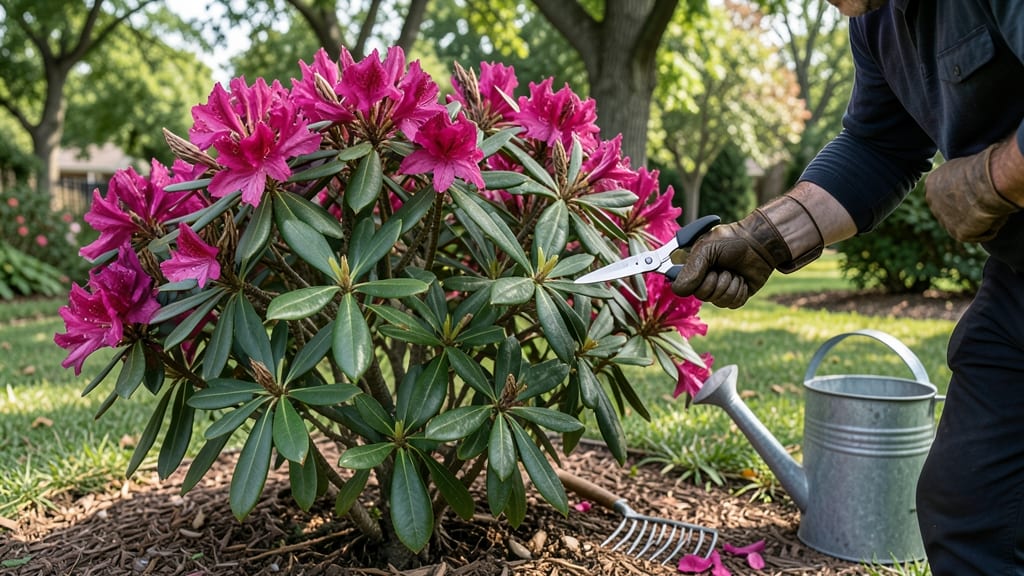
You can prune rhododendrons in summer only under specific conditions—otherwise, it stresses the plant by promoting tender new growth vulnerable to frost and pests. For best results, prune in late winter or early spring, but light cleanup after flowering is acceptable if needed.
Summer pruning is generally discouraged because it triggers rapid, soft growth that won't mature enough to survive fall frost. 🌿 This leaves your rhododendron exposed to cold damage and attracts pests drawn to stressed plants.
The ideal time to prune is when the plant is dormant—late winter or early spring—giving it time to recover before summer heat arrives.
If you must trim in summer, focus only on removing dead, diseased, or crossed branches. Avoid heavy pruning, which can shock the plant and reduce its ability to bloom next season. Always use clean, sharp tools to minimize damage and disinfect cuts to prevent infections.
💡 In This Article
- Why Summer Pruning Damages Rhododendrons
- Safe Summer Trimming Exceptions for Rhododendrons
Why summer pruning damages rhododendrons
Rhododendrons follow a natural growth cycle where summer pruning disrupts their ability to prepare for winter dormancy. When you cut back branches during warm months, the plant responds by producing soft, tender new growth that lacks the woody structure needed to withstand frost.
This new growth typically contains higher moisture content and thinner cell walls, making it more susceptible to freezing temperatures that can cause cell rupture and dieback.
The real danger lies in how this new growth affects the plant's winter hardiness. Rhododendrons rely on a gradual process called hardening off, where they slowly adapt to colder temperatures by increasing sugar concentrations in their cells and thickening cell walls.
Summer pruning cuts this process short, leaving vulnerable shoots exposed to sudden temperature drops. In regions with first fall frost occurring between October and November, this can mean the difference between a healthy plant and one struggling to recover.
Pests and diseases also take advantage of stressed rhododendrons. The fresh cuts from summer pruning create entry points for pathogens like Phytophthora root rot or Botrytis blight, while the tender new growth attracts insects such as lace bugs and spider mites.
These pests thrive in the warm summer conditions and can quickly infest a plant weakened by improper pruning. The plant's natural defenses are compromised during active growth phases, making it particularly vulnerable during this time.
Botanists observe that summer-pruned rhododendrons often exhibit delayed dormancy, where the plant continues growing when it should be entering a rest period. This metabolic imbalance forces the plant to divert energy away from root development and storage carbohydrate production—critical processes for surviving winter.
The result is a plant that enters dormancy weaker than it should be, with reduced energy reserves to sustain itself through cold months.
Consider this comparison: A rhododendron pruned in late winter has 6-8 weeks to recover and harden off before winter, while one pruned in July might have only 2-3 months—often not enough time for complete adaptation.
The plant's growth hormones, primarily auxins and gibberellins, remain active longer, preventing the natural shift to dormancy hormones like abscisic acid that prepare the plant for cold.
Even the timing of flower bud formation is affected. Rhododendrons set next year's blooms on current season's growth. Heavy summer pruning can remove up to 50% of potential flower buds, leading to reduced or absent blooms the following spring.
The plant's energy is redirected toward repairing pruning wounds rather than developing floral structures.