
Planting
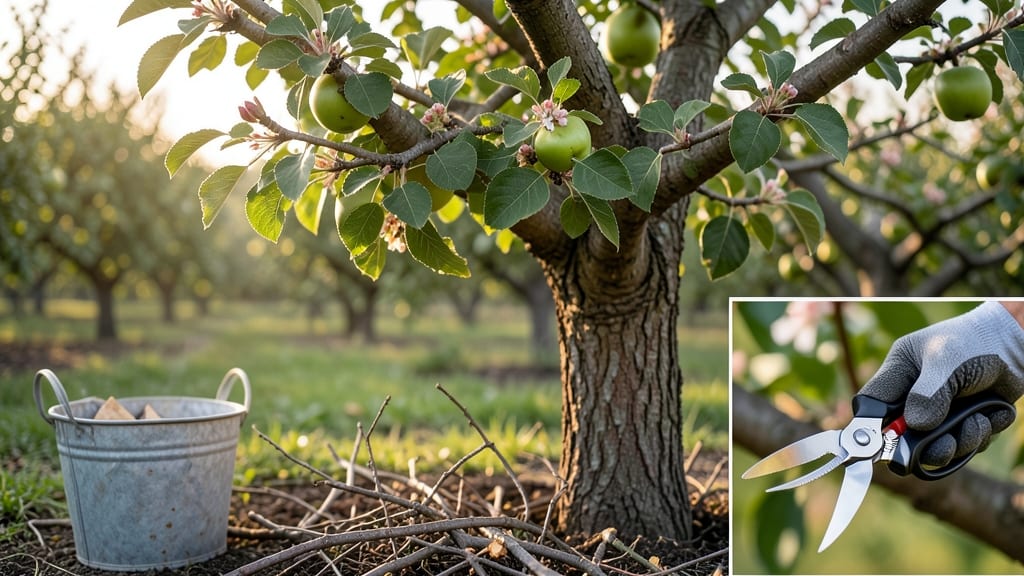
You can prune an apple tree in summer, but it's risky—summer cuts stress the tree, increase disease risk, and may reduce next year's fruit production. Limit trimming to late summer after harvest, focusing only on removing dead or diseased branches.
Summer pruning is a delicate operation because apple trees are most vulnerable during their active growing season.
When you cut branches in summer, you disrupt the tree's natural energy flow, leaving exposed wounds that become entry points for fungal infections like silver leaf disease. 🌳 The tree's immune system is already stretched thin trying to support fruit production, so any additional stress from pruning can weaken its overall health.
Even minimal cuts should be made with sterilized tools and sealed with pruning paste to prevent infection.
If you must prune in summer, focus on corrective trimming—removing only dead, diseased, or crossing branches that pose immediate risks. Avoid heavy pruning or shaping cuts, as these can trigger excessive sap loss and attract pests.
The best summer window is late August to early September, after most fruit has been harvested, giving the tree time to recover before winter dormancy.
💡 In This Article
- Why Summer Pruning Damages Apple Trees
- Safe Summer Apple Tree Trimming Techniques
Why summer pruning damages apple trees
The real danger of summer pruning lies in how it disrupts the apple tree's photosynthesis and sap flow. During active growth, trees rely on a continuous stream of nutrients moving through their vascular system—cutting branches severs this flow, creating what arborists call "wound shock."
This stress forces the tree to divert energy toward healing rather than producing fruit or storing energy for winter. 🌿 In mature trees, this can reduce next year's harvest by up to 30% if pruning is too aggressive.
Summer cuts also leave wounds exposed for months, creating perfect conditions for fungal infections like silver leaf disease (caused by the Chalara fungus). Unlike dormant-season pruning, when wounds quickly seal with callus tissue, summer wounds remain vulnerable to moisture and pathogens.
The tree's natural defenses are weakened by the heat and humidity of summer, making it 10 times more susceptible to infection compared to winter pruning. Even small cuts can become entry points for pests like borers or cankers.
Consider this: A 1-inch diameter branch removed in summer creates a wound area of about 3 square inches. That's a massive opening for moisture to penetrate, especially during summer rains. In contrast, winter pruning lets the tree heal before spring growth begins, minimizing stress.
The key difference is timing—the tree's ability to compartmentalize damage is far more effective when it's dormant rather than actively growing.
Another critical factor is the tree's hormonal balance. Summer pruning disrupts the natural production of auxins, hormones that regulate growth and fruit development. When you remove branches, the tree may produce excessive water sprouts (fast-growing, weak shoots) to compensate, further draining its energy reserves.
These sprouts are particularly common in 'Fuji' and 'Gala' varieties, which are already prone to vigorous regrowth.
The visual difference between summer and winter pruning is striking. Summer cuts often show ragged edges that fail to heal cleanly, while winter pruning results in smooth callus formation within 2-3 weeks.
The contrast in healing speed demonstrates why arborists universally recommend dormant-season pruning for apple trees. Even minimal summer trimming should be approached with extreme caution to avoid long-term damage.
What most gardeners don't realize is how quickly summer stress compounds. A tree pruned in July may show no immediate symptoms, but by September, you might notice yellowing leaves or stunted growth—signs the tree is struggling to recover.
The cumulative effect of heat, moisture, and pruning wounds creates a perfect storm for decline. 🌳 This is why professional orchardists rarely prune apple trees in summer unless absolutely necessary.