
Pruning
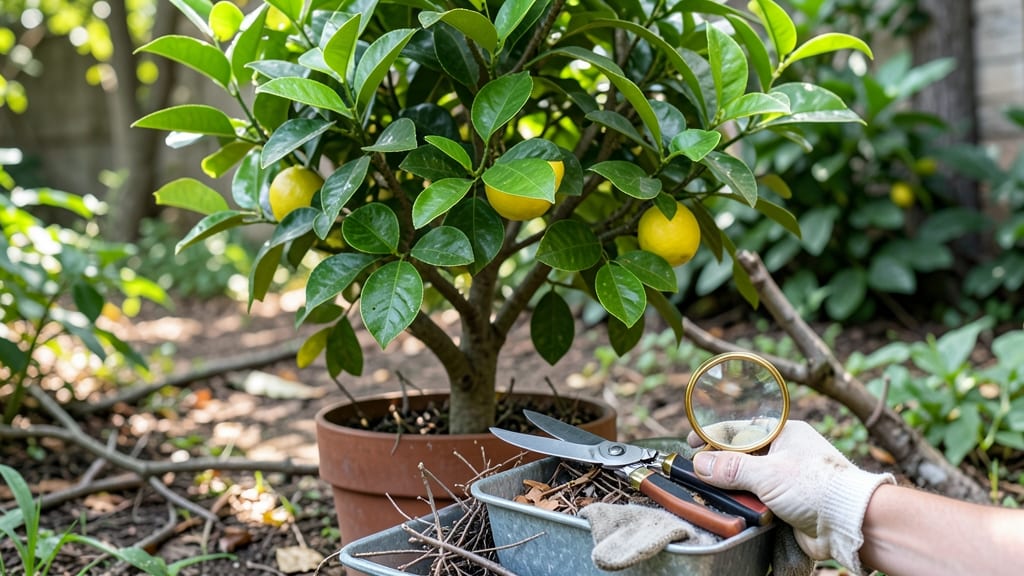
Pruning a potted lemon tree isn’t just about shaping—it’s about unlocking bigger fruit and bushier growth while keeping your tree healthy. 🌿 I’ve pruned mine every spring for three years, and the difference in harvest size is night-and-day.
The key? Timing, clean cuts, and knowing where to stop before you stress the plant.
You’ll need sharp bypass pruners (dull blades tear wood), rubbing alcohol for sterilizing cuts, and a pair of gloves—lemon sap can irritate skin. Grab a small hand saw for thicker branches, and keep a spray bottle of diluted neem oil nearby to prevent infection.
Most importantly, have a bucket ready for trimmings: compost them, not the trash.
Start by removing dead or crossing branches first—these compete for sunlight and nutrients. Then, cut back overly leggy growth to encourage bushier growth, always pruning just above a leaf node (the bump where leaves attach).
For fruit production, thin out crowded branches to let light reach the center of the tree. One rule: never remove more than 25% of the foliage at once—this keeps your tree from going into shock.
After pruning, give your tree a deep watering and hold off on fertilizer for two weeks to let cuts heal. Watch for new growth in 4-6 weeks, and if you see yellowing leaves or sparse blooms, you may have pruned too late in the season.
The best time? Late winter or early spring, just as new buds begin to swell.
📚 In This Guide
- What you need
- Instructions
- Tips and common mistakes
- Wrapping up and next steps
What you need
- ● Pruning shears (bypass or anvil type) – Choose sharp, sterilized shears with a 4- to 6-inch blade for precision cuts. Bypass shears (curved blades) are ideal for clean cuts on tender lemon tree branches.
- ● Disinfectant (70% isopropyl alcohol or bleach solution) – Wipe blades before and after pruning to prevent disease spread. Mix 1 part bleach to 9 parts water for a DIY sanitizer.
- ● Gloves (gardening or cut-resistant) – Protect your hands from thorns and sap. Opt for nitrile-coated gloves for durability.
- ○ Small pruning saw (optional but helpful) – For thicker branches (½-inch diameter or larger). A folding pruning saw with a fine-toothed blade works best.
- ● Clean cloth or paper towels – For wiping sap and debris from tools.
- ● Compost bin or bag – Collect pruned branches for composting (avoid diseased or pest-infested cuts).
- ● Choose the right time – Prune during the tree’s dormant season (late winter/early spring) or after fruiting (summer/fall). Avoid heavy pruning in peak heat.
- ● Assess the tree’s health – Look for dead, diseased, or crossing branches to prioritize. Healthy trees need 1/3 or less of their canopy removed per session.
- ● Water the tree 1–2 days prior – Ensures the tree is hydrated and less stressed during pruning.
- ● Work in good light – Natural light helps you spot branches and cuts clearly.
- ● Hand lens or magnifying glass – For inspecting small branches or buds up close.
- ● Pruning sealant (wound dressing) – Apply to large cuts (>½-inch) to reduce sap loss and infection risk. Use a tree-specific sealant like Tanglefoot Tree Wound Pruning Seal.
- ● Notebook & pen – Sketch your tree’s shape before pruning to guide cuts and track growth.
- ● Lightweight ladder or stool – If your tree is tall (over 5–6 feet), use a stable, 3-legged stool to reach safely.
Step-by-step instructions for pruning a potted lemon tree
Here’s how I keep my lemon tree thriving year-round with precise cuts and seasonal adjustments.
✂️ Step 1: Time Your Pruning for Optimal Growth
Prune your lemon tree in late winter or early spring, just before new growth begins. This is when the tree enters active growth mode and can heal quickly. Avoid pruning in fall or winter—you’ll risk exposing the tree to cold damage while it’s dormant. If you notice leggy growth or overcrowded branches at other times, do light maintenance trims but avoid heavy cuts.
Look for new buds forming along the stems—this is your signal that the tree is waking up. Prune 2-3 weeks before these buds burst open to give the tree time to recover before the growing season kicks in. I always check for small, swollen nodes where leaves meet the stem; these are prime spots for new growth.
✂️ Step 2: Remove Dead, Diseased, or Crossing Branches First
Start by eliminating dead, broken, or diseased branches—these are easy to spot because they’re dry, discolored, or lack leaves. Use sterilized pruning shears to make clean cuts just outside the branch collar (the swollen area where the branch meets the trunk). This prevents infections from spreading to healthy wood.
Next, remove any branches that are rubbing against each other or growing inward. These "crossing branches" compete for sunlight and nutrients, weakening the tree. Cut them back to the nearest outward-facing bud or branch. I like to step back and visualize the tree’s shape—this helps me see which branches are disrupting airflow and light penetration.
✂️ Step 3: Shape the Tree for Balance and Airflow
Lemon trees thrive when they have an open, vase-like shape that allows sunlight and air to reach the center. Aim to reduce the canopy by about 20-25% in one session—never remove more than a third of the foliage at once. Start by thinning out overly dense areas where branches grow too close together.
Use your pruners to cut back to the nearest outward-facing bud on each branch. This encourages new growth to fill in gaps while maintaining an airy structure. Avoid "topping" (cutting the very top of the tree flat)—this can shock the plant and lead to weak, spindly regrowth. Instead, focus on gradually lowering the canopy to prevent the tree from becoming top-heavy in its pot.
✂️ Step 4: Encourage Fruit Production with Strategic Cuts
To boost fruit production, prune back some of the oldest wood—this stimulates new flowering branches. Focus on removing long, non-fruiting shoots that grow straight out from the main branches. Cut these back to a leaf node where you see a small bud forming. Lemon trees often fruit on 1-2 year old wood, so avoid pruning back into older, bare wood.
If your tree is overloaded with fruit, thin out some of the clusters to 3-4 fruits per branch. This prevents the tree from becoming energy-depleted and ensures the remaining lemons grow larger and sweeter. I always leave a few extra clusters—sometimes the tree surprises you with extra blooms later in the season.
🌿 Step 5: Post-Pruning Care for a Strong Recovery
After pruning, water the tree deeply to help it recover from the stress of cutting. Lemon trees in pots dry out faster, so check the top 2 inches of soil—if it’s dry, water until it runs out the drainage holes. Avoid fertilizing immediately after pruning; wait 4-6 weeks to let the tree heal before applying a balanced citrus fertilizer (like 6-6-6 or 8-3-9).
Keep the tree in bright, indirect light for the first week after pruning to reduce stress. If you notice yellowing leaves or wilting, it’s a sign of shock—this usually passes within a few days. Once new growth appears (usually 3-4 weeks later), you can resume normal care. I always monitor for aphids or spider mites, which love fresh pruning wounds, and treat them immediately with neem oil if needed.
Tips & tricks for pruning a potted lemon tree
Let me share the hard-won lessons I've learned after years of shaping my own lemon trees—these tricks will help you avoid common pitfalls and get results that look like you hired a pro.
Seasonal Timing is Everything: The 2-3 week window before buds burst is your golden opportunity. If you're unsure when this occurs, use the "finger test"—gently press a bud. If it feels firm but slightly yielding (like a grape), it's ready. In colder climates, wait until after the last frost date, but never prune after mid-spring—you'll risk encouraging late-season growth that won't harden off before winter.
Clean Cuts Prevent Future Problems: Always sterilize your pruning shears with rubbing alcohol between cuts, especially when removing diseased branches. I use a small spray bottle of 70% isopropyl alcohol for quick sterilization between branches. Make cuts at a 45-degree angle just outside the branch collar—this prevents water from pooling and causing rot. The collar is that little swollen area where the branch meets the trunk, and cutting here promotes faster healing.
Shape with Purpose: When thinning dense areas in Step 3, aim to create a "Y-shaped" structure where the main trunk splits into three primary branches. This natural shape mimics how lemon trees grow in their native Mediterranean climate and prevents weak crotches. For potted trees, avoid letting branches grow longer than 18 inches without pruning—they'll become top-heavy and prone to snapping in the pot.
Fruit Production Hack: The 3-4 fruits per branch rule is non-negotiable for quality, but here's the pro move: when you thin fruit clusters, save the largest, most centrally located lemons. These get the most sunlight and air circulation, which means sweeter, thicker-skinned fruit. I also look for clusters where the lemons are already showing color—these are the ones most likely to ripen successfully.
Pro Tips for Prune A Potted Lemon Tree
- Let me share the hard-won lessons I've learned after years of shaping my own lemon trees—these tricks will help you a...
- Seasonal Timing is Everything: The 2-3 week window before buds burst is your golden opportunity. If you're unsure whe...
- Clean Cuts Prevent Future Problems: Always sterilize your pruning shears with rubbing alcohol between cuts, especiall...
Frequently asked questions
Got questions about pruning your potted lemon tree? You’re not alone! Here are some of the most common concerns—and their answers—to help you prune like a pro.
When is the best time to prune a potted lemon tree?
Prune your lemon tree late winter or early spring (just before new growth starts) for best results. Light trimming can also happen in summer after fruiting, but avoid heavy cuts during fall or winter when the tree is dormant. Pro tip: If you’re in a warm climate, prune when you notice pests or overcrowding—timing isn’t as critical!
How much can I trim off without harming the tree?
Never remove more than 25-30% of the foliage in one session. Focus on dead, diseased, or crossing branches first, then shape lightly. Over-pruning stresses the tree and can reduce fruit production. Think of it like a haircut—less is more!
Will pruning my lemon tree increase fruit production?
Yes—but only if done correctly! Pruning improves airflow and sunlight exposure, which boosts flowering and fruiting. However, avoid heavy pruning on young trees (under 3 years old) or those already struggling. Patience pays off: wait until the tree is established before aggressive shaping.
What if my lemon tree gets pests after pruning?
Pests like aphids or spider mites often appear after pruning due to fresh sap exposure. Act fast: Wipe leaves with soapy water, use neem oil, or introduce beneficial insects (like ladybugs). Prune early in the day to let cuts dry faster, reducing pest attraction. Prevention tip: Sterilize tools with rubbing alcohol before and after pruning!
Can I prune a potted lemon tree in small spaces?
Potted lemon trees thrive with container-specific pruning. Use dwarf varieties (like ‘Meyer’ lemons) and prune to fit your space—aim for a balanced shape with an open center. If your pot is tiny, prioritize root pruning (gently tease roots) alongside branch trimming to encourage compact growth.
Wrapping up and next steps
Pruning your potted lemon tree doesn’t have to be intimidating—it’s all about timing, technique, and a little patience. 🌿 With the right tools, a clear plan, and seasonal care, you’ll encourage lush foliage, better airflow, and even more delicious fruit.
Remember, consistency is key, so make pruning a regular part of your tree’s routine.
Now that you’re ready to tackle it, why not take the next step? Grab your pruners, step outside, and give your lemon tree the love it deserves. Happy pruning—and enjoy those homegrown lemons in no time!