
Pruning
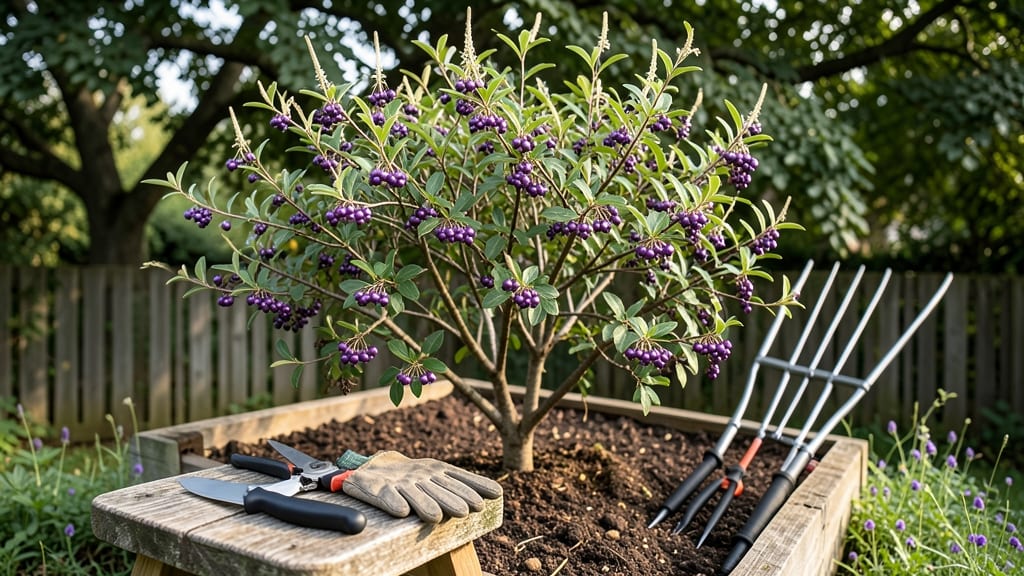
Pruning callicarpa reveals its secret to vibrant purple berries—and I’ve learned the hard way that timing and technique make all the difference. 🌿 The key? Prune lightly in late winter or early spring before new growth starts, and you’ll encourage bushier branches packed with those stunning metallic berries.
You’ll only need sharp pruning shears, gloves, and a clear head—no fancy tools required. The goal is to thin out crowded branches by 20-30% to improve airflow, which prevents disease and lets sunlight reach the center.
I cut back any dead, crossing, or weak stems first, then shape the plant by shortening overlong branches.
By summer, you’ll see the payoff: denser foliage and clusters of berries that turn from green to deep purple. The berries stay on the plant longer when pruned correctly, giving you weeks of color. Just avoid heavy pruning in fall—it stresses the plant before winter.
For best results, repeat the process every 2-3 years to maintain shape and berry production. Even if you miss a year, callicarpa is forgiving—just focus on removing dead wood and opening up the center. Your neighbors will be jealous of those showstopping berries!
📚 In This Guide
- What you need
- Instructions
- Tips and common mistakes
- Wrapping up and next steps
What you need
- ● Pruning shears: Bypass pruners (sharp, 5-7 inch blades) for small stems (1/4"–1/2" thick). Anvil pruners are okay for occasional use but can crush stems.
- ● Loppers: Bypass loppers (8-12 inch blades) for thicker branches (up to 2" diameter). Look for ratcheting or bypass types for precision.
- ● Hand saw: Pruning saw with a curved blade for stubborn, woody stems (2" or thicker). Avoid cheap saws—they tear wood.
- ● Gloves: Garden gloves (leather or heavy-duty fabric) to protect hands from thorns and sap.
- ● Disinfectant: 70% isopropyl alcohol or rubbing alcohol to clean tools between cuts (prevents disease spread).
- ● Trash bag or bucket: For collecting pruned branches and debris.
- ● Hose or water spray bottle: To rinse tools and clean sap off blades post-pruning.
- ● Sharpener: A file or sharpening stone to maintain blade edges between uses.
- ● Pruning sealant: Tree wound sealant (like Tanglefoot) for large cuts (controversial—skip if your plant is healthy!).
- ● Knee pad or stool: For comfort if your Callicarpa is tall or sprawling.
- ● Notebook/pencil: To jot down notes on pruning patterns or plant health observations.
- ● Safety glasses: If dealing with large, thorny branches or using a saw.
Step-by-Step guide to pruning callicarpa for lush growth
Here’s how I keep my callicarpa bushes thriving year-round—simple techniques that guarantee those stunning purple berries.
✂️ Step 1: Prune After Flowering in Late Summer
Wait until late summer, after the flowers fade but before berries ripen, to do your first prune. This is when you’ll see withered blooms—snip them off at the base to encourage fresh growth. I use clean, sharp pruners to make cuts just above a leaf node or outward-facing bud, which prevents dead branches and promotes new shoots.
Real talk: Don’t rush this step. Pruning too early removes next year’s flowers, and pruning too late can stress the plant. Aim for mid-August in most climates. If you’re unsure, check for new growth—that’s your cue it’s safe to prune.
✂️ Step 2: Thin Out Crowded Branches in Early Spring
Come early spring, before buds swell, inspect your callicarpa for crossing or rubbing branches. These compete for sunlight and weaken the plant. Remove one-third of the oldest stems at ground level—this rejuvenates the bush and prevents overcrowding. I like to work on dry, calm days when the plant isn’t stressed.
Watch for dead or diseased wood—it’ll look brown and brittle. Cut these back to healthy growth immediately. If you’re unsure, scratch the bark with your fingernail: green underneath means it’s alive; brown means it’s dead and should go.
☀️ Step 3: Shape and Lighten the Bush Mid-Season
In late spring or early summer, give your callicarpa a light shaping. Focus on opening up the center so air circulates—this prevents fungal issues and lets sunlight reach inner branches. Trim back any branches that grow too close together or block walkways.
Here’s the thing—callicarpa grows fast, so I only remove no more than 20% of the foliage in one session. You’ll know you’ve done enough when you can see light filtering through the center without gaps. Avoid heavy pruning now; you’ll sacrifice next year’s berries.
⏰ Step 4: Clean Up in Dormancy (Late Winter)
When the plant is fully dormant (late winter, before buds break), do a final cleanup. Remove any remaining dead wood or branches that didn’t make it through winter. I also rake up fallen leaves and debris—this keeps pests and diseases at bay.
This is also the time to sterilize your tools with rubbing alcohol. Callicarpa can attract borers, and a clean cut means fewer problems later. If you’re in a cold climate, wait until after the last frost—pruning too early can shock the plant.
🌿 Step 5: Maintain Year-Round with Light Trims
Between major prunes, keep an eye out for suckers (shoots growing from the base) or overly long branches. Snip these back to 6-8 inches to maintain shape. I do this every 4-6 weeks during the growing season—it’s like giving the plant a quick haircut to keep it tidy.
Don’t skip this! A well-maintained callicarpa produces more berries and stays compact. If you notice yellowing leaves, it might be time to check for pests or adjust watering—but usually, it’s just a sign the plant needs a little TLC.
Tips & tricks for pruning callicarpa like a pro
These simple but game-changing tricks will help you avoid common mistakes and keep your callicarpa thriving for years.
Timing is Everything: In Step 1, when pruning after flowering, look for the specific moment when berries are still firm but flowers have completely faded. This usually falls around mid-August in most climates, but check your local frost dates - if you're in a cooler zone, aim for late August. The key is catching that sweet spot between "just after flowers fade" and "before berries ripen" to preserve next year's blooms. I've ruined two pruning seasons by waiting too long!
The 45-Degree Rule: For all your cuts, especially in Steps 1, 2, and 3, make your pruning cuts at a 45-degree angle just above a leaf node or outward-facing bud. This simple technique prevents water from pooling on the cut and reduces the risk of disease. I always double-check my cuts with this angle - it makes all the difference in how quickly new growth appears. Think of it as giving your plant a proper "staircase" for water to run off.
Seasonal Maintenance Calendar: Create a simple yearly schedule: mark mid-August for Step 1, early spring for Step 2, late spring/early summer for Step 3, late winter for Step 4, and then every 4-6 weeks for Step 5 maintenance. I keep mine on my phone calendar with weather alerts so I don't miss the optimal windows. This prevents that "I forgot when to prune" panic that leads to over-pruning or missed opportunities for new growth.
Tool Care Matters: After every pruning session, especially in Step 4, take 2 minutes to clean and sterilize your tools with rubbing alcohol. I keep a small bottle in my gardening toolbox specifically for this purpose. Clean tools prevent the spread of borers and other pests that love callicarpa. Trust me on this - I learned the hard way when my pruners became a disease vector between plants.
Pro Tips for Prune Callicarpa
- These simple but game-changing tricks will help you avoid common mistakes and keep your callicarpa thriving for years.
- Timing is Everything: In Step 1, when pruning after flowering, look for the specific moment when berries are still fi...
- The 45-Degree Rule: For all your cuts, especially in Steps 1, 2, and 3, make your pruning cuts at a 45-degree angle j...
Frequently asked questions
Got questions about pruning your Callicarpa? You’re not alone! Here are answers to the most common concerns—so you can keep those stunning purple berries coming year after year.
When is the best time to prune Callicarpa?
The ideal time is late winter or early spring, just before new growth begins. This helps shape the plant while avoiding the risk of frost damage. A light prune after flowering (summer) can also encourage bushier growth—but avoid heavy cuts then!
How much should I cut back my Callicarpa?
Keep it moderate! Remove 1/3 of the oldest stems to the ground each year to promote new growth. For shaping, trim back overly long branches by 1/4 to maintain a balanced form. Avoid aggressive pruning—it can reduce berry production.
What if I prune at the wrong time?
Pruning too late in fall or winter can expose tender stems to frost damage. If you accidentally prune after flowering, don’t stress—just focus on light shaping in spring. The plant is resilient, but timing matters for berry set!
Can I prune Callicarpa for thicker foliage?
To encourage denser growth, prune just above a leaf node (where leaves meet the stem) to stimulate branching. Avoid "heading back" (cutting into old wood)—this can weaken the plant. Pinch back tips in early summer for bushier results!
What should I do if my Callicarpa isn’t flowering or berrying?
Check for over-pruning or poor sunlight (they need full sun to partial shade). If stems are leggy, prune to 1/3 of their height in spring. Also, ensure it’s getting well-draining soil—waterlogged roots can stress the plant.
Wrapping up and next steps
Pruning your Callicarpa isn’t just about keeping it tidy—it’s your secret to vibrant purple berries and a healthier plant year after year! 🌿 With the right timing, tools, and techniques, you’ll encourage lush growth and stunning fall color.
Now that you’re armed with the know-how, grab those shears and get pruning—your shrub will thank you with a breathtaking display!
Ready for more? Explore our guide on fertilizing Callicarpa to give your plant the extra boost it needs to thrive!