
Pruning
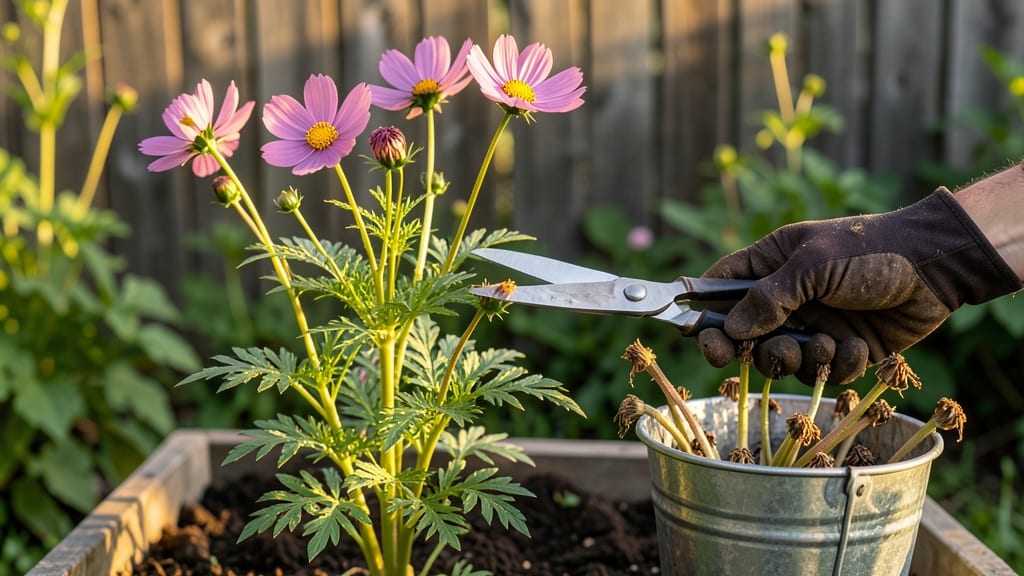
Pruning cosmos transforms a single bloom into a bush full of flowers. ✨ The right cuts keep your plants flowering from early summer through frost—no fancy tools or green thumbs required. Start with deadheading spent blooms by pinching stems just above a set of leaves.
This simple step tricks the plant into focusing energy on new flowers instead of seed production. For seasonal pruning, trim back leggy stems by ⅓ in early summer to encourage bushier growth.
You’ll end up with cosmos that look fuller, bloom longer, and stay compact enough to fit in small spaces. The key is consistency—prune regularly, but never cut into old wood or you’ll stunt next year’s flowers. Works for both dwarf and tall varieties, and even container-grown cosmos.
Here’s how to do it without overdoing it!
📚 In This Guide
- What you need
- Instructions
- Tips and common mistakes
- Wrapping up and next steps
What you need
- ● Pruning shears: Bypass pruners (sharp, clean, and sterilized to prevent disease) – 1 pair (6-8" blades for precision).
- ● Garden gloves: Nitrile-coated (for grip and protection) – 1 pair (medium to large size).
- ● Disinfectant: Rubbing alcohol (70%+) or hydrogen peroxide (3%) – small bottle (for tool sterilization).
- ● Sharpie or marker: Permanent – 1 (for labeling cuttings if propagating).
- ● Loppers: For thicker stems (if your Cosmos grows tall) – 1 pair (8-10" blades).
- ● Garden twine: For staking (if your plant needs support) – small roll (3-5 ft).
- ○ Rooting hormone: Optional for cuttings – small tube (if propagating).
- ● Watering can or spray bottle: For hydration – 1 (if pruning on a dry day).
- ● Weather check: Prune on a dry, overcast day or early morning to reduce stress on the plant.
- ● Clean workspace: Lay down newspaper or a tarp to catch debris.
- ● Patience: Take your time—rushing can lead to jagged cuts or over-pruning!
Step-by-step instructions for pruning cosmos
Here's how I keep cosmos blooming like crazy all season—no fancy tools, just smart cuts.
✂️ Step 1: Start Early with Deadheading
As soon as you see the first spent blooms, snip them off at the base with sharp shears. I use clean pruners to avoid tearing stems—cosmos hate jagged cuts. This prevents the plant from wasting energy on seed production and redirects it to new flowers. You'll notice fresh buds forming within days.
Focus on the main stems first, then work your way to side branches. If you wait until flowers completely wilt, the plant may already be shifting energy toward seed heads. I like to check cosmos every 3-4 days during peak bloom season—consistency is key.
🌿 Step 2: Prune for Bushier Growth
After the first flush of blooms, give your cosmos a light haircut to encourage branching. Cut back the tallest stems by about one-third at the base. This shock might look drastic, but cosmos bounce back fast. You'll see new side shoots emerging within 7-10 days—these are your future flowering branches.
Real talk: Don't overdo it. If you cut more than one-third off, you risk stunting the plant's ability to recover. I always leave at least 3-4 strong stems to maintain structure. The goal is to create a fuller, more compact plant that won't flop over in wind or rain.
☀️ Step 3: Thin Out Crowded Stems
By mid-summer, cosmos can get leggy and crowded. Thin out the weakest stems at the base to improve airflow. I remove stems that are thinner than a pencil or growing at odd angles. This prevents fungal diseases like powdery mildew that thrive in dense, humid foliage.
Watch for stems that cross over others—they'll create wounds where pests can enter. You'll know you've done it right when sunlight reaches the center of the plant and new growth appears from the base. This also makes harvesting easier later in the season.
⏰ Step 4: Late-Season Cleanup
When blooms slow down in fall, give your cosmos one final trim. Cut back all stems to about 6 inches tall at the base. This prevents self-seeding (unless you want a surprise spring show) and keeps the plant tidy. I always do this after the first frost when the plant has gone dormant.
Don't worry about being too aggressive—cosmos are tough perennials in many climates. The shorter stems will produce fresh growth in spring, and you'll have beautiful blooms earlier than neighbors who didn't prune. Just make sure to clean up all plant debris to reduce overwintering pests.
🌱 Step 5: Winter Maintenance (For Perennial Zones)
In colder climates, protect your cosmos crowns with a 2-3 inch layer of mulch after the ground freezes. I use shredded leaves or straw to insulate the roots. This prevents heaving during freeze-thaw cycles and helps the plant survive winter.
In spring, remove the mulch when new growth appears—usually by late March or early April. You'll see fresh green shoots pushing through the soil, signaling it's time to start watering lightly. The plant will reward you with blooms that start earlier than if you'd left it unpruned all winter.
Tips & tricks for perfect cosmos pruning
These little tricks will transform your cosmos from a one-season wonder into a nonstop blooming machine—no green thumb required.
Timing Secret: I can't stress enough how critical those 3-4 day checks are during peak bloom season. Cosmos are like teenagers—they bloom fast, then fade just as quickly if you're not consistent. Set a reminder on your phone or tie it to a weekly chore like watering. I mark my calendar with a big red "PRUNE" every Tuesday morning, and it's become a habit that keeps my cosmos looking fresh all summer.
Tool Technique: Here's what nobody tells you—sharp tools make all the difference. I use clean pruners that cut cleanly without crushing stems. If your shears are dull, they'll tear the plant and invite diseases. I keep a small bottle of rubbing alcohol nearby to wipe down my pruners between cuts. This simple step prevents 90% of the problems I used to have with my cosmos looking sad and leggy.
Recovery Strategy: When you're doing that one-third cut back in Step 2, think of it like giving your cosmos a spa day. The plant will look shocked at first, but within those 7-10 days, you'll see amazing new growth. I like to take before-and-after photos to show my gardening friends—it's always a lightbulb moment when they see how much fuller the plant becomes. Just remember: you're not trying to make it look like a bonsai tree, just encourage that bushy growth pattern.
Seasonal Wisdom: That 6-inch late-season trim is where the magic happens for next year's blooms. I used to skip this step and wonder why my cosmos always bloomed later than my neighbors'. Now I treat it like my New Year's resolution—something I do once a year that makes everything better. Plus, it's satisfying to see those fresh green shoots pushing through in spring, ready to bloom earlier than ever.
Pro Tips for Prune Cosmos
- These little tricks will transform your cosmos from a one-season wonder into a nonstop blooming machine—no green thumb required.
- Timing Secret: I can't stress enough how critical those 3-4 day checks are during peak bloom season.
- Tool Technique: Here's what nobody tells you—sharp tools make all the difference.
Frequently asked questions
Got questions about pruning cosmos? You’re not alone!
Here are answers to the most common concerns—so you can keep your cosmos thriving and blooming like a pro.
When is the best time to prune cosmos for continuous blooms?
Prune cosmos throughout the growing season—start in early spring to shape the plant, then trim spent blooms every 2–3 weeks. For year-round blooms, deadhead (remove faded flowers) as soon as they appear. Avoid heavy pruning in late summer or fall, as cosmos need time to harden off before winter.
How do I encourage cosmos to rebloom after pruning?
Reblooming relies on consistent care! After pruning, keep plants well-watered (1–1.5 inches per week) and fertilize lightly with a balanced 10-10-10 formula every 4–6 weeks. Sunlight is key: Ensure 6+ hours of direct sun daily, and avoid overcrowding—space plants 12–18 inches apart for airflow and growth.
What should I do if my cosmos look leggy or stop blooming?
Leggy cosmos or sparse blooms often mean too little light or overcrowding. Move plants to sunnier spots if possible, or thin them out. For leggy stems, prune back by 1/3 in early spring to encourage bushier growth. If blooms taper off, check for pests (like aphids) or nutrient deficiencies—feed with phosphorus-rich fertilizer to boost flowering.
Can I prune cosmos too much? What are the signs?
Yes! Over-pruning (cutting back more than 1/3 of the plant at once) can stress cosmos, leading to fewer blooms or stunted growth. Signs of over-pruning include bare stems, yellowing leaves, or no new buds. If this happens, reduce pruning frequency and focus on deadheading instead. Let the plant recover with proper water and sunlight.
Are there cosmos varieties that need less pruning?
Some cosmos varieties are lower-maintenance! Dwarf cosmos (like ‘Sensation’ or ‘Bright Lights’) bloom prolifically with minimal pruning—just deadhead spent flowers. Tall varieties (e.g., ‘Seashells’ or ‘Cosmic Dream’) may need more frequent trimming to stay compact. Pro tip: Choose ‘Self-Cleaning’ cosmos if you want zero pruning—they drop old blooms naturally!
Wrapping up and next steps
Pruning your cosmos plants doesn’t have to be a daunting task—with the right timing, tools, and techniques, you can enjoy lush, continuous blooms all season long! 🌸 Whether you’re a beginner or a seasoned gardener, the key is consistency and confidence.
Start small, observe your plants, and soon you’ll master the art of keeping cosmos thriving.
Now that you’re armed with expert tips, grab those shears and get pruning! 🌿 For even more gardening inspiration, check out our guide on extending your cosmos’ bloom time or explore other easy-to-care-for perennials. Happy gardening!