
Pruning
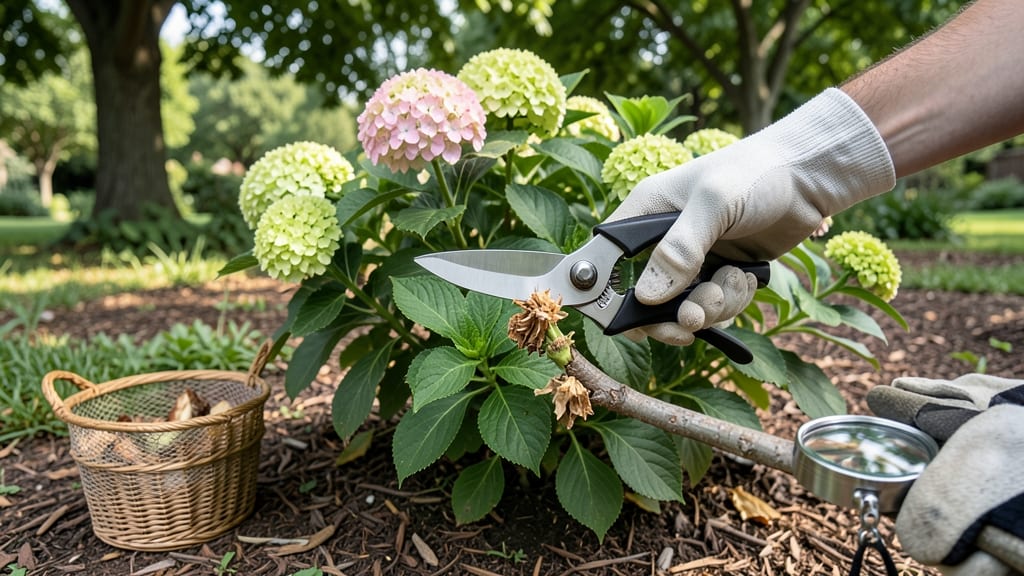
Pruning Limelight hydrangeas in summer can double your fall blooms if you do it right. ✂️ I’ve learned the hard way that cutting too late—or in the wrong spots—means fewer flowers by September. These hydrangeas grow on new wood, so timing and technique matter more than most gardeners realize.
The key is pruning after the first flush of blooms (usually June) but before August, when new growth hardens off. Grab your bypass pruners and sanitize them first—old cuts attract disease.
Focus on removing last year’s spent blooms and shaping the plant’s vase-like form by thinning crowded stems at the base.
You’ll end up with stronger stems, more air circulation, and bigger blooms that last well into frost. The plant rewards precise cuts with vibrant green cones that turn pinkish in fall—a showstopper in any garden. Just avoid heavy pruning after mid-summer, or you’ll sacrifice next year’s flowers.
Works for container gardens too—just scale the cuts. Here’s how to spot mistakes (like over-pruning) and fix them before it’s too late.
📚 In This Guide
- What you need
- Instructions
- Tips and common mistakes
- Wrapping up and next steps
What you need
- ● Bypass pruners – Sharp, clean, and disinfected (7-inch blades work best for thicker stems). Pro tip: 💡 Use rubbing alcohol or a 10% bleach solution to sterilize between cuts!
- ● Hand pruners (for finer cuts) – Ideal for trimming smaller stems or deadheading spent blooms.
- ○ Loppers (optional but helpful) – For thicker stems (up to 1.5 inches). Look for bypass-style loppers with comfortable grips.
- ● Garden gloves – Nitrile-coated or heavy-duty leather to protect against thorns and sap.
- ● Disposable pruning saw (if needed) – For woody, stubborn stems that won’t yield to pruners.
- ● Rag or paper towels – For wiping down tools and cleaning sap.
- ○ Sealer (optional) – Pruning sealant (like Tanglefoot Tree Wound Pruning Seal) to coat larger cuts and prevent disease.
- ● Garden twine or zip ties – To secure heavy stems if needed after pruning.
- ● Garden hose or spray bottle – For rinsing tools and refreshing your hydrangea post-prune.
- ● Trash bag or bucket – To collect pruned debris and spent blooms.
- ● Choose the right time – Prune on a cool, cloudy morning (avoid midday heat to reduce plant stress).
- ● Check the weather forecast – Hold off if rain is expected within 24 hours to prevent fungal issues.
- ● Identify last year’s blooms – Limelight hydrangeas bloom on new wood, so focus on cutting back only dead or overgrown stems.
Step-by-Step guide for pruning Limelight hydrangeas in summer
Limelight hydrangeas reward precise summer pruning with vibrant fall blooms—here's how to do it right.
✂️ Step 1: Identify and Remove Dead or Weak Growth
Start by examining each stem for signs of damage or poor growth. Dead branches appear dry, brittle, and brown all the way through, while weak stems are thin, leggy, and often pale green. Use clean, sharp pruning shears to make your cuts at a 45-degree angle, about ¼ inch above a leaf node or bud—this encourages new growth from the right spot.
I always prune dead stems first because they drain energy from the plant. Look for stems that haven’t produced leaves or flowers this season—they’re candidates for removal. If you’re unsure, gently scratch the bark with your fingernail: if it’s green underneath, the stem is still alive.
✂️ Step 2: Thin Out Overcrowded or Crossing Branches
Next, focus on thinning out the canopy to improve airflow and sunlight penetration. Remove branches that are growing inward toward the center of the plant, as these create dense, shaded areas where diseases like powdery mildew thrive. Aim to open up the plant’s structure so light reaches the inner stems.
For crossing branches, choose the stronger, more vigorous stem to keep and prune the weaker one back to its point of origin. This step is all about balance—you want a rounded, open shape that lets sunlight reach all parts of the plant. Avoid cutting more than ⅓ of the plant’s total growth in one session.
✂️ Step 3: Prune Back Overly Long or Leggy Stems
Limelight hydrangeas often produce long, leggy stems that stretch toward the light but fail to produce strong blooms. To correct this, identify the longest stems and prune them back by ⅓ to ½ their length, cutting just above a set of leaves or a bud. This encourages the plant to branch out and produce shorter, bushier stems that will support more flowers.
Here’s the thing—don’t cut back into old wood (the brown, woody part of the stem). You’ll know you’re cutting too far if you see only bare, hardened stems with no green growth. Instead, focus on the current season’s growth, which is the lighter green, more flexible part of the stem.
✂️ Step 4: Shape the Plant for Optimal Growth
Now it’s time to refine the plant’s shape. Step back and visualize the ideal form—a balanced, rounded bush with an open center. Use your pruners to trim back any stems that are growing too upright or outward, cutting them back to a bud that will encourage a more compact shape. This step is about aesthetics, but it’s also functional—proper shaping reduces the risk of storm damage.
For Limelight hydrangeas, which bloom on new wood, you’re essentially training the plant to produce stronger, more flower-laden stems for next season. Avoid heavy pruning now—just light shaping. You’ll see the results in late summer and fall when the new blooms emerge.
💧 Step 5: Clean Up and Monitor After Pruning
Once you’ve finished pruning, clean your tools with rubbing alcohol to prevent the spread of disease. Collect and dispose of any clippings that show signs of pests or disease—don’t compost them. Water the plant deeply after pruning to help it recover and reduce stress. Mulch around the base with 2-3 inches of organic mulch to retain moisture and regulate soil temperature.
Watch the plant closely in the days following pruning. If new growth appears weak or yellowed, it might be a sign of over-pruning or stress. In that case, hold off on further cuts and focus on keeping the soil consistently moist and the plant well-fed with a balanced fertilizer. You’ll know you’ve pruned correctly when you see fresh, vibrant growth emerging from the cut stems within a few weeks.
Tips & tricks for pruning Limelight hydrangeas
These strategic insights will help you transform your summer pruning into a fall blooming success story.
Precision Cutting Technique: When making your 45-degree angle cuts in Step 1, visualize the cut as a slice of pizza—this angle prevents water from pooling at the cut site, which could lead to rot. The ¼-inch clearance above leaf nodes is crucial because it positions new growth at the optimal spot for sunlight exposure. I've found that using a sharp, clean pair of pruners makes all the difference—dull blades crush stems instead of cleanly cutting them.
Visual Growth Assessment: In Step 3, when identifying leggy stems to prune back by ⅓ to ½ their length, look for stems that are stretching upward with minimal branching. These are your "reach-for-the-sun" stems that won't support heavy blooms. The key is to cut just above a set of leaves or a bud—this creates a natural growth point. I always run my fingers along the stem first to locate these nodes before making my cut.
Seasonal Timing Strategy: While the instructions focus on summer pruning, timing matters even more than technique. The best window is late June to early July when the plant has finished its initial flush of growth but before the next major growth spurt. This timing ensures you're not removing potential flowering stems that might be forming. I've seen dramatic differences in bloom production when pruning at this optimal window versus later in summer.
Pro Tips for Prune Limelight Hydrangeas In Summer
- These strategic insights will help you transform your summer pruning into a fall blooming success story.
- Precision Cutting Technique: When making your 45-degree angle cuts in Step 1, visualize the cut as a slice of pizza—this angle prevents water from pooling at the cut site, which could lead to rot.
- Visual Growth Assessment: In Step 3, when identifying leggy stems to prune back by ⅓ to ½ their length, look for stems that are stretching upward with minimal branching.
Frequently asked questions
Got questions about summer pruning for your Limelight hydrangeas?
Here are answers to the most common concerns—so you can prune with confidence and keep those stunning blooms coming!
Can I prune Limelight hydrangeas in summer, or should I wait until fall?
Yes, summer pruning is perfectly safe for Limelight hydrangeas! Unlike mophead types, these panicle hydrangeas bloom on new wood, so pruning in late summer (after blooming) encourages fuller growth and bigger blooms next season. Just avoid heavy cuts in early summer—focus on shaping and deadheading spent flowers.
How much can I trim back Limelight hydrangeas in summer without hurting them?
You can trim back up to 1/3 of the plant in late summer, but avoid drastic cuts. Aim to remove only:
- Dead or damaged stems
- Overcrowded branches
- Spend blooms (fading flower clusters)
What’s the best time of day to prune Limelight hydrangeas in summer?
Prune on a cool, cloudy day or early morning to reduce stress on the plant. Avoid midday heat—it can shock the hydrangea and slow recovery. If you must prune in the afternoon, water the plant thoroughly before and after to help it bounce back faster.
What if I accidentally prune too much? Will my Limelight hydrangea survive?
Don’t panic! Limelight hydrangeas are hardy and can recover from over-pruning, but growth may be slower that season. If you’ve cut back more than 1/3 of the plant:
- Fertilize lightly with a balanced, slow-release formula (10-10-10) to support regrowth.
- Water deeply 2-3 times per week to keep roots hydrated.
- Skip heavy pruning next year—focus on maintenance cuts only.
Are there any alternatives to pruning if I don’t want to cut my Limelight hydrangea?
If pruning feels overwhelming, try these low-maintenance alternatives:
- Deadheading only: Snip off only faded flower clusters (no shaping needed). This keeps the plant tidy and redirects energy to new growth.
- Thinning out: Remove 1-2 oldest stems at the base each year to encourage younger, stronger growth.
- Mulching: Add 2-3 inches of mulch around the base to retain moisture and reduce stress—no cutting required!
Wrapping up and next steps
Pruning your Limelight hydrangeas in summer isn’t just about trimming—it’s about strategic care that ensures those stunning fall blooms you love! 🌿 By following the right steps—like cutting back 1/3 of the oldest stems and shaping new growth—you’ll encourage healthier, fuller plants.
Remember, timing and technique are key, so grab those shears and get ready to see your garden thrive.
Now that you’re armed with the know-how, take action! Pick a calm summer day, gather your tools, and give your hydrangeas the attention they deserve. Your future blooms will thank you! 🌸