
Pruning
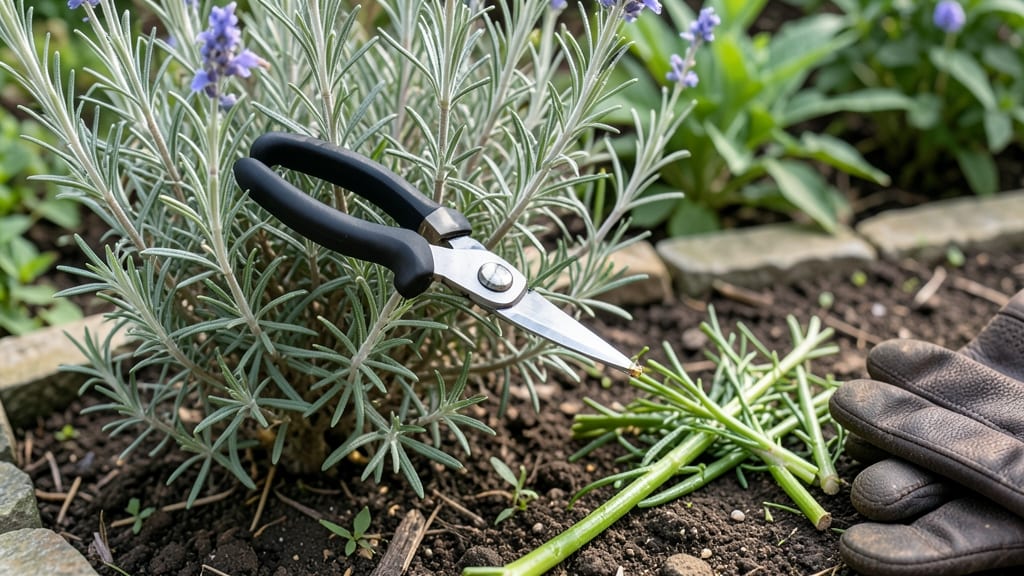
Your rosemary's woody stems don't have to be a lost cause—three strategic cuts can bring it back to life. ✂️ I've revived more than a dozen overgrown rosemary plants using this method, and the difference after just one pruning session is shocking.
The key is timing and technique, not brute force with the shears.
Start by grabbing clean pruners and a bucket for clippings—you'll want to work when the plant is actively growing, either in early spring or right after harvest. The goal is to remove up to one-third of the plant's growth while keeping the shape balanced.
Never cut into old, bare wood; always leave green growth behind.
What you'll end up with is a bushier, more productive rosemary plant that produces fresh sprigs for months. The new growth stays tender and fragrant, and you'll notice more flowers—those little blue blooms mean more stems for harvesting. Regular pruning keeps the plant compact and prevents that leggy, overgrown look.
This method works for both upright and trailing rosemary varieties, and it's perfect for container plants too. The secret is consistency—prune lightly every few months instead of waiting until it's a tangled mess. Your kitchen (and neighbors) will thank you for the fresh herbs.
📚 In This Guide
- What you need
- Instructions
- Tips and common mistakes
- Wrapping up and next steps
What you need
- ● Bypass pruners – Sharp, clean bypass pruners (not anvil pruners) with a 4- to 6-inch blade for precise cuts. (1 pair)
- ● Hand pruners or loppers – For thicker stems (up to ½-inch diameter). (1 pair)
- ● Disinfectant (70% isopropyl alcohol or bleach solution) – To sterilize tools and prevent disease. (small bottle or spray)
- ○ Garden gloves – Protect your hands from thorns and sap. (1 pair, optional but recommended)
- ● Rake or garden fork – To clear away debris after pruning. (1)
- ○ Pruning saw (optional) – For very thick, woody stems (over ½-inch). (1)
- ● Choose the right time – Prune in early spring (before new growth) or late winter for best results.
- ● Check the weather – Avoid pruning in extreme heat or cold (ideal temp: 50–75°F).
- ● Water the plant – Lightly water rosemary 1–2 days before pruning to reduce stress.
- ● Have a plan – Sketch or mentally map out which cuts to make (see our 3-step pruning guide for reference!).
How to prune overgrown rosemary: revive woody stems with 3 simple cuts
Here's my foolproof method for turning woody, leggy rosemary back into lush, fragrant bushes.
✂️ Step 1: Remove Dead or Damaged Growth First
Start by cutting out any brown, crispy stems or branches that look completely dead. These won't regrow and just take energy from healthy parts. Use clean, sharp pruners to make a clean cut just above a leaf node—this is where new growth will emerge. You'll know you're cutting in the right spot when you see a tiny bump or leaf scar.
Don't worry about being perfect here—rosemary is forgiving. If you accidentally cut into green wood, just trim back slightly to expose a proper node. I like to gather all the dead stems in one pile and dispose of them in the trash, not the compost, since they might carry disease.
✂️ Step 2: Thin Out Overcrowded Branches
Now focus on the thick, woody stems that have lost their flexibility. These are the branches that feel hard as a pencil when you bend them. Cut these back to within ¼ inch of the main stem—this encourages new growth from the base. I aim to remove about ⅓ of the plant's total volume in this step to avoid shocking it.
Look for branches that are growing inward or crossing over others. These compete for sunlight and air circulation. Cut these completely off at their base. You'll see the plant's shape open up as you work. If you're unsure which branches to keep, imagine the plant as a rounded bush—everything should contribute to that shape.
☀️ Step 3: Shape for Airflow and Sunlight
Step back and look at your rosemary from all sides. Now's the time to create that perfect rounded shape. Cut back any branches that are growing too long or leggy, leaving 4-6 inches of new growth. Always cut just above a leaf node—this is where new shoots will emerge. You'll notice the plant starts looking fuller and more compact as you make these cuts.
Focus on the outer edges of the plant. If you see branches growing straight up, cut them back to encourage bushier growth. For woody stems that are completely bare at the bottom, cut them back to where you see fresh green growth. This might mean removing half the stem, but it's necessary to revive the plant.
💧 Step 4: Clean Up and Encourage New Growth
After your cuts, clean your pruners with rubbing alcohol to prevent spreading any potential diseases. Now's the time to give your rosemary a good drink—water deeply until you see moisture coming out of the drainage holes. This helps the plant recover from the pruning shock and encourages new growth.
In the following weeks, you'll see new shoots emerging from the leaf nodes where you made your cuts. These will be tender and green, signaling that your pruning worked. Keep the soil consistently moist but not soggy during this recovery period. In about 4-6 weeks, your rosemary should look noticeably fuller and healthier.
Tips & tricks for perfect rosemary pruning
Reviving your rosemary doesn't have to be intimidating—these simple strategies will help you transform woody stems into lush, fragrant bushes with confidence.
Tool Prep: Before you even touch your rosemary, take 5 minutes to clean and sharpen your pruners. A dull blade crushes stems instead of making clean cuts, which can damage the plant. I like to wipe mine down with rubbing alcohol between cuts to prevent spreading any potential diseases from dead branches to healthy ones. This step alone makes all the difference in how smoothly your pruning goes.
Visual Cues Matter: In Step 3, when you're shaping your rosemary, look for those tiny leaf nodes—they're your secret weapon. These little bumps are where all new growth emerges, so always cut just above them. If you're unsure where to cut, step back and imagine your rosemary as a rounded ball. Every branch should contribute to that shape, and cutting back leggy stems to 4-6 inches of new growth will give you that perfect rounded form. Think of it as sculpting your plant!
Season Timing: The best time to prune is in early spring, just as new growth begins. This gives your rosemary the entire growing season to recover and establish new shoots. If you must prune later in the season, avoid cutting back more than ⅓ of the plant's volume at once—this prevents shock and allows the plant to recover before winter. Remember, rosemary is hardy, but it's still a living plant that needs time to heal.
Pro Tips for Prune Overgrown Rosemary
- Reviving your rosemary doesn't have to be intimidating—these simple strategies will help you transform woody stems into lush, fragrant bushes with confidence.
- Tool Prep: Before you even touch your rosemary, take 5 minutes to clean and sharpen your pruners.
- Visual Cues Matter: In Step 3, when you're shaping your rosemary, look for those tiny leaf nodes—they're your secret weapon.
Frequently asked questions
Got questions about pruning overgrown rosemary? You're not alone! Here are some of the most common concerns—and straightforward answers—to help you tackle that woody mess with confidence.
When is the best time to prune rosemary?
Prune rosemary in early spring (just as new growth starts) or late winter for the best results. Avoid pruning in fall or winter, as cold weather can stress the plant. If your rosemary is severely overgrown, you can do a light trim anytime—but spring is ideal for a full revival!
Can I prune rosemary too much?
Yes! Over-pruning can harm your rosemary, especially if you cut into old, woody stems. Aim to remove no more than 1/3 of the plant in a single session. Focus on shaping and thinning, not aggressive cuts. If you’ve already pruned too much, don’t panic—just give it time to recover with proper water and sunlight.
What if my rosemary turns brown or dies after pruning?
Brown or dying stems after pruning usually mean over-cutting or underwatering. If you see this, stop pruning immediately and check the soil—rosemary hates soggy roots! Water lightly (only when the top inch of soil is dry) and place it in full sun. Most plants bounce back in a few weeks if the roots are still healthy.
Can I propagate rosemary from my pruned cuttings?
Rosemary cuttings root easily. After pruning, take 3–4 inch cuttings from healthy stems, strip the lower leaves, and place them in well-draining soil or water. Keep them in bright, indirect light and mist occasionally. Roots should form in 2–4 weeks—perfect for expanding your herb garden!
What if my rosemary is woody with no green growth?
If your rosemary is mostly woody and leafless, it’s likely chronically overgrown or stressed. Try a hard prune: Cut back all the way to green, leafy stems (even if it looks drastic). While it may take a year or two to recover, this aggressive approach often rejuvenates the plant. Pair it with regular watering and fertilizer to encourage new growth.
Wrapping up and next steps
Pruning overgrown rosemary doesn’t have to be intimidating—with just three simple cuts and a little patience, you can revive woody stems and encourage lush, aromatic growth.
Remember, timing and technique are your best friends: prune in early spring or after flowering, and always cut back to healthy wood to keep your rosemary thriving. 🌿
Now that you’re armed with the know-how, grab those shears and give your rosemary the TLC it deserves! For even better results, harvest sprigs regularly to encourage bushier growth—and soon, you’ll be enjoying fresh rosemary in your favorite dishes. Happy pruning! 🌟