
Pruning
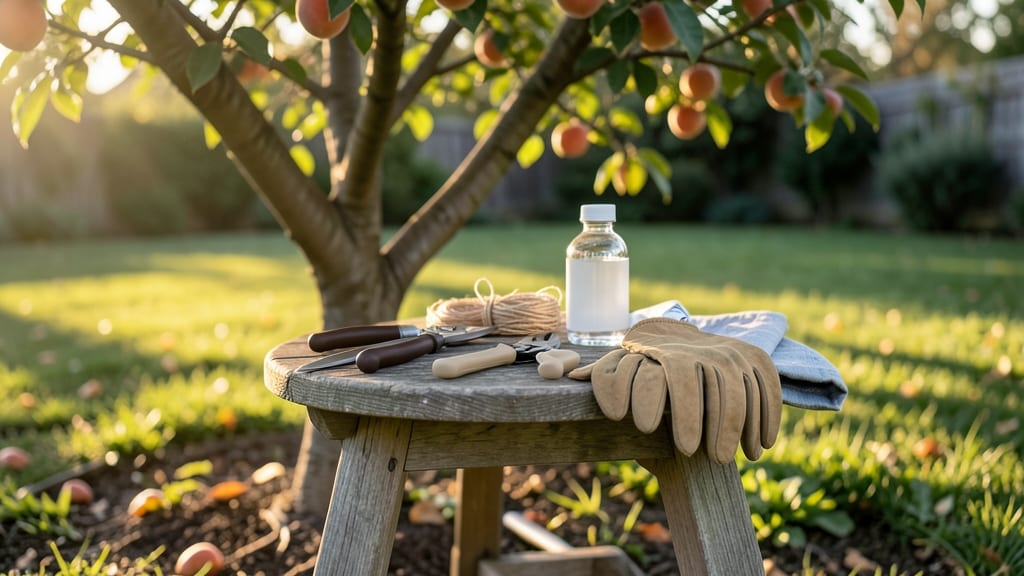
Pruning peach trees in late winter isn’t just about shaping—it’s about setting the stage for a record-breaking harvest next summer. 🌱 I’ve watched my own trees go from tangled messes to open, sun-drenched canopies in just a few hours, and the difference in fruit quality is night-and-day.
The key is timing: dormant season pruning (right after the last frost) encourages vigorous new growth while avoiding disease risks from wet spring conditions.
You’ll need just three tools: sharp bypass pruners for clean cuts, loppers for thicker branches, and a 3-in-1 pruning saw for the stubborn ones. Safety first—wear gloves (peach tree thorns are no joke) and sanitize your tools with rubbing alcohol to prevent spreading bacterial canker.
The goal is an open-center shape that lets sunlight reach all fruit, but if your tree has a strong central leader, we’ll work with that instead.
Start by removing dead, crossing, or diseased branches—these steal energy from your fruit. Then cut back last year’s growth by one-third to encourage new, productive wood. Thin out crowded branches to improve airflow, which cuts down on fungal issues.
By the time summer rolls around, you’ll have a tree that’s bursting with sunlight, air, and potential for juicy, flavorful peaches.
This method works for both young trees (establishing structure) and mature ones (revitalizing production). Just avoid heavy pruning in late summer—it stresses the tree before winter dormancy. Now grab those tools and let’s get pruning!
📚 In This Guide
- What you need
- Instructions
- Tips and common mistakes
- Wrapping up and next steps
What you need
- ● Pruning shears (bypass pruners) – Sharp, clean shears with a 4- to 6-inch blade for cutting small branches (up to ½-inch thick). Pro tip: 💡 Disinfect blades with rubbing alcohol to prevent disease spread!
- ● Loppers – For thicker branches (½- to 2-inch diameter), opt for bypass loppers with a 20- to 24-inch handle for leverage.
- ● Pruning saw – A curved-tooth pruning saw for branches thicker than 2 inches. Look for a 7- to 10-inch blade for precision cuts.
- ● Gloves – Heavy-duty gardening gloves (preferably with cut-resistant palms) to protect against thorns and splinters.
- ○ Disinfectant (optional but recommended) – A 10% bleach solution (1 part bleach to 9 parts water) or rubbing alcohol (70% isopropyl) to sterilize tools between cuts.
- ● Rubbing alcohol or hydrogen peroxide – For wiping down tools and cuts to prevent bacterial/fungal infections.
- ● Tarp or drop cloth – A 5x7-foot tarp to lay under the tree to collect debris and make cleanup easier.
- ● Extension pole pruners – If your tree is tall, these 10- to 12-foot poles with shears attached save your back!
- ● Sealing wax or pruning paint – For large cuts (over ½-inch thick), though modern research suggests this is often unnecessary for peach trees.
- ● Marking twine or flags – To tag branches you’re unsure about before making cuts.
- ● Safety glasses – Especially useful if you’re dealing with thick branches or debris flying.
- ● Ladder (if needed) – A stable, 3-section ladder rated for at least 250 lbs for taller trees.
Step-by-Step instructions for pruning peach trees
Here's the precise method I've used for years to revive dormant peach trees and set them up for a fruit-filled summer.
✂️ Step 1: Remove Dead, Diseased, or Damaged Wood
Start by examining the entire tree for branches that are dead, diseased, or physically damaged. Dead wood will be brittle, grayish-brown, and won't bleed when cut—it snaps like dry twigs. Diseased branches often show dark spots, oozing sap, or fungal growth. Use sharp pruning shears to make clean cuts just outside the branch collar (the swollen area where the branch meets the trunk).
This is the most critical step—removing these branches prevents disease from spreading to healthy wood and improves airflow through the canopy. I always prune out any branches that cross or rub against each other, as these will eventually create wounds that invite pests. Make your cuts at a 45-degree angle just outside the branch collar to promote faster healing.
✂️ Step 2: Thin the Canopy for Better Light Penetration
Peach trees need sunlight to reach the center of the tree for strong fruit production. Look for branches that grow inward or upward—these create dense shade where fruit won't develop properly. Remove about 20-25% of the tree's total branches, focusing on those that are too close together or growing in the wrong direction. Prioritize branches that are thinner than a pencil, as these won't contribute much to the tree's structure.
Thinning opens up the tree and allows air to circulate, reducing humidity and preventing fungal diseases like brown rot. I like to step back every few cuts to visualize the tree's shape—you want an open, vase-like structure with a strong central leader (main trunk). Avoid removing more than one-third of the tree's foliage in a single pruning session, as this can stress the tree.
✂️ Step 3: Shape the Tree for Optimal Fruit Production
Peach trees thrive when they have a balanced, open structure. Start by selecting 4-6 strong, evenly spaced scaffold branches (the main branches that form the tree's framework) around the trunk. These should be spaced 12-18 inches apart and angled outward at about 45 degrees. Remove any competing branches that grow too close to these scaffold branches.
Next, focus on the smaller branches within the canopy. Cut back last year's growth by one-third to encourage new, vigorous growth. This is where you'll see the tree's future fruit—peach trees produce fruit on one-year-old wood, so pruning back old growth stimulates new branches that will bear fruit next season. Always make cuts just above a bud that faces outward, as this encourages the branch to grow in the right direction.
⏰ Step 4: Time Your Pruning for Late Winter Dormancy
The best time to prune peach trees is during late winter, just before buds begin to swell but before new growth starts. In most climates, this falls between mid-February and early March. Pruning at this time allows the tree to heal before the growing season begins, reducing the risk of disease and promoting strong new growth.
If you miss the late winter window, you can still prune in early spring before the tree breaks dormancy, but avoid heavy pruning after buds have swollen. I've found that pruning too late in the season can stimulate new growth that won't have time to harden off before winter, making it more susceptible to cold damage. Always prune on a dry, sunny day to minimize stress on the tree.
🌱 Step 5: Clean Up and Protect the Tree
After pruning, collect all the cut branches and dispose of them in a sealed bag or burn them—never leave them on the ground, as they can harbor diseases and pests. Sterilize your pruning tools with a 10% bleach solution (1 part bleach to 9 parts water) or rubbing alcohol to prevent spreading pathogens between cuts.
Apply a dormant oil spray to the tree to smother overwintering pests like scale insects and mites. This is also a good time to add a 2-3 inch layer of mulch around the base of the tree (but keep it 6 inches away from the trunk to prevent rot). Water the tree deeply if the soil is dry, as this helps the tree recover from pruning stress and prepares it for the growing season ahead.
Tips & tricks for pruning peach trees
Here's what nobody tells you about pruning peach trees—these details make all the difference between a stressed tree and one that thrives.
Branch Collar Precision: The most critical cut in Step 1 is where you make it—always just outside the branch collar, never flush with the trunk. This swollen area contains healing cells that protect the tree from infection. If you cut too close, you create an open wound that invites disease. I've seen peach trees develop cankers from improper cuts, so take your time here. Use a sharp pair of pruning shears and make clean cuts at a 45-degree angle to maximize healing potential.
Visualizing the Canopy: In Step 2, when thinning the canopy, step back every few cuts to visualize the tree's shape. You want an open, vase-like structure that allows sunlight to reach the center. I like to imagine the tree as an umbrella—if you can't see light filtering through the branches, you're still too dense. Focus on removing branches that grow inward or upward, as these create shade that prevents fruit development. Remember, you're aiming for 20-25% removal, not more.
Bud Direction Matters: When shaping the tree in Step 3, always cut just above a bud that faces outward. This encourages new growth to develop in the right direction, creating a balanced structure. I've made the mistake of cutting above inward-facing buds, which led to a tree with branches growing toward the center—exactly where you don't want fruit to develop. Take a moment to identify which buds face outward before making each cut, especially on smaller branches.
Timing is Everything: The late winter window in Step 4 is your best bet for successful pruning, but even small variations can affect the tree. If you're in a warmer climate where buds swell earlier, prune on the cooler days of late winter. I've found that pruning on days below 50°F helps prevent premature bud break. Always check the weather forecast and choose a dry, sunny day to minimize stress on the tree. This timing allows the tree to heal before the growing season begins, setting it up for strong new growth.
Pro Tips for Prune Peach
- Here's what nobody tells you about pruning peach trees—these details make all the difference between a stressed tree and one that thrives.
- Branch Collar Precision: The most critical cut in Step 1 is where you make it—always just outside the branch collar, never flush with the trunk.
- Visualizing the Canopy: In Step 2, when thinning the canopy, step back every few cuts to visualize the tree's shape.
Frequently asked questions
Got questions about peach tree pruning? You’re not alone! Here are some of the most common concerns—and their answers—to help you prune with confidence.
When is the absolute latest I can prune my peach tree?
Late winter (just before buds swell) is ideal, but you can prune lightly into early spring if needed. Avoid heavy pruning after buds break—it stresses the tree and invites pests. If you missed the window, focus on removing dead wood and shaping in summer after harvest.
Can I prune peach trees in fall?
Nope! Fall pruning is a big no-no for peaches. It opens wounds that won’t heal before winter, making the tree vulnerable to disease and pests. Stick to late winter or early spring for best results. Pro tip: Mark branches to prune in fall if you’re tempted—wait until next year!
What if I accidentally cut into the wrong spot?
Don’t panic! If you nick a branch but don’t sever it, seal the wound with pruning sealant (optional for peaches) and monitor for signs of rot or infection. For clean cuts, use sharp tools and cut at a <45° angle just outside the branch collar. If you fully cut off a branch, don’t worry—peaches are resilient!
Will pruning reduce my peach harvest?
Not if done right! Proper pruning increases fruit quality and yield by improving airflow and sunlight. Focus on removing water sprouts, dead wood, and crowded branches—this directs energy to producing juicier, larger peaches. Just avoid over-pruning; aim to remove no more than 25% of the tree’s canopy per year.
How do I know if my peach tree is over-pruned?
Watch for these red flags:
- Sparse or weak new growth in spring
- Fewer than 5–10 fruit wood spurs (small branches with fruit buds)
- Leaves that look tiny or pale
Wrapping up and next steps
Pruning your peach tree in late winter isn’t just about shaping—it’s your secret weapon for healthier growth and juicier fruit this summer! 🌱 With the right tools, timing, and technique, you’ll transform your tree into a thriving powerhouse.
Now that you’ve got the know-how, roll up your sleeves and give your peach tree the care it deserves—your future harvest will thank you!
Ready to take it further? Monitor your tree’s progress throughout the spring and summer, adjusting as needed. And if you’re feeling ambitious, explore organic pest control methods to keep those peaches flawless from blossom to bite!