
Pruning
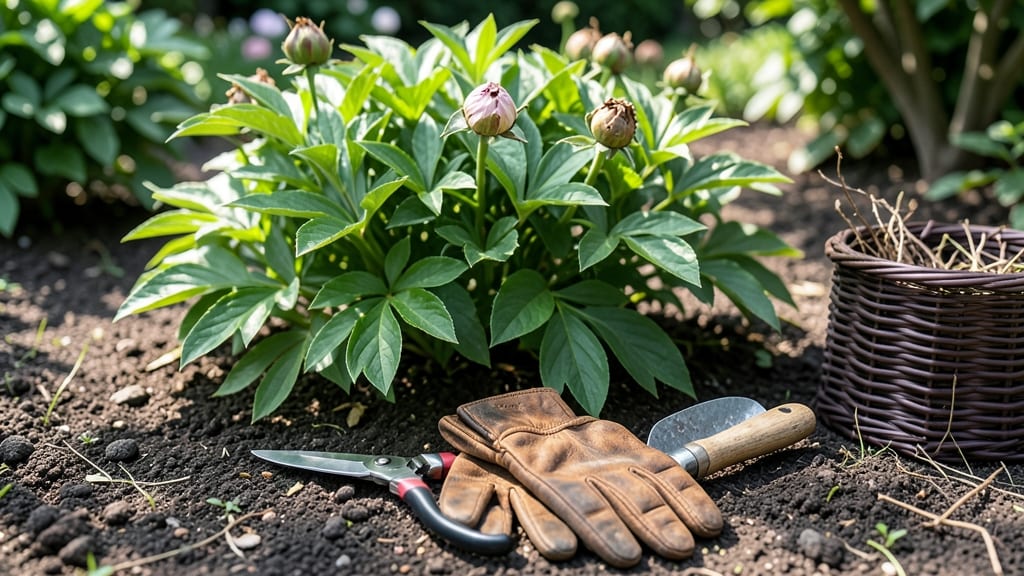
Pruning peonies after flowering isn’t just about tidying up—it’s the secret to next year’s showstopping blooms. ✂️ I’ve learned the hard way that skipping this step means fewer flowers and weaker stems.
The right cuts now determine whether your peonies will reward you with lush, healthy growth or struggle to recover.
Here’s what you’ll need: sharp bypass pruners (dull blades tear stems), gloves (those thorns don’t play fair), and a clear day in late summer when the foliage has fully browned.
The goal is simple: remove dead blooms and up to ⅓ of the stem, but never cut into the woody base—those buds are where next year’s flowers form.
Start by snipping spent blooms at the base, then work your way up the stem, cutting just above a leaf node. The plant will thank you with stronger roots and bigger blooms next spring.
Just remember: patience pays off—peony roots take time to recover, so avoid heavy pruning in fall or winter.
Common mistakes? Cutting too much or too late, or leaving disease-ridden stems behind. Focus on clean cuts and healthy growth, and your peonies will thrive for decades. Let’s get those blooms back on track!
📚 In This Guide
- What you need
- Instructions
- Tips and common mistakes
- Wrapping up and next steps
What you need
- ● Bypass pruners: Sharp, high-quality pruners (e.g., Felco or Fiskars) to make clean cuts. Size: 6-8 inches for ease of use.
- ● Loppers: For thicker stems (1-2 inches in diameter). Recommended: 20-24 inches long for leverage.
- ● Disinfectant (70% isopropyl alcohol or bleach solution): 1 part bleach to 9 parts water to sterilize tools between cuts.
- ● Garden gloves: Heavy-duty, cut-resistant gloves (e.g., Mechanix or Wolverine) to protect hands from thorns.
- ○ Pruning saw (optional): For stubborn, woody stems. Type: Curved blade for precision.
- ● Garden twine or rubber bands: To bundle pruned stems for easy cleanup.
- ● Compost bin or bag: For disposing of pruned foliage (avoid adding to mulch near peonies—it can harbor disease).
- ● Safety glasses: Recommended if working with thick stems or in windy conditions.
- ○ Knee pads (optional): For comfort if pruning low-growing or large peony bushes.
- ● Timing: Wait until late summer or early fall (after foliage yellows but before hard frost) for optimal pruning.
- ● Weather: Choose a dry, overcast day to minimize stress on the plant.
- ● Health check: Inspect the peony for pests/disease before pruning. Note: Avoid pruning if signs of blight or borers are present.
Step-by-Step instructions for pruning peonies after flowering
Here’s the simple method I use every year to keep my peonies thriving—and it only takes 15 minutes.
✂️ Step 1: Wait Until Flowers Fully Fade
Never prune until the blooms are completely spent and the foliage starts yellowing naturally. Cutting too early removes energy the plant needs to store for next year’s buds. Wait until late summer (August-September) when 75-80% of the leaves have browned.
I know it’s tempting to tidy up right after flowering, but patience here pays off. The plant uses those leaves to photosynthesize and build up strength for winter. If you’re unsure, just wait until the last petals fall—it’s the clearest signal.
✂️ Step 2: Cut Stems Back to the Crown
Use clean, sharp pruners to snip each stem 1-2 inches above the ground, just above the crown where the buds form. Avoid leaving stubs—they can rot or attract pests. I like to make a slight angle cut to help water run off cleanly.
Don’t worry about cutting too low. Peonies are tough and will sprout new growth from the base. If you accidentally cut into the crown, don’t panic—just leave it be. The plant will recover as long as the roots are healthy.
🌱 Step 3: Remove Dead or Diseased Foliage
After trimming the main stems, rake up any remaining dead leaves or stems lying on the ground. This prevents fungal diseases from overwintering in the debris. I bundle the clippings and compost them—just don’t compost if the plant showed signs of powdery mildew.
Check the crown for any blackened or mushy spots. If you find them, trim those areas out with sterilized pruners. Healthy crowns should look firm and greenish-white, not brown or soft. This is your last chance to spot and fix issues before winter.
💧 Step 4: Mulch and Water for Winter Prep
Spread a 2-3 inch layer of organic mulch (like shredded bark or straw) around the base, keeping it 6 inches away from the crown to prevent rot. This insulates the roots and protects against extreme cold. I water deeply before mulching to help the soil retain moisture.
Peonies are drought-tolerant once established, but a good soak before winter helps them weather dry spells. Avoid overwatering now—wet mulch can suffocate roots. If your area gets heavy snow, a light covering of mulch will prevent crown heave when the ground freezes and thaws.
⏰ Step 5: Mark the Spot and Plan for Spring
Place a small stake or flag near the crown to mark the spot—peonies take 2-3 years to rebloom after a severe prune, and you’ll forget where they are. I jot the variety in my garden journal to track performance over time.
In early spring, before new growth appears, add a balanced fertilizer (10-10-10) around the base. Peonies are heavy feeders, and this gives them a head start. Watch for the first green shoots in late winter—that’s your cue to start light watering and prepare for another spectacular bloom season.
Tips & tricks for perfect late-summer peony pruning
These simple tricks will help you avoid common mistakes and ensure your peonies come back even stronger next year.
Timing Secret: The 15-minute pruning session is just the beginning—what matters most is when you do it. I learned this the hard way after ruining three batches by cutting too early. Look for the telltale signs: stems that have completely collapsed and leaves showing 75-80% browning. This usually happens in late summer (August-September), but don't rush it. The plant needs those leaves for photosynthesis to build energy for next year's blooms.
Tool Technique: Sterilize your pruners between cuts, especially if you notice any signs of disease. I dip mine in rubbing alcohol between plants to prevent spreading fungal spores. For Step 2, make clean cuts at the 1-2 inch mark—this prevents ragged edges that can trap moisture and rot. A slight angle cut helps water run off cleanly, which is crucial for preventing crown rot during winter.
Disease Prevention: In Step 3, when you're removing dead foliage, don't just toss it in the compost if you suspect powdery mildew. Instead, bundle it and throw it in the trash. Healthy peony foliage can compost, but diseased material spreads problems. Also check the crown for any blackened or mushy spots—these are early signs of rot. Trim these out immediately with sterilized tools to give your plant the best chance at recovery.
Mulching Wisdom: That 2-3 inch layer of organic mulch in Step 4 isn't just decoration—it's insulation. Spread it around the base but keep it 6 inches away from the crown to prevent rot. I've found that straw works particularly well because it allows moisture to drain while still insulating roots. For extra protection in snowy climates, add a light covering of mulch in winter to prevent crown heave when the ground freezes and thaws.
Pro Tips for Prune Peonies After Flowering
- These simple tricks will help you avoid common mistakes and ensure your peonies come back even stronger next year.
- Timing Secret: The 15-minute pruning session is just the beginning—what matters most is when you do it.
- Tool Technique: Sterilize your pruners between cuts, especially if you notice any signs of disease.
Frequently asked questions
Got questions about pruning peonies after they bloom? You’re not alone!
Here are answers to the most common concerns—so you can prune with confidence and keep your peonies thriving for years to come.
When is the exact best time to prune peonies after flowering?
Wait until late summer or early fall (after the foliage yellows, typically August–September). Pruning too early can stress the plant, while waiting too long may risk winter damage. Aim for 4–6 weeks after blooming for ideal results.
What if I cut back peonies too early—will they survive?
Peonies are tough, but early pruning (right after blooms) can weaken them. You might still get blooms next year, but they could be smaller or fewer. The plant relies on foliage to store energy for next season—so patience pays off!
Do I need to remove all the dead foliage, or just the stems?
Leave the yellowing leaves intact until they wither naturally (they feed the roots!). Only cut back the brown, crispy stems at ground level. This helps the plant recharge for spring without losing essential nutrients.
What if my peonies don’t bloom after pruning—did I mess up?
Not necessarily! Peonies often take 2–3 years to rebloom after a major prune. Ensure they get full sun (6+ hours), well-draining soil, and regular watering. If they’re established, they’ll bounce back—just give them time!
Can I prune peonies in the fall and winter?
Fall pruning (as described) is ideal, but you can also trim in early spring (March) before new growth starts. Avoid winter pruning—frozen stems can rot, and the plant won’t have time to recover before spring. Stick to late summer/fall or early spring for best results.
Pro Tip:
Use sterilized shears (rubbing alcohol or bleach wipe) to prevent spreading disease. And if your peonies are overcrowded, this is the perfect time to divide them too! Just dig up clumps in fall and replant sections for fresh blooms.
Wrapping up and next steps
Pruning peonies after flowering is your secret to vibrant, healthy blooms next season—just follow the right steps! By cutting back faded flowers and dead foliage in late summer, you’re giving your peonies the care they need to thrive.
Remember, timing and technique are everything, so take your time and enjoy the process.
Now that you’re armed with the know-how, grab those shears and give your peonies the love they deserve! 🌸 Next, why not explore how to fertilize peonies for even more lush growth? Happy gardening!