
How To
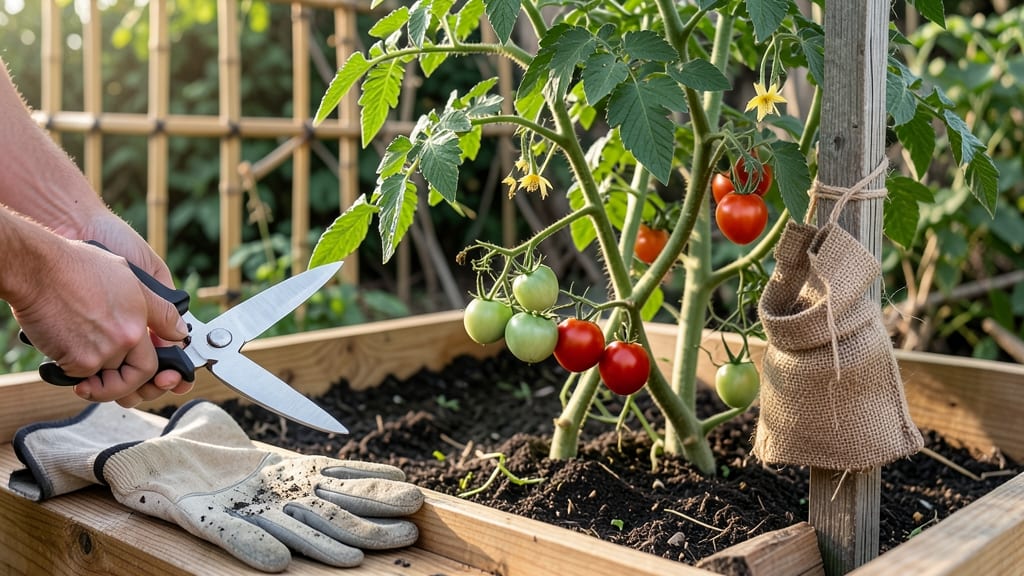
Pruning tomatoes for more fruit isn’t just about cutting—it’s about redirecting energy to where you want it. ✂️ I’ve gone from a handful of small tomatoes to bushels of vine-ripened fruit by mastering this simple technique that boosts air circulation and stops the plant from wasting energy on leaves.
Start when plants hit 18 inches tall, pinching off suckers (those little shoots between main stems) to focus growth upward. The goal? More sunlight on existing fruit and fewer diseases lurking in crowded foliage.
You’ll see the difference in 2-3 weeks—bigger tomatoes, fewer rotten ones, and a plant that keeps producing until frost.
📚 In This Guide
- What you need
- Instructions
- Tips and common mistakes
- Wrapping up and next steps
What you need
- ● Sharp pruning shears or scissors – Clean, sterilized, and bypass-pruned (for precision cuts).
- ● Gloves – Garden or work gloves to protect your hands from thorns and dirt.
- ● Disinfectant (rubbing alcohol or bleach solution) – To sterilize tools between cuts and prevent disease spread.
- ● Garden twine or soft plant ties – For securing indeterminate tomato plants to stakes or cages (if needed).
- ● Sturdy stakes or tomato cages – For indeterminate varieties (2-3 stakes per plant, 6+ feet tall).
- ○ Plant growth regulator (optional) – Like Aluminum Sulfate or Potassium Nitrate to boost flowering (follow label instructions).
- ● Garden journal or marker – To track pruning dates and plant progress.
- ● Pruning saw (for thick stems) – If dealing with large, woody tomato plants.
- ● Compost or mulch – To replenish nutrients after pruning.
Step-by-Step guide to pruning tomatoes for maximum fruit production
Here's the method I swear by—pinch and prune at the right times, and your tomato plants will reward you with bushels of fruit.
✂️ Step 1: Pinch Off Suckers Early for Stronger Growth
Start when your tomato plants are about 12-18 inches tall—this is usually 3-4 weeks after transplanting. Suckers are the small shoots that grow in the "V" where a stem meets a branch. These little stems steal energy from your fruit production. Use your thumb and forefinger to pinch them off cleanly at the base, or snip with pruning shears if they're too tough.
I focus on removing suckers below the first 6-8 inches of the main stem first. This encourages the plant to put energy into the lower branches where fruit will form. Don't worry if you miss a few—just keep up with regular checks every 5-7 days. The key is consistency; one missed sucker won't ruin your harvest, but letting them grow will weaken your plant.
🌿 Step 2: Prune Lower Leaves to Improve Airflow and Reduce Disease
Once your plant reaches 3-4 feet tall, start removing the bottom 6-12 inches of leaves. Use clean, sharp pruners to make a clean cut just above a leaf node (the bump where leaves grow). This prevents disease by improving airflow and sunlight penetration to the lower fruit. It also helps keep the soil from splashing onto leaves when you water.
Here's the thing—don't go overboard. You want to leave enough leaves to keep the plant photosynthesizing, but you're aiming for a balance. If your plant starts looking stressed, you've pruned too much. Stop when you see 4-5 main stems with leaves spaced about 12-18 inches apart. This structure supports heavy fruit loads without breaking.
☀️ Step 3: Maintain the Main Stem and Prune for Balance
For indeterminate tomatoes (the vining types that keep growing), focus on keeping 1-2 strong main stems. Remove any competing stems that grow from the base or along the main trunk. You'll also want to prune back any branches that grow inward—they'll block sunlight and air from reaching the center of the plant.
When your plant reaches your trellis or cage height (6-8 feet), stop pinching suckers above that point. Let the plant focus its energy on fruit production rather than vertical growth. You'll know you're doing it right when your plant looks like a bushy, open umbrella rather than a tangled mess. This shape lets sunlight reach all the fruit and keeps diseases at bay.
⏰ Step 4: Time Your Late-Season Pruning for a Second Flush of Fruit
About 4-6 weeks before your first frost, give your tomato plant one last pruning boost. Remove any leaves that are yellowing or diseased, and trim back any overly long branches. This redirects the plant's energy into any remaining flowers and green fruit, giving you a second flush of tomatoes just before harvest time.
I like to do this on a cool, overcast day to reduce stress on the plant. Water deeply the night before and after to help it recover. Don't worry if your plant looks a little sparse after this prune—it's just redirecting its energy where it counts. You'll be amazed at how many extra tomatoes you get from this final push.
Tips & tricks for perfect tomato pruning
These simple tricks will help you maximize your tomato harvest without stressing your plants.
Timing is Everything: The 3-4 week mark after transplanting is critical for Step 1. This is when your plant has enough energy to recover from transplant shock but hasn't yet started heavy fruiting. If you wait too long, those suckers will compete with your existing fruit for nutrients. I always check for new suckers every 5-7 days—set a reminder on your phone if you tend to forget!
Tool Matters: Don't just rip suckers off with your hands—use clean pruning shears or your fingers for a precise cut. Dull tools can crush stems, creating entry points for disease. I keep a small pair of pruners in my gardening tool belt for quick touch-ups. For larger branches in Step 2, sharp pruners make clean cuts that heal faster and look less ragged.
Visual Cues for Balance: When you're aiming for that 4-5 main stems structure in Step 2, think of your plant like an umbrella. The main stems should be evenly spaced around the center, with leaves reaching outward. If you see branches growing inward, trim them back immediately—they'll block sunlight from reaching the center where most of your fruit will form. This open structure also prevents humidity from building up, which reduces disease risk.
Late-Season Strategy: That 4-6 week window before frost is your golden opportunity for a second harvest. I always do this final pruning on a cool morning when the plant is less stressed. The key is to remove only the yellowing leaves and overly long branches—you're not trying to create a bare skeleton, just redirecting energy. Watering deeply the night before helps the plant recover faster from this final trim.
Pro Tips for Prune Tomatoes For More Fruit
- These simple tricks will help you maximize your tomato harvest without stressing your plants.
- Timing is Everything: The 3-4 week mark after transplanting is critical for Step 1.
- Tool Matters: Don't just rip suckers off with your hands—use clean pruning shears or your fingers for a precise cut.
Frequently asked questions
about pruning tomatoes can save you time and stress in the garden! Here are answers to the most common queries to help you master the art of tomato pruning for a bountiful harvest.When is the best time to start pruning my tomato plants?
Start pruning once your tomato plants are about 12–18 inches tall and have developed their first few sets of true leaves. For determinate varieties (bush tomatoes), minimal pruning is needed—focus on removing suckers only if crowded. For indeterminate varieties (vining tomatoes), begin pruning early to encourage vertical growth and airflow.
How often should I prune my tomato plants?
Check your plants weekly during the growing season (spring to early fall) for new suckers. Remove them promptly—they grow fast! For indeterminate tomatoes, prune aggressively early in the season, then taper off as the plant matures to avoid stressing it before harvest.
Will pruning my tomatoes reduce my yield?
Not if done correctly! Pruning indeterminate tomatoes actually increases yield by directing energy to fruit production. Determinate varieties may see slightly fewer tomatoes but with better size and quality. The key is balance—never prune more than 1/3 of the plant’s foliage at once.
What should I do if my tomato plant looks stressed after pruning?
Stress signs (yellowing leaves, wilting, or slow growth) often mean you’ve pruned too much. Stop pruning immediately and focus on recovery: water deeply, add compost, and provide shade if needed. Avoid pruning during extreme heat or drought—wait for cooler, cloudy days.
Can I prune tomatoes if I’m growing them in containers?
Yes! Container-grown tomatoes (especially indeterminate varieties) benefit from pruning to fit their smaller space. Use support stakes or cages early, and prune suckers regularly to prevent overcrowding. Just avoid over-pruning—container plants have limited resources, so prioritize airflow and sunlight over aggressive trimming.
Wrapping up and next steps
Pruning your tomato plants isn’t just about trimming—it’s about unlocking their full potential!
By following these simple steps—pinching suckers, pruning leaves, and staking or caging your plants—you’ll encourage bigger yields, healthier growth, and more flavorful fruit. 🌱✨ Whether you’re a seasoned gardener or a beginner, a little effort now means a bountiful harvest later.
Ready to dive in? Grab your shears and start pruning—your future tomato sandwiches will thank you! Next, explore our guide on identifying tomato plant diseases to keep your garden thriving all season.