
Pruning
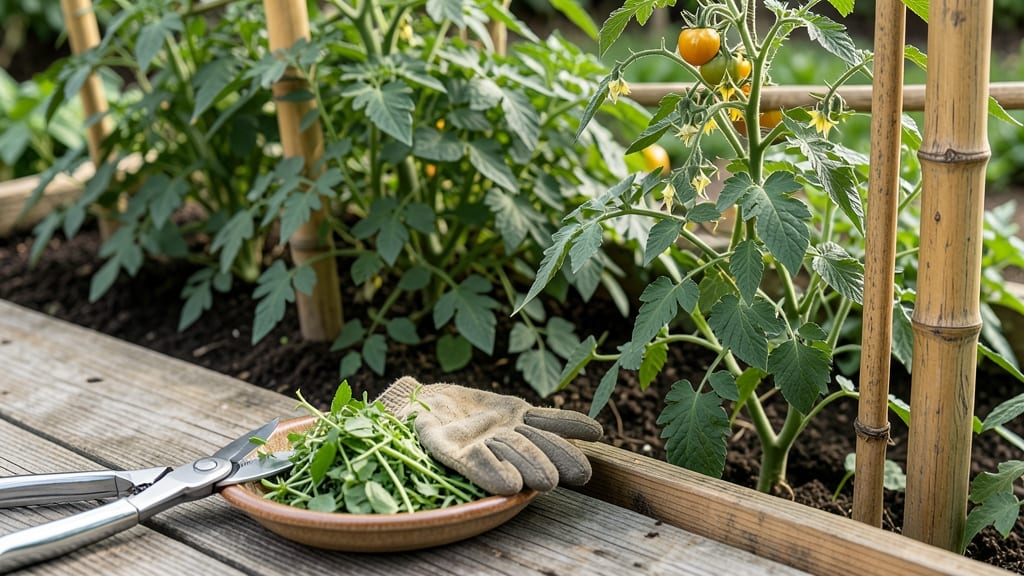
Determinate and indeterminate tomatoes need completely different pruning approaches—or you’ll end up with fewer fruits and more diseases. ✂️ I’ve spent years watching my determinate plants produce all their tomatoes at once while my indeterminate vines kept stretching, and the difference comes down to how you shape them.
The right cuts can double your yield, improve airflow, and keep plants healthy all season.
Determinate tomatoes—those bushy plants that stop growing at a certain height—never need aggressive pruning. Your goal is simply to remove suckers (those little shoots in the leaf axils) to improve airflow and prevent blight.
Indeterminate varieties, though, are a different story: they keep growing until frost, so you’ll prune to direct energy upward, encourage more flowers, and keep the plant from toppling over. Both types need clean cuts with sharp shears, but the why and how couldn’t be more different.
With determinate tomatoes, focus on removing only diseased or crowded leaves—no need to stress the plant. Indeterminate tomatoes, though, thrive when you prune suckers early and top the main stem in late summer to redirect energy into ripening existing fruit.
The payoff? Determinate plants give you a single, massive harvest all at once, while indeterminate varieties keep producing until frost. Either way, proper pruning means more tomatoes, fewer pests, and plants that actually stay upright.
Here’s the kicker: one wrong cut can ruin a season. Determinate tomatoes hate being pruned too much, while indeterminate ones need regular maintenance to avoid becoming unruly. Master these techniques, and you’ll go from guessing to growing like a pro—no more sad, leggy plants or blight-ridden foliage.
Let’s get those shears sharp and those vines shaped right.
The first product explained
Looking for a game-changer in your tomato-growing arsenal?
Meet the Fiskars StaySharp Pruning Shears—your new best friend for tackling determinate and indeterminate tomato pruning like a pro! 🍅✂️ These shears are designed to make your gardening tasks easier, cleaner, and more efficient, whether you're shaping bushy determinate varieties or guiding the sprawling vines of indeterminate plants.
🔧 Specs & Features
The Fiskars StaySharp Pruning Shears are built for durability and precision, with:
- Forged from high-carbon steel: Ensures sharpness and longevity, even after years of heavy use.
- Self-sharpening design: The blades stay sharp with every cut, so you spend less time sharpening and more time pruning.
- Ergonomic, soft-grip handles: Reduces hand fatigue during long pruning sessions—perfect for gardeners who love to get their hands dirty.
- Bypass cutting action: Delivers clean cuts that heal faster, reducing the risk of disease in your tomato plants.
- Rust-resistant coating: Protects against moisture and extends the life of your shears, even in humid garden conditions.
🎯 Target Users
These pruning shears are ideal for:
- Home gardeners who want to maximize yield and plant health with precise cuts.
- Urban farmers and homesteaders managing limited space (especially great for indeterminate tomatoes!).
- Organic growers who prioritize clean, chemical-free pruning tools.
- Beginners and seasoned gardeners alike—easy to use but powerful enough for tough jobs.
💰 Price Point & Value
Priced at $25–$30, the Fiskars StaySharp Pruning Shears offer exceptional value for their quality and versatility. While it’s an investment, the durability and performance make them a cost-effective choice over time. Think of it as a long-term partner for your garden—no need to replace them every season!
Whether you're trimming suckers, shaping cages, or harvesting ripe tomatoes, these shears will help you work smarter, not harder. Ready to elevate your tomato game? Grab a pair and watch your plants thrive! 🌱💚
The second product explained
Next up, let’s dive into Pruning Shears Pro by Fiskars—a premium, ergonomic tool designed for both beginners and seasoned gardeners tackling determinate vs. indeterminate tomato pruning. Whether you're snipping suckers from a sprawling vine or shaping a bushy determinate plant, these shears deliver precision and comfort.
🔧 Key Specs & Features
- Blade Material: High-carbon stainless steel for rust resistance and sharp cuts.
- Ergonomic Handle: Soft-grip design reduces hand fatigue during long pruning sessions.
- Adjustable Blade: Locking mechanism for customizable cutting angles (ideal for thick indeterminate stems).
- Weight: Lightweight (8 oz) yet sturdy, with a balanced feel for effortless control.
- Safety: Finger guard prevents accidental nicks while pruning.
🎯 Who’s It For?
Perfect for:
- Gardeners with indeterminate tomatoes (e.g., Cherry, Beefsteak varieties) needing frequent sucker removal.
- Urban farmers or container growers pruning space-saving determinate varieties (e.g., Roma, Celebrity).
- Those with arthritis or hand sensitivity—thanks to its cushioned grip.
💰 Price Point & Value
Priced at $25–$30 (depending on retailer), the Fiskars Pruning Shears Pro offers long-term value with its durability.
While it’s an investment upfront, its precision and comfort make it a worthwhile upgrade from basic scissors—especially for serious tomato enthusiasts. Pro tip: 💡 Pair it with a disinfectant spray to prevent disease transfer between cuts!
✨ Why It Stands Out
Unlike budget shears that dull after a few uses, this tool maintains its edge season after season. The adjustable blade is a game-changer for indeterminate tomatoes, allowing you to tailor cuts to the plant’s growth stage.
Plus, its sleek design makes it a garden staple that won’t gather dust in your shed.
Head-to-head comparison
Choosing between determinate and indeterminate tomatoes isn’t just about preference—it’s about strategy. Whether you’re a backyard gardener or a seasoned homesteader, understanding how these two types perform under pruning will help you maximize your harvest.
Below, we break down the key differences in a side-by-side comparison so you can decide which variety aligns best with your goals, space, and effort level. 🍅🔪
🌱 Performance: Yield & Growth Habits
Determinate and indeterminate tomatoes have completely different growth patterns, which directly impacts their yield and pruning needs.
- Determinate Tomatoes:
- Grow in a bush-like shape, reaching maturity quickly (60–80 days).
- Produce fruit all at once (great for canning or sauces!).
- Yield is concentrated—expect a big harvest in a short window.
- Pruning note: Minimal pruning is ideal; over-pruning reduces fruit production.
- Indeterminate Tomatoes:
- Grow indefinitely, vining upward (10+ feet if unchecked!).
- Produce fruit continuously throughout the season (perfect for fresh eating!).
- Yield is spread out—smaller batches over months.
- Pruning note: Heavy pruning is key to directing energy to fruit and preventing disease.
Winner for: Determinate = bulk harvests (e.g., Roma for sauces). Indeterminate = long-term fresh supply (e.g., Cherry or Beefsteak).
🔧 Features: Pruning Requirements & Techniques
Pruning style and frequency are where these tomatoes diverge the most. Here’s how to handle each:
| Factor | Determinate Tomatoes | Indeterminate Tomatoes |
|---|---|---|
| Pruning Frequency | Minimal—only remove suckers at the base to prevent overcrowding. | Regular—prune suckers weekly to encourage upward growth and airflow. |
| Sucker Removal | Remove only the lowest suckers to maintain bush shape. | Remove all suckers larger than a pencil (except those near fruit clusters). |
| Staking/Trellising | Low cages or no support needed (unless heavy fruit causes sprawl). | Essential! Use stakes, cages, or trellises to train vines upward. |
| Fruit Cluster Management | Let clusters ripen naturally—no thinning needed. | Thin clusters to 3–5 trusses per vine to improve fruit size and air circulation. |
Pro Tip: 💡 For indeterminate tomatoes, prune in the morning when plants are hydrated to reduce stress.
💰 Price & Accessibility
Your wallet (and garden space) will thank you for knowing these cost and space trade-offs:
- Determinate Tomatoes:
- Generally cheaper to grow (fewer plants needed for bulk harvests).
- Ideal for small spaces (containers, balconies, or tight garden beds).
- Seeds/seedlings are widely available and often budget-friendly.
- Indeterminate Tomatoes:
- May require more upfront investment (stakes, cages, or trellises).
- Need more space (vertical gardening is a must).
- Heirloom or hybrid varieties (e.g., Sungold, Brandywine) can be pricier but offer superior flavor.
Winner for: Determinate = budget-conscious beginners. Indeterminate = serious gardeners willing to invest in quality.
🌿 Durability & Disease Resistance
Pruning affects more than just yield—it impacts plant health. Here’s how each type handles stress and disease:
- Determinate Tomatoes:
- More resilient to over-pruning but susceptible to cracking if overloaded with fruit.
- Less airflow in dense foliage = higher risk of fungal diseases (early blight, late blight).
- Pruning hack: 🌡️ Remove yellow leaves early to prevent disease spread.
- Indeterminate Tomatoes:
- More prone to stress from aggressive pruning (can stunt growth if overdone).
- Better airflow when properly pruned = lower disease risk.
- Pruning hack: ✨ Disinfect pruners with rubbing alcohol between cuts to avoid bacterial transfer.
Winner for: Determinate = low-maintenance gardens. Indeterminate = gardeners prioritizing health and airflow.
🍽️ Harvest & Culinary Use
Your pruning strategy should align with how you plan to use your tomatoes. Here’s the breakdown:
| Use Case | Determinate Tomatoes | Indeterminate Tomatoes |
|---|---|---|
| Best For | Canning, sauces, salsas, paste | Fresh eating, salads, sandwiches, snacking |
| Flavor Profile | Often meaty and uniform (e.g., San Marzano). | Wide variety—sweet, tangy, or complex (e.g., Black Krim, Early Girl). |
| Storage Life | Short-term fresh use; ideal for preserving. | Longer shelf life if harvested at peak ripeness. |
| Pro Tip | 🎯 Plant multiple determinate varieties for staggered harvests if you want fresh tomatoes too! |
Which one should you choose?So, which tomato type—and pruning style—should you choose? The answer depends on your gardening goals, space, and how much effort you’re willing to invest. Let’s break it down to help you decide like a pro! 🌱✂️ 🏆 Best for Beginners or Small GardensIf you’re new to gardening or working with limited space, determinate tomatoes are your best bet. Their compact growth and minimal pruning needs make them low-maintenance superstars. You’ll still get a bountiful harvest (often all at once!) without the fuss of constant trimming. Perfect for containers, patios, or small backyard plots. 🌿 Best for Experienced Gardeners or Large YieldsIf you’re ready to roll up your sleeves and want a continuous harvest all season long, indeterminate tomatoes are worth the extra care. They thrive with proper pruning, staking, and training—rewarding you with heavier yields over a longer period. Ideal for those with space, time, and a passion for maximizing every inch of their garden. 🌍 Best for Urban or Vertical GardeningShort on ground space? Indeterminate tomatoes shine in vertical setups like trellises, cages, or even hanging baskets. Their vining nature lets you grow upward, saving precious real estate. Just ensure you prune regularly to keep them supported and productive. Determinate varieties can also work in containers, but they’ll need sturdy pots to hold their weight. 🍅 Pro Tip for Hybrid SolutionsCan’t decide? Some gardeners plant both! Use determinate tomatoes for early-season harvests (like sauces or salsas) and indeterminate varieties for fresh eating or extended production. It’s a win-win for variety and efficiency. 💡 Final Verdict: Choose determinate for ease and compactness, indeterminate for yield and flexibility. Whichever you pick, happy pruning—and enjoy that homegrown tomato bliss! 🍅😋 |