
Pruning
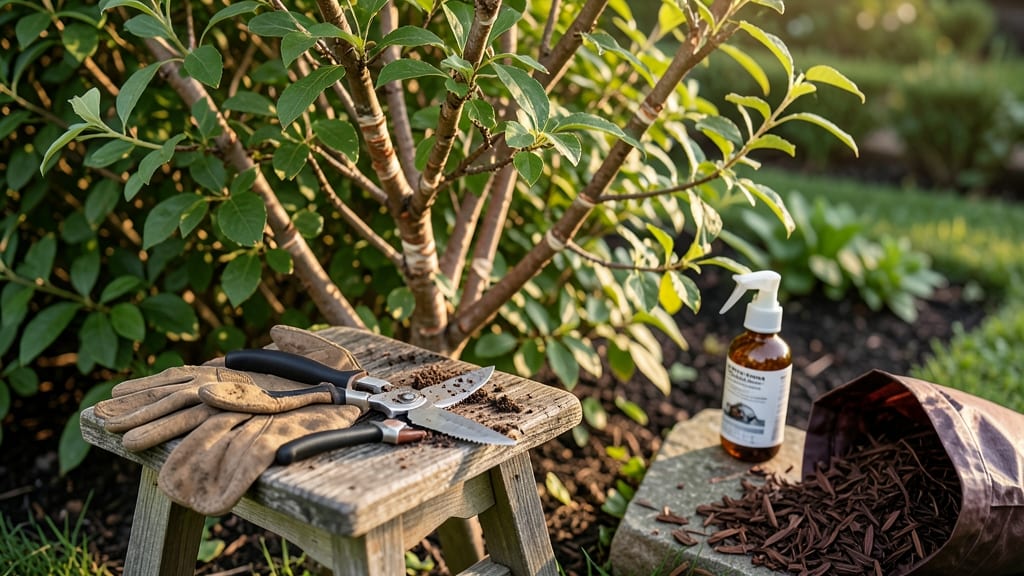
Pruning ninebark bushes transforms them from scraggly to stunning—I’ve turned my overgrown shrubs into lush, multi-season focal points with just a few strategic cuts each year. The key? Timing matters most: late winter or early spring, before new growth begins, is when ninebark responds best to shaping.
Skip summer pruning unless you’re removing dead branches, or you’ll risk stunting next year’s blooms and those signature peeling bark layers.
You’ll need sharp pruners (bypass loppers for thicker stems) and a clear vision—ninebark’s layered branches create natural tiers, so prune to maintain that shape while thinning out crowded centers.
For older bushes, rejuvenation pruning in stages over 2-3 years works wonders: cut back one-third of the oldest stems each year to encourage fresh, vigorous growth from the base. The result? A bush that stays compact, blooms prolifically, and showcases that gorgeous exfoliating bark year-round.
Healthier growth starts with clean cuts: angle them just above an outward-facing bud to direct new shoots away from the center. Avoid shearing—ninebark’s foliage is too fine for that—and never prune more than one-third of the bush at once, or you’ll shock the plant.
After pruning, step back: you should see light filtering through the branches, not dense walls of foliage. The payoff? A bush that stays disease-resistant, fuller, and more productive for decades.
Pro tip: Mark your calendar for late February or early March—right when forsythia blooms—to prune before buds swell. If you miss that window, wait until after flowering, but avoid heavy pruning in summer.
For container-grown ninebark, the same rules apply, just scale down your tools. Now grab those pruners—your bush’s best years are ahead!
📚 In This Guide
- What you need
- Instructions
- Tips and common mistakes
- Wrapping up and next steps
What you need
- ● Pruning shears: Sharp, bypass-style shears (for cuts up to ½ inch thick). Pro tip: Clean blades with rubbing alcohol to prevent disease spread! 🌡️
- ● Loppers: For thicker stems (½ to 1½ inches). Choose bypass loppers for clean cuts.
- ● Pruning saw: For stubborn, thick branches (1½+ inches). Opt for a curved blade for ease.
- ● Garden gloves: Heavy-duty, cut-resistant gloves to protect your hands.
- ● Disinfectant: 70% isopropyl alcohol or a 10% bleach solution (1 part bleach to 9 parts water) to sterilize tools between cuts.
- ● Trash bags or bucket: For collecting pruned branches and debris.
- ● Water: A hose or spray bottle to rinse tools and clean up sap.
- ● Hand pruners with a ratchet mechanism for easier cutting of larger branches.
- ● Pole pruner if your ninebark is tall (6+ feet) and hard to reach.
- ● Plant wound sealant (like Tanglefoot Tree Wound Pruning Seal) for large cuts (though many experts debate its necessity!).
- ● Notebook & pen to jot down pruning notes (e.g., "pruned in March—removed 30% of old wood").
- ● Safety glasses if dealing with thorny or overgrown ninebark bushes.
Instructions for pruning ninebark bushes year-round
Pruning ninebark isn’t just about shaping—it’s about rejuvenating growth and preventing disease. Here’s how to do it right, season by season.
Prune for Shape and Airflow in Late Winter or Early Spring
Start by removing any dead, diseased, or crossing branches first—these compete for energy and invite pests. Use clean, sharp pruners to make cuts just outside the branch collar, where the branch meets the main stem. This ensures a clean wound that heals faster. Ninebark’s peeling bark makes it easy to spot deadwood; look for branches that are hollow or have no green tissue inside.
Next, thin out overcrowded areas to improve airflow. Aim to remove no more than 25% of the plant’s foliage in a single session—this prevents stress. Step back often to check your work; the goal is an open center that lets sunlight reach all branches. If your ninebark has grown leggy, cut back some of the longest stems by one-third to encourage bushier growth. Do this before new growth begins, typically in late February to early March in most climates.
Light Maintenance Pruning in Summer
Summer is for touch-ups, not major restructuring. Remove any suckers—those vigorous shoots growing from the base or along the stem—that drain energy from the main plant. These often appear after heavy pruning or if the soil is overly rich. Snip them off at the base with clean pruners, and avoid leaving stubs, which can rot.
If your ninebark has flowered poorly, prune back a few of the oldest stems by half their length in early summer. This stimulates new growth that will flower more vigorously next year. Watch for powdery mildew on leaves; if you see it, prune affected foliage immediately and dispose of it in the trash—not the compost—to prevent spread. Water at the base after pruning to reduce stress on the plant.
Rejuvenate Older Bushes in Fall
If your ninebark has become woody and sparse, fall is the time to rejuvenate it. Cut back one-third of the oldest stems to the ground in October or November, just as the plant begins its dormancy period. This encourages fresh, vigorous growth from the base. Space out the cuts over 2-3 years if the bush is large; removing too many stems at once can shock the plant.
After pruning, rake up and dispose of all fallen leaves and debris around the base. Ninebark is prone to fungal issues in damp conditions, so keeping the area clean reduces risks. Apply a 2-3 inch layer of mulch around the base (but not touching the trunk) to protect roots over winter. Avoid heavy pruning after mid-October in colder climates, as new growth may not harden off before frost.
Clean Up and Prepare for Next Year
After the growing season winds down, sterilize your pruners with rubbing alcohol to prevent the spread of disease. Sharpen them if needed—dull blades tear wood, inviting infections. Store them in a dry place until next year. Ninebark’s peeling bark makes it resilient, but proper pruning habits now ensure it stays healthy and vibrant for decades.
Take notes on what you pruned and when—this helps track growth patterns and adjust future cuts. For example, if you notice new shoots growing from the base after last year’s pruning, you’ll know to thin them out earlier next time. A well-pruned ninebark rewards you with lush foliage, abundant flowers, and that signature exfoliating bark year after year.
Tips & tricks for perfect ninebark bush pruning
These seasoned strategies will help you maintain your ninebark’s health while keeping its natural beauty intact.
Pruning Precision: When making cuts in Step 1, always target the branch collar—the swollen area where the branch meets the main stem. This is where the plant’s natural healing begins. If you cut too close to the trunk or leave stubs, you risk inviting disease. I’ve seen too many ninebarks develop cankers from improper cuts, so take your time—this is where the plant’s future health hinges.
Seasonal Timing Matters: The late February to early March window in Step 1 is critical because it allows the plant to heal before new growth begins. If you prune too early in winter, the cuts may not heal properly before spring’s growth spurt. In warmer climates, you might extend this slightly into April, but always prioritize completing pruning before buds swell. This timing ensures the plant can direct energy to recovery rather than new foliage.
Disease Prevention: After any pruning session—especially in Step 3—sterilize your tools between cuts. I use a 1:10 bleach-to-water solution to wipe down pruners after each branch, and I always dispose of infected material in the trash, not compost. Ninebark’s peeling bark makes it resilient, but fungal spores can still take hold in wounds. This simple habit has saved my plants from multiple outbreaks over the years.
Mulching Strategy: The 2-3 inch layer of mulch mentioned in Step 3 isn’t just decorative—it’s a protective barrier. Apply it after pruning to regulate soil temperature and retain moisture, which helps the plant recover. Just be sure to keep it 2-3 inches away from the trunk to prevent rot. I’ve noticed that properly mulched ninebarks show significantly less stress during winter’s cold snaps.
Pro Tips for Ninebark Bush Pruning
- These seasoned strategies will help you maintain your ninebark’s health while keeping its natural beauty intact.
- Pruning Precision: When making cuts in Step 1, always target the branch collar—the swollen area where the branch meets the main stem.
- Seasonal Timing Matters: The late February to early March window in Step 1 is critical because it allows the plant to heal before new growth begins.
Frequently asked questions
When is the best time to prune a ninebark bush?
The ideal time to prune ninebark is late winter or early spring (just before new growth starts) to encourage fresh, vibrant foliage. You can also do a light shaping trim in summer after flowering, but avoid heavy pruning then—it may reduce next year’s blooms. Never prune in fall unless removing dead wood, as it can stimulate tender new growth vulnerable to frost.
How much can I prune a ninebark bush?
Ninebark is hardy and forgiving, but avoid cutting back more than one-third of the plant at a time. For rejuvenation, you can prune older stems to the ground in stages over 2–3 years. Young plants benefit from light annual pruning to shape them early, while mature shrubs (3+ years old) can handle renewal pruning every 3–5 years to keep them bushy.
Why is my ninebark bush not blooming after pruning?
If your ninebark skips blooms, it’s usually due to over-pruning or cutting back too late in the season. Blooms form on old wood, so avoid heavy pruning after flowering. Try light pruning in early spring and fertilize with balanced, slow-release granules to encourage flowering. If the issue persists, check for nutrient deficiencies (like iron or nitrogen) or pests.
Can I prune a ninebark bush in winter?
Yes, but only for structural shaping or deadwood removal. Avoid heavy pruning in winter, as it can expose the plant to cold stress or fungal issues. If you must prune, wait until mid-to-late winter (after the worst frost) and use sterilized tools. Focus on removing dead, diseased, or crossing branches to keep the shrub healthy until spring growth resumes.
What’s the difference between pruning ninebark and other shrubs?
Ninebark is unique because it tolerates hard pruning better than many shrubs—it even regenerates from the base if cut back severely. Unlike spring-flowering shrubs (which bloom on old wood), ninebark blooms on new and old wood, giving you more flexibility in timing. However, avoid shearing (like with boxwoods), as it can lead to a woody, leggy appearance. Instead, use selective pruning to open the center for airflow.
Wrapping up and next steps
Pruning your ninebark bush doesn’t have to be intimidating—it’s all about timing, technique, and a little patience! 🌿 By following seasonal guidelines and keeping your tools sharp, you’ll encourage lush, vibrant growth while maintaining that perfect shape. Whether you’re trimming for aesthetics or health, remember: consistency is key.
Ready to take the next step? Grab your pruners, mark your calendar for the next pruning window, and give your ninebark the care it deserves. Your future blooms will thank you! 🌸