
Pruning
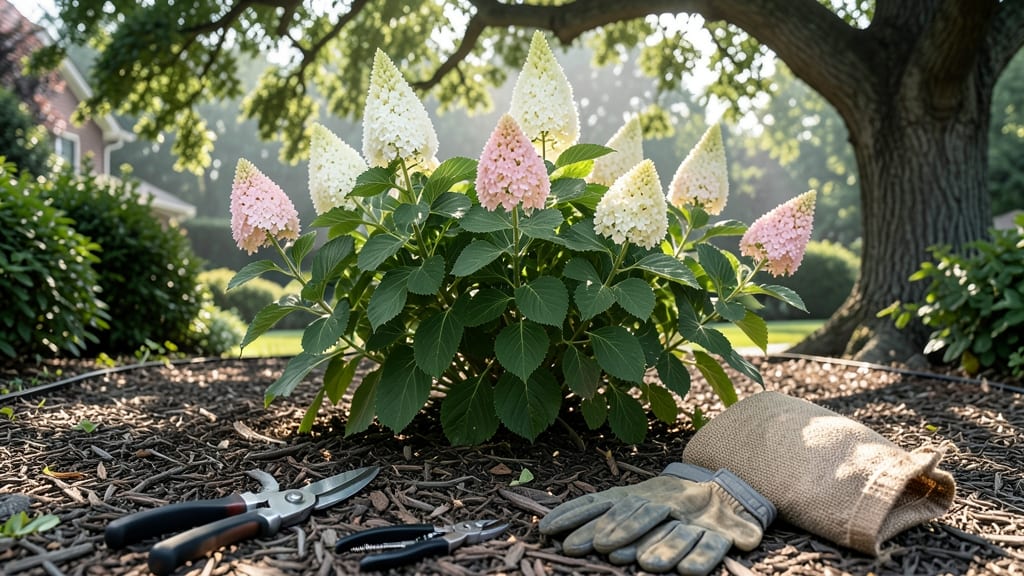
Pruning Peegee hydrangea in late winter means cutting back old stems by about one-third to promote strong new growth and bigger blooms next season, while avoiding aggressive cuts that could stress the plant.
Late winter is the ideal time to prune Peegee hydrangeas because the plant is dormant, making it less vulnerable to damage. 🌿 This timing allows you to remove last year's growth cleanly without disturbing the plant's energy reserves.
The key is to focus on shaping the plant while leaving enough structure for new shoots to emerge in spring. I always use sharp pruners to make clean cuts just above a leaf node or bud, which encourages healthy regrowth.
What sets Peegee hydrangeas apart is their ability to bloom on both old and new wood, though they produce the most vibrant flowers on current season's growth. By cutting back old stems, you're essentially giving your plant a fresh start for the upcoming growing season.
Just remember to avoid over-pruning—removing more than one-third of the plant can weaken its structure and reduce flowering potential.
💡 In This Article
- When and Why Late-Winter Pruning Works for Peegee Hydrangeas
- Step-by-Step Guide to Pruning Peegee Hydrangeas Correctly
When and why late-winter pruning works for Peegee hydrangeas
Late-winter pruning targets Peegee hydrangeas when they're in full dormancy, typically between mid-February and early March in most climates. This timing aligns with the plant's natural growth cycle, when it's not actively photosynthesizing or flowering. The cold temperatures slow metabolic processes, reducing stress from pruning cuts.
During dormancy, the plant's energy is stored in its roots, allowing it to recover quickly from the pruning process and redirect resources to new growth when spring arrives.
The biological mechanism at work involves the plant's hormonal response. When you make clean cuts at a 45-degree angle just above a leaf node or outward-facing bud, you stimulate the production of auxin—a plant hormone that promotes cell elongation and root development.
This hormonal shift triggers the formation of new shoots from dormant buds along the remaining stems. Peegee hydrangeas, in particular, respond well to this stimulation because they're naturally vigorous growers, capable of producing 12-18 inches of new growth per season under optimal conditions.
This pruning approach also minimizes disease risk by removing last year's stems that may have harbored fungal spores or pests. The old wood is more susceptible to pathogens because its protective bark has degraded over winter.
By cutting back one-third of the plant's height, you're essentially creating an open structure that improves air circulation—a crucial factor for preventing fungal infections like powdery mildew. The increased airflow also allows sunlight to penetrate deeper into the plant, which is essential for photosynthesis in the new growth.
What most gardeners don't realize is how this timing maximizes next year's flower production. Peegee hydrangeas produce their most vibrant blooms on current season's growth, so removing last year's stems doesn't sacrifice flowers—it actually enhances them.
The plant responds to the pruning stress by producing larger, more abundant flower clusters on the new stems that emerge in spring. This is particularly noticeable in the second year after pruning, when the plant has fully recovered and established a strong root system.
Consider the environmental factors at play: late winter's cooler temperatures help prevent excessive sap flow that can occur with spring pruning, while the ground remains cold enough to protect the plant's roots from temperature fluctuations.
The combination of hormonal stimulation, improved plant structure, and reduced disease pressure creates an optimal environment for the plant to focus its energy on producing healthy new growth and abundant blooms.
For visual reference, imagine pruning a Peegee hydrangea as giving it a "haircut" that shapes its growth pattern. The cuts should be made at the point where the stem meets the main branch, creating a clean surface that can heal properly.
This technique not only improves the plant's appearance but also its long-term health and productivity. The result is a hydrangea that enters the growing season with a strong foundation for the year ahead.