
Pruning
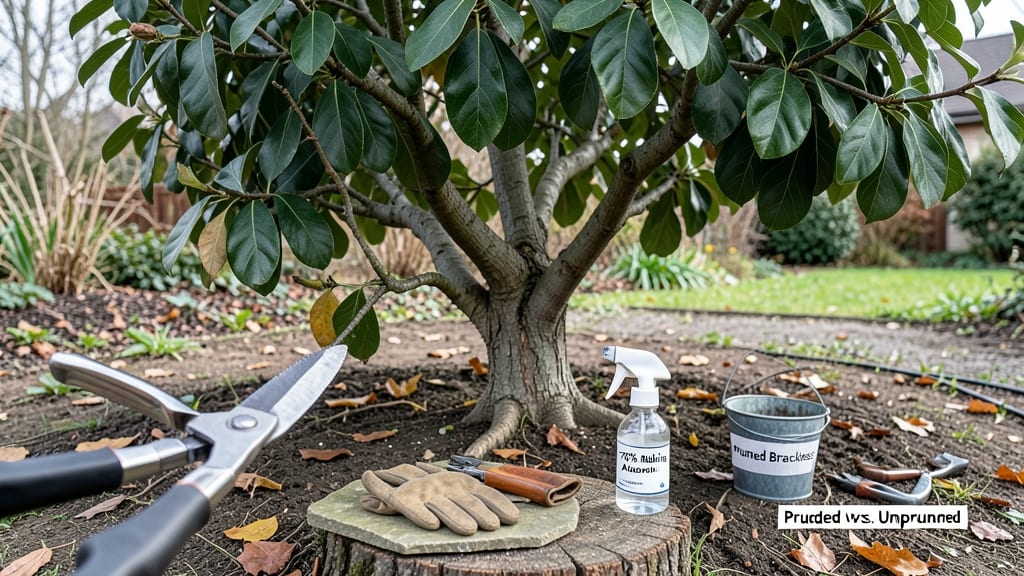
Pruning a persimmon tree isn't just about shaping—it's about unlocking next year's harvest. ✂️ I learned the hard way that skipping pruning means fewer fruits and a tree that struggles to support its own weight.
The right cuts at the right time transform a wild, tangled mess into a productive, open-centered tree that lets sunlight reach every branch. Start with the basics: sharp pruners, a ladder, and a disinfectant to prevent disease spread.
Persimmons bloom on old wood, so we're not hacking away—just guiding growth. Focus on removing dead wood first, then thin out crossing branches. Aim for an open vase shape that lets air and light circulate.
By late winter, you'll see new growth emerging from the pruned branches—this is where next year's flowers (and fruit) will form. The tree rewards careful pruning with heavier crops and stronger structure. Even a small annual pruning session keeps the tree healthy for decades.
This works for both Asian and American persimmons, though timing varies slightly by variety. The key is consistency—don't wait until the tree is overgrown to start. Let's get those branches looking intentional!
📚 In This Guide
- What you need
- Instructions
- Tips and common mistakes
- Wrapping up and next steps
What you need
- ● Pruning shears: Sharp, bypass-style shears (for cuts up to ½ inch thick). Quantity: 1 pair.
- ● Loppers: For thicker branches (½ to 1½ inches). Quantity: 1 pair.
- ● Pruning saw: For branches over 1½ inches in diameter. Quantity: 1 (hand or folding saw).
- ● Disinfectant: 70% isopropyl alcohol or a pruning sealant (to prevent disease spread). Quantity: Small bottle or spray.
- ● Gloves: Heavy-duty, cut-resistant gloves (persimmon trees have thorns!). Quantity: 1 pair.
- ○ Ladder: Sturdy, extendable ladder (if tree is tall). Quantity: 1 (optional for smaller trees).
- ○ Pruning paint/sealant: (Optional) For sealing large cuts (over ½ inch) to protect the tree.
- ● Trash bags: For collecting pruned branches. Quantity: 2–3 (or a wheelbarrow for hauling).
- ● Weather check: Prune on a dry, calm day (avoid wind or rain).
- ● Safety glasses: To protect against debris. Quantity: 1 pair.
- ● Long sleeves/pants: To avoid scratches from thorns.
- ● Knowledge of tree structure: Familiarize yourself with the tree’s central leader and branch angles.
Instructions: pruning persimmon trees for healthy fruit production
Here's my foolproof method for shaping persimmons year-round—whether you're correcting winter damage or encouraging summer fruit.
✂️ Step 1: Prune for Structure in Late Winter (Before Bud Break)
Use sharp bypass pruners to remove dead, diseased, or crossing branches first. Persimmons respond best to structural pruning when they're still dormant—this prevents sap bleeding and fungal infections. Look for branches growing toward the center of the tree; these compete for sunlight and should be cut back to the nearest outward-facing bud.
Make cuts just outside the branch collar (that swollen area where the branch meets the trunk) at a 45-degree angle. This ensures proper healing. For branches thicker than your thumb, use a pruning saw and seal the cut with tree wound paint if your climate is wet—this prevents water entry that leads to rot. I always prune on a dry day to reduce fungal spores in the air.
☀️ Step 2: Thin Out Fruit Spurs in Early Summer (After Flowering)
Once flowers appear, wait until 50% of blooms have fallen before thinning. Persimmons set fruit heavily, and overloading branches weakens the tree. Leave one fruit per spur (those small, stubby branches where fruit forms) to ensure each gets maximum sunlight and nutrients. Use clean, sharp pruners to cut the stem just above a leaf node—never tear the fruit off by hand.
Watch for clusters of fruit growing in dense areas. These compete for resources and often produce small, poor-quality fruit. Remove the entire cluster down to the spur, then wait 2-3 weeks before pruning nearby branches again. This gives the tree time to heal without inviting bacterial infections. I mark clusters with flagging tape if I'm unsure which to remove—it's easier to spot from a distance.
✂️ Step 3: Light Pruning for Airflow in Late Summer (After Harvest)
After the main harvest, inspect the canopy for branches that rub together or grow inward. These should be pruned back to a healthy outward-facing bud using the same 45-degree cut technique. Persimmons need good airflow to prevent fungal diseases like anthracnose, which thrives in humid, shaded conditions. Remove any suckers (shoots growing from the base or trunk) immediately—they drain energy from the main tree.
This is also the time to shorten overly vigorous branches by one-third to encourage bushier growth. Look for branches that extend beyond the main canopy; these often produce smaller fruit. Cut just above a lateral bud pointing in the direction you want the branch to grow. I always step back after pruning to visualize the tree's shape—it's the best way to spot missed areas.
🪴 Step 4: Minimal Winter Cleanup (Remove Only the Obvious)
During winter, limit pruning to removing dead wood and branches broken by storms. Avoid heavy pruning in cold months—persimmons are slow to heal, and winter cuts invite disease. If you must prune, do it on a warm, dry day when temperatures are above 40°F. Seal larger cuts with tree wound paint to protect against winter sunscald.
Rake up and dispose of all pruned material to reduce fungal spores near the tree. I always wear gloves when handling persimmon branches—some varieties have thorns that draw blood, and the sap can irritate skin. Leave the pruned branches in a pile for a few days before composting; this helps break down any lingering pathogens.
Tips & tricks for pruning persimmon trees
These practical insights will help you shape your persimmon tree like a pro—without the guesswork.
Timing is Everything: In Step 1, when pruning for structure before bud break, choose a day when temperatures are predicted to stay above 40°F for at least 24 hours. Cold weather slows healing, and wounds left open in chilly conditions can invite fungal infections. I've learned this the hard way after seeing sap ooze from cuts made too early in the season.
Visualize First, Cut Second: Before making any cuts in Step 3, step back and examine the tree's shape from all angles. Imagine how sunlight will hit the canopy after your pruning—this helps you decide which branches to shorten by one-third. I mark potential cuts with flagging tape first, then step back again to visualize the final shape. This prevents over-pruning and ensures balanced growth.
Cleanliness Prevents Disease: After removing clusters in Step 2, immediately disinfect your pruners with rubbing alcohol between cuts. Persimmon trees are particularly susceptible to bacterial canker, and contaminated tools spread pathogens faster than you'd think. I keep a small spray bottle of alcohol in my tool belt for quick cleanups between branches.
Winter Pruning Shortcuts: During Step 4, focus only on removing dead wood and storm-damaged branches. If you're unsure whether a branch is dead, scratch the bark with your fingernail—if it's green underneath, it's still alive. For branches thicker than your thumb, use a pruning saw and seal the cut immediately with tree wound paint to prevent winter sunscald.
Pro Tips for Pruning A Persimmon Tree
- These practical insights will help you shape your persimmon tree like a pro—without the guesswork.
- Timing is Everything: In Step 1, when pruning for structure before bud break, choose a day when temperatures are predicted to stay above 40°F for at least 24 hours.
- Visualize First, Cut Second: Before making any cuts in Step 3, step back and examine the tree's shape from all angles.
Frequently asked questions
Got questions about pruning your persimmon tree? You’re not alone! Here are answers to the most common concerns—from timing to tools—to help you prune like a pro.
When is the best time to prune a persimmon tree?
The ideal time is late winter or early spring (before buds break) for American persimmons, or summer after harvest for Asian varieties. Avoid heavy pruning in fall, as wounds may not heal before winter. Light shaping in summer (after fruiting) is safe for both types.
Do I need special tools for pruning persimmon trees?
Basic tools like bypass pruners (for small branches), loppers (thicker branches), and a pruning saw (large limbs) work well. Sterilize tools with rubbing alcohol to prevent disease. A pole saw or harvesting shears can help with high branches.
Will pruning reduce my persimmon harvest?
Not if done correctly! Pruning improves fruit quality by increasing airflow and sunlight. Remove dead, crossing, or overcrowded branches first. Over-pruning (cutting >25% of foliage) may temporarily reduce yield, but proper shaping boosts long-term production.
What should I do if my persimmon tree bleeds sap after pruning?
Sap bleeding is normal and harmless—it won’t harm the tree. To minimize mess, prune on dry, cool days (avoid hot weather). Seal large cuts (>1 inch) with pruning sealant if concerned, but most persimmons heal fine without it.
Can I prune a young persimmon tree differently than a mature one?
Yes! Young trees (1–3 years) need structural shaping—remove competing leaders and thin branches to encourage a strong scaffold. Mature trees (4+ years) focus on renewal pruning: cut back older wood to stimulate new growth and fruit-bearing branches.
Wrapping up and next steps
Pruning your persimmon tree is a rewarding way to ensure healthy growth, abundant fruit, and a stunning shape—whether you’re a seasoned gardener or just starting out! 🌳 By following the right techniques at the right time, you’ll create an environment where your tree thrives and produces delicious harvests for years to come.
Now that you’re armed with the know-how, roll up your sleeves and get pruning! Start by assessing your tree’s needs, then take action with confidence. For extra guidance, consider consulting local gardening resources or joining a community of fellow plant enthusiasts. Happy pruning—your persimmon tree will thank you! 🍊✨