
Pruning
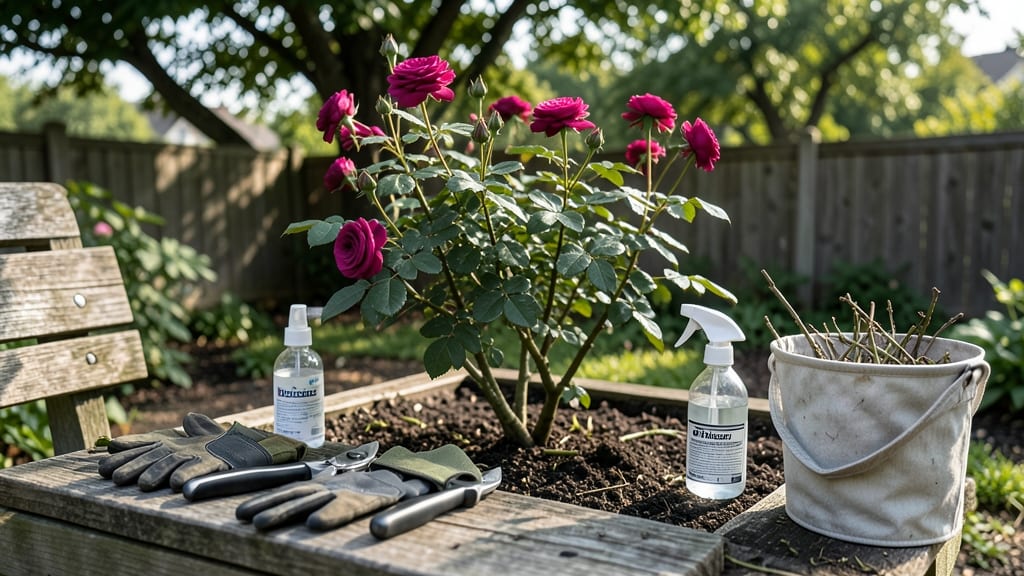
Fall pruning knockout roses transforms next year’s blooms from decent to jaw-dropping. ✂️ I’ve pruned these tough beauties for years, and timing is everything—too early and you risk frost damage; too late and you leave them vulnerable.
The key? Wait until after your first hard frost but before winter dormancy sets in completely.
You’ll need sharp bypass pruners (dull blades tear canes), a clean bucket for trimmings, and a pair of gloves—these roses have thorns that don’t play nice. The goal is to cut back by one-third, removing dead, crossing, or weak stems.
Think of it like giving your plant a haircut: shorter on the sides, but never so short you’re left with stubs.
After pruning, your roses will look like overgrown sticks, but that’s exactly what they need to survive winter. The fresh cuts seal quickly in cool air, and the plant directs energy into root growth.
By spring, you’ll see thicker canes and more blooms than ever before—sometimes up to 50% more—because you’ve trained the plant to focus its energy.
This method works in zones 5-9, though exact timing shifts slightly with your climate. In colder zones, prune after the ground freezes; in milder areas, you’ve got a bit more wiggle room. The secret? Don’t rush—wait for that first crisp morning frost as your signal.
📚 In This Guide
- What you need
- Instructions
- Tips and common mistakes
- Wrapping up and next steps
What you need
- ● Bypass pruners: A sharp, high-quality pair (e.g., Felco or Fiskars) to make clean cuts—1 pair.
- ● Loppers: For thicker canes (½"–1" diameter)—1 pair with bypass blades.
- ● Garden gloves: Heavy-duty, cut-resistant (e.g., Mechanix or Wolverine)—1 pair.
- ● Disinfectant (70% isopropyl alcohol or bleach solution): To sterilize tools between cuts—small spray bottle.
- ● Rake or broom: For clearing debris—1.
- ● Hand saw: For stubborn, thick canes—pruning saw with fine teeth.
- ● Pruning sealant: (e.g., Tree Seal Tape) to protect large cuts—small roll.
- ● Marking twine or paint: To tag canes for reference (if needed).
- ● Compost bin or bag: For collecting pruned canes—1 container.
Step-by-step instructions for pruning Knockout roses in fall
Here’s how I prune my Knockout roses each fall—it takes just 30 minutes per bush and sets up next year’s most vibrant blooms.
✂️ Step 1: Wait for the Right Time
Prune after your first hard frost when the plant is fully dormant but before winter storms hit. You’ll know it’s time when leaves turn brown and drop, and new growth stops. I wait until late November in my zone 6 garden—this timing prevents new shoots from sprouting before winter, which would freeze and die.
Check the weather forecast for a dry, calm day. Pruning in wet or windy conditions stresses the plant and spreads disease. If rain is forecast within 24 hours, reschedule. This step ensures your roses heal cleanly before winter.
✂️ Step 2: Gather Tools and Clean Up
Use only sharp, clean tools: a pair of bypass pruners for larger canes and a pair of hand pruners for smaller stems. Wipe blades with rubbing alcohol before you start—this prevents spreading fungal spores from last year’s cuts. I also lay down a tarp beneath the bush to collect debris easily.
Remove any dead, diseased, or crossing branches first. These are obvious—look for blackened canes, strange growths, or branches rubbing against each other. Cut these out completely at the base. This step prevents pests and diseases from overwintering in your rose bush.
✂️ Step 3: Make Your Cuts for Structure
Start by cutting back last year’s blooms to just above a set of five outward-facing leaves (this is called the “5-leaf rule”). Make cuts at a 45-degree angle, about ¼ inch above a bud that faces outward. This encourages strong new growth in spring and prevents crowded canes.
Step back and assess the shape—you want an open center with light filtering through. I aim for a vase-like shape with the widest part at the base. Avoid cutting more than ⅓ of the plant’s total height in one season. This step ensures your rose has the energy to rebound quickly in spring.
✂️ Step 4: Thin and Shape for Airflow
Remove any weak, thin, or spindly canes entirely—they won’t produce strong blooms. Look for stems thinner than a pencil; these compete with stronger growth for nutrients. Cut these back to the ground. This step improves airflow, which reduces humidity and fungal diseases like black spot.
Shape the remaining canes so they’re evenly spaced around the center. Aim for 3-5 main canes per bush, depending on its size. Avoid leaving stubs—always cut back to a bud or branch junction. This step keeps your rose compact and prevents overcrowding.
✂️ Step 5: Clean Up and Protect for Winter
Collect all pruned branches and debris, then dispose of them in the trash—not your compost pile. Rose canes can harbor diseases that survive winter. I also spray the remaining canes with a 2% neem oil solution to deter pests before the first snowfall.
Mulch the base of the plant with 2-3 inches of organic mulch (like shredded bark) to insulate roots. Keep mulch 6 inches away from the stem to prevent rot. This step protects roots from freezing and thawing cycles, which can damage them.
Tips & tricks for pruning Knockout roses in fall
A few simple tricks will help you prune like a pro and keep your roses thriving for years to come.
Timing is Everything: The 30-minute pruning window per bush is perfect for focused work, but don't rush! I like to spread my 30 minutes over a few days if I have multiple bushes—this prevents fatigue and ensures precision cuts. Remember, the goal is to remove about ⅓ of the plant's height, so take your time assessing each cane's health and position. This careful approach prevents over-pruning, which stresses the plant.
Tool Prep Matters: Before you even touch your roses, give your pruners a thorough cleaning with rubbing alcohol. I learned this the hard way after transferring fungal spores from one bush to another. Also, keep a small spray bottle of rubbing alcohol handy to wipe blades between cuts—this prevents cross-contamination. Sharp tools make cleaner cuts that heal faster, so take 5 minutes to hone your blades before starting.
Visual Cues for Perfect Cuts: When making your 45-degree cuts in Step 3, imagine you're cutting a slice off a pie—this angle helps water run off the cut instead of pooling. Look for outward-facing buds when making your cuts; these will grow into strong, upright canes. I like to count five leaves above the cut point to ensure I'm following the 5-leaf rule correctly. This simple visual check makes all the difference in spring growth.
Winter Protection Strategy: The 2-3 inches of mulch you add in Step 5 is crucial, but placement matters just as much as quantity. I like to create a donut shape with my mulch—piling it around the base but keeping it 6 inches away from the stem. This prevents rot while still insulating roots. For extra protection in harsh winters, consider wrapping the entire bush with burlap after mulching, especially if you're in zone 5 or colder.
Pro Tips for Pruning Knockout Roses In Fall
- A few simple tricks will help you prune like a pro and keep your roses thriving for years to come.
- Timing is Everything: The 30-minute pruning window per bush is perfect for focused work, but don't rush!
- Tool Prep Matters: Before you even touch your roses, give your pruners a thorough cleaning with rubbing alcohol.
Frequently asked questions
Got questions about pruning your Knockout® roses this fall? You’re not alone! Here are the most common concerns—and straightforward answers—to help you get it right.
When is the exact best time to prune Knockout roses in fall?
Prune after the first hard frost (when temperatures dip below 25°F (-4°C)) and before winter dormancy sets in. This usually lands in late November to early December in most U.S. zones. The goal? Remove spent blooms and shape canes before the plant goes into hibernation mode.
What if I missed the fall window—can I prune in early spring instead?
Yes! Early spring (just as new growth appears, around March–April) is your backup plan. Just avoid pruning too early—frost can damage fresh cuts. Knockout roses are forgiving, but fall pruning still gives them a head start for next year’s blooms.
How much should I cut back—1/3, 1/2, or more?
Aim to reduce each cane by 1/3 to 1/2, focusing on:
- Dead, diseased, or crossing branches
- Weak or spindly growth
- Canes older than 3 years (they’re less productive)
My roses look sad after pruning—did I overdo it?
Don’t panic! Knockout roses bounce back fast. If you cut too much, mulch heavily (3–4 inches) and water deeply before winter. Avoid fertilizing post-prune—let the plant focus on healing. Signs of recovery: New buds by spring = success!
Do I need to disinfect my pruners between cuts?
Absolutely!
Wipe blades with rubbing alcohol (70%+) or a 10% bleach solution between cuts to prevent spreading disease. Knockout roses are tough, but fungal spores (like black spot) lurk on tools. Pro tip: Sterilize tools before and after pruning sessions.
Wrapping up and next steps
Pruning your Knockout roses in fall is your secret weapon for vibrant blooms and robust canes next season! By removing dead or weak growth, improving airflow, and shaping your plants now, you’re setting the stage for a showstopping spring and summer.
Think of it as a gift to your garden—a little effort now means months of effortless beauty later.
Ready to transform your roses? Grab your pruners, roll up your sleeves, and start planning your late-winter cleanup—because the best gardens begin with the right prep! 🌸✂️