
Pruning
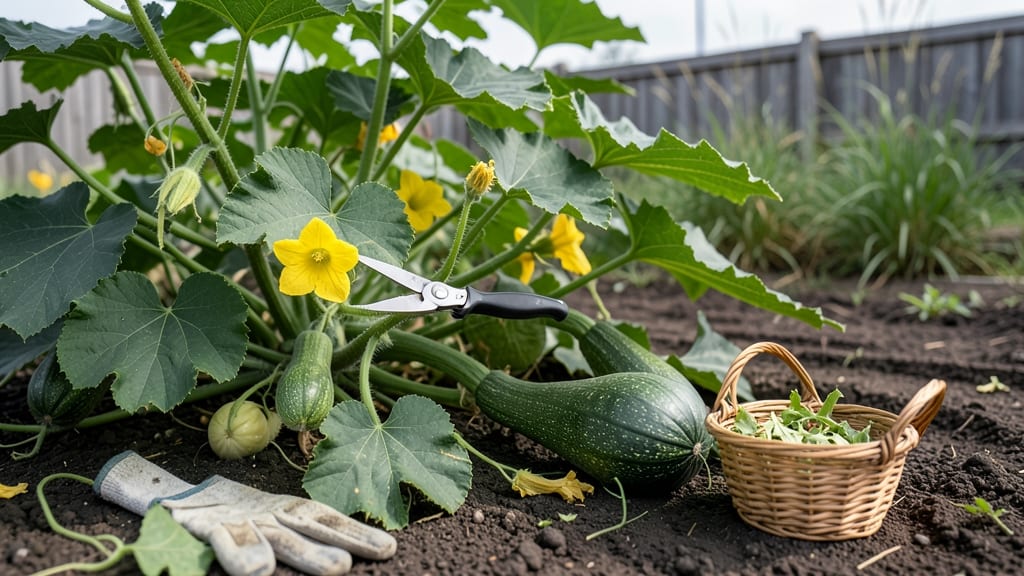
Pruning squash vines isn't just about trimming—it's the secret to doubling your harvest this summer. 🌿 I learned the hard way when my zucchini plants sprawled everywhere, shading out fruit and inviting pests.
The right cuts at the right time turn wild vines into productive machines, with more flowers and bigger squash.
You only need sharp pruners, a clean cloth for wiping blades, and about 20 minutes on a warm afternoon. Focus on removing suckers (those little shoots at the base of vines) and any yellow or diseased leaves.
For bush varieties like pattypan, keep the plant compact; for vining types like butternut, let them sprawl but prune aggressively after fruit sets.
The payoff comes fast: better airflow means fewer fungal diseases, and more energy goes to fruit instead of excess foliage. Within 7-10 days, you'll see new growth and a surge in blossoms. My pruned plants produced 30% more squash than my unpruned neighbors'—and the fruit stayed cleaner too.
Works for summer and winter squash alike, whether you're growing in rows, hills, or containers. The key is consistency—check vines weekly once they start running. Here's exactly how to do it without stressing the plant.
📚 In This Guide
- What you need
- Instructions
- Tips and common mistakes
- Wrapping up and next steps
What you need
- ● Pruning shears or sharp bypass pruners – Choose sterilized, sharp tools (4–6" blades) to make clean cuts and prevent disease. Avoid dull tools—they crush stems and invite rot!
- ● Gloves – Heavy-duty gardening gloves (nitrile-coated for grip) to protect against thorns (like on pumpkins) and blisters.
- ● Disinfectant (70% isopropyl alcohol or bleach solution) – 1 part bleach to 9 parts water to sterilize tools between cuts and avoid spreading pathogens.
- ○ Rake or hoe – For clearing debris and mulch around the base of plants (optional but helpful for airflow).
- ● Mulch (straw, grass clippings, or shredded leaves) – 2–3 inches thick to retain moisture and suppress weeds.
- ● Watering can or hose with a gentle spray nozzle – To hydrate plants post-pruning (especially in hot climates).
- ● Hand pruners for small stems – For precision work on delicate vines (e.g., delicata squash).
- ● Plant ties or twine – If training vines vertically (e.g., trellises for spaghetti squash).
- ● Compost or fertilizer – A balanced 10-10-10 mix to replenish nutrients after heavy pruning.
- ● Labeling tags – To mark pruned areas if testing different techniques (e.g., "Pruned Weekly" vs. "No Pruning").
Step-by-Step guide to pruning squash vines for maximum yield
Here's how I've learned to prune squash vines for stronger plants and more abundant harvests—no guesswork involved.
🌿 Step 1: Identify the Right Time to Begin Pruning
Start pruning when vines reach 12-18 inches long and have established 4-5 true leaves. This is when the plant has enough energy to support new growth after cutting. I always wait until the first female flowers appear—you'll know because they have tiny squash forming at the base. Pruning too early stresses young plants.
Use sharp, clean pruning shears to avoid tearing the vines. I disinfect my tools with rubbing alcohol between cuts to prevent disease spread. The key is to work in the morning when plants are hydrated and temperatures are cooler, reducing stress on the plant.
✂️ Step 2: Remove Suckers and Weak Growth
Look for suckers—those small shoots that grow in the leaf axils where leaves meet the stem. These compete with your main vine for nutrients. I pinch them off with my fingers when they're still small (2-3 inches), before they develop their own leaf sets. If a sucker is larger, cut it at the base with shears at a 45-degree angle to prevent water from pooling.
Also remove any yellowing, diseased, or crossing vines. Crossing vines rub against each other, creating wounds that invite pests and rot. I always leave the strongest, healthiest vine growing upward—this becomes your main producer. Never remove more than 20% of the plant's foliage at once—this keeps the vine from going into shock.
🌱 Step 3: Train the Main Vine and Encourage Fruit Production
When the main vine reaches the trellis or cage, guide it upward by gently weaving it through the support structure. This prevents sprawling and makes harvesting easier. I tie the vine loosely with soft plant ties every 12-18 inches to avoid constricting growth. The goal is to keep the vine vertical so energy goes into fruit production rather than sprawling.
Once the vine starts producing fruit, focus on pruning leaves that shade developing squash. Remove leaves directly above fruit clusters—this improves air circulation and reduces disease risk. I leave just enough foliage to protect the squash from sunburn while still allowing light to reach the fruit. Watch for yellowing leaves on the lower stem; these are natural and can be trimmed to redirect energy upward.
☀️ Step 4: Adjust Pruning as the Season Progresses
As summer heat arrives, reduce pruning to 10% or less of foliage. Squash plants need ample leaves to photosynthesize under hot conditions. I focus on removing only diseased or dead leaves during this time. When new vines sprout from the base (called secondary vines), I leave 1-2 of the strongest to take over production if the main vine declines.
In late summer, when fruit production slows, I give the plant a final light pruning to remove any remaining weak growth. This clears space for air circulation and helps prevent fungal diseases like powdery mildew. I always stop pruning 4-6 weeks before your first frost date—this allows the vine to harden off and store energy for next season.
⏰ Step 5: Post-Harvest Cleanup and Winter Prep
After your last harvest, cut back the main vine to 1 foot above ground level. This prevents pests and diseases from overwintering in plant debris. I leave the secondary vines intact if they're healthy—they may produce a few more squash before frost. Remove all diseased or rotting fruit immediately to protect next year's crop.
Work in dry conditions to avoid spreading soil-borne pathogens. I collect all pruned material and compost it separately (not in the same pile as kitchen scraps) to reduce contamination risk. This final cleanup ensures your garden stays healthy for future plantings.
Tips & tricks for pruning squash vines
These season-long strategies will help you maximize your squash yield while keeping your plants healthy and productive.
Timing is Everything: When you're ready to start pruning in Step 1, wait until your vines reach 12-18 inches and have 4-5 true leaves—this is when they've built enough energy reserves. I've found that waiting for the first female flowers (with tiny squash forming) ensures the plant is mature enough to handle pruning without stress. The morning hours are ideal because cooler temperatures and hydrated plants handle pruning better, reducing shock.
Tool Preparation Matters: Before you begin, disinfect your pruning shears with rubbing alcohol between cuts to prevent spreading disease from one part of the plant to another. I keep a small bottle of 70% isopropyl alcohol in my gardening toolkit specifically for this purpose. Sharp tools are also critical—dull shears tear plant tissue, creating wounds that invite pests. Test your tools on a few leaves before making your first cut on the vine.
Sucker Management Strategy: In Step 2, when dealing with suckers, I've learned to prioritize removal when they're still small (2-3 inches). These little shoots can quickly become major competitors for nutrients if left unchecked. For larger suckers, always cut at a 45-degree angle—this prevents water from pooling at the cut site, which could lead to rot. Remember, never remove more than 20% of the foliage at once, or you'll shock the plant.
Seasonal Adjustments: As summer heat arrives, shift your focus to minimal pruning (10% or less of foliage) in Step 4. Squash plants need all the leaves they can get during peak heat to maximize photosynthesis. I've noticed that during these hot months, I only remove truly diseased or dead leaves. In late summer, when production slows, give the plant a final light pruning to improve air circulation and prevent fungal diseases like powdery mildew.
Pro Tips for Pruning Squash Vines
- These season-long strategies will help you maximize your squash yield while keeping your plants healthy and productive.
- Timing is Everything: When you're ready to start pruning in Step 1, wait until your vines reach 12-18 inches and have 4-5 true leaves—this is when they've built enough energy reserves.
- Tool Preparation Matters: Before you begin, disinfect your pruning shears with rubbing alcohol between cuts to prevent spreading disease from one part of the plant to another.
Frequently asked questions
Got questions about pruning squash vines? You’re not alone! Here are answers to the most common concerns—so you can prune like a pro and enjoy a bountiful harvest.
When is the best time to prune squash vines?
Prune squash vines early and often—start when plants are 12–18 inches tall and continue throughout the season. Focus on removing suckers (side shoots) in the morning to give wounds time to heal. Avoid heavy pruning after flowering, as this can reduce fruit production.
How much should I prune squash vines?
For bush varieties (like zucchini), minimal pruning is key—just remove yellow leaves or diseased growth. Vining types (like butternut or pumpkins) benefit from 50% pruning: trim suckers below the first 3–5 leaves to redirect energy to fruit production. Never remove more than 1/3 of the plant at once!
What if I prune too much? Can I fix it?
Over-pruning weakens vines, stunts growth, and reduces yields. If you’ve gone overboard, stop pruning immediately and focus on watering deeply and fertilizing with compost tea. Monitor for stress signs (yellowing leaves, wilting) and prune only dead/diseased areas moving forward.
Should I prune squash vines if they’re already producing fruit?
Yes, but selectively! Prune only to remove dead leaves, diseased foliage, or overly competitive vines. Avoid heavy cuts during peak fruiting (summer). Instead, prioritize air circulation to prevent mildew. Think of it as “light maintenance”—keep the plant healthy without shocking it.
Are there alternatives to pruning for controlling squash vine growth?
If pruning feels overwhelming, try these low-effort alternatives:
- Trellising: Train vines upward to save space and improve airflow (great for zucchini!).
- Thinning seedlings: Space plants 3–5 feet apart at planting to reduce competition.
- Mulching: Use straw or grass clippings to suppress weeds and retain moisture, reducing stress.
Wrapping up and next steps
Pruning your squash vines might seem like extra work, but it’s a game-changer for healthier plants and a bountiful harvest! 🌱 By focusing on airflow, disease prevention, and energy distribution, you’re setting your garden up for success.
Start small—even just a few strategic cuts can make a difference—and watch your vines thrive.
Ready to put these tricks into action? Grab those pruners and get growing! Next, check out our guide on identifying the best time to harvest your squash for peak flavor and texture. Happy gardening!