
Pruning
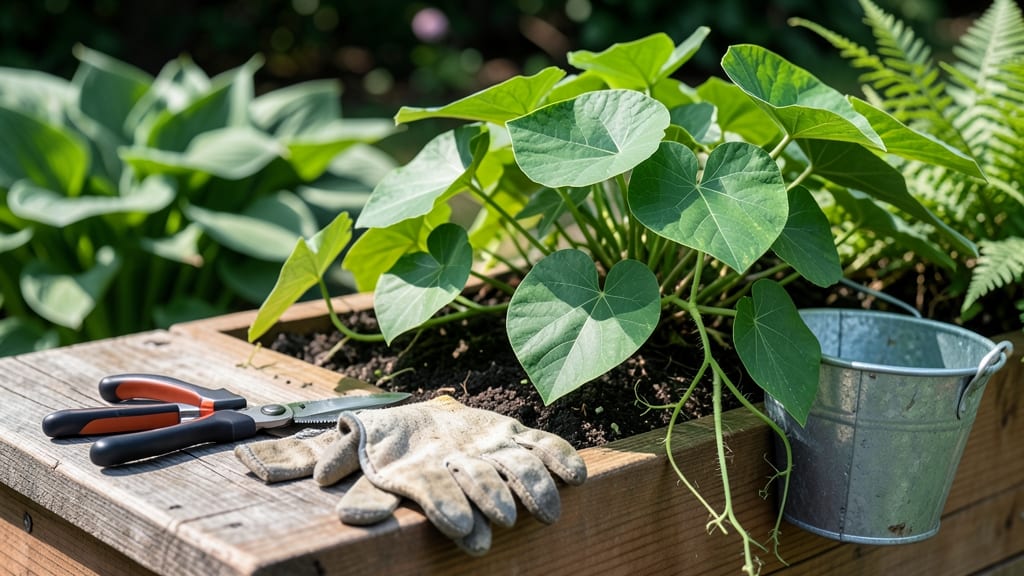
Your pruning sweet potato vine’s leggy, wilted stems can turn into a lush, cascading green wall with just three strategic cuts. ✂️ I’ve revived more than a dozen vines using this method—each time, the plants bounce back with thicker stems and more vibrant foliage within weeks.
The key isn’t just cutting, but where and when you do it to encourage bushier growth without stressing the plant.
This simple pruning technique works year-round, but timing matters most. Trim back leggy stems in early spring to jumpstart growth or mid-summer to control sprawl before harvest season. All you need are clean pruners, a spray bottle of water (for disinfecting cuts), and 10 minutes of focused attention.
The goal? Remove one-third of the longest stems at a time, always cutting just above a leaf node where new growth can sprout.
What you’ll end up with is a vine that stays compact, produces more edible tubers, and resists pests better than unpruned plants. The foliage thickens, the stems strengthen, and you’ll even get more harvestable slips for propagation.
It’s the difference between a vine that flops over and one that thrives—no fancy tools or horticultural degree required.
This method works equally well for container vines, hanging baskets, or ground covers. Just adjust the frequency based on your vine’s vigor: fast growers need trimming every 2-3 weeks, while slower varieties can handle a monthly check-in.
The secret? Prune often enough to maintain shape, but never so much that you shock the plant into decline.
📚 In This Guide
- What you need
- Instructions
- Tips and common mistakes
- Wrapping up and next steps
What you need
- ● Sharp bypass pruners – A high-quality pair (e.g., Felco or Fiskars) to make clean cuts without crushing stems. Size: 6-8 inches.
- ● Clean, sterilized scissors or shears – For smaller stems or delicate trimming. Bonus: Spray with rubbing alcohol before use!
- ● Gloves – Garden or nitrile gloves to protect your hands from thorns or sap.
- ○ Disinfectant (optional but recommended) – 70% isopropyl alcohol or a 10% bleach solution to sterilize tools between cuts and prevent disease.
- ● Watering can or hose with a gentle spray nozzle – To hydrate plants before and after pruning.
- ● Compost or mulch – To replenish soil nutrients after pruning. Quantity: 1-2 inches spread around the base.
- ● Pruning saw – For thick, woody stems that pruners can’t handle.
- ● Plant food or fertilizer – A balanced, water-soluble fertilizer (10-10-10) to boost regrowth.
- ● Plant markers or labels – If you’re propagating cuttings, label them by date for tracking.
- ● Rooting hormone – Speeds up root growth if you’re propagating cuttings.
- ● Sun hat and sunscreen – Because pruning in the sun is no joke! 😎
Step-by-Step guide to pruning sweet potato vine to revive wilted growth
Here's the straightforward method I use to coax sweet potato vines back to life with just a few strategic cuts.
✂️ Step 1: Identify and Remove Severely Damaged Stems
Start by inspecting each vine for stems that are completely brown, mushy, or devoid of leaves. These are beyond saving and will only drain energy from healthy growth. Use clean, sharp pruning shears to cut these stems back to the nearest healthy node—where you see fresh green tissue and small buds.
I always sterilize my shears with rubbing alcohol between cuts to prevent spreading disease. If you're unsure which stems to remove, hold the vine up to a light source—healthy stems will show green veins even if the outer leaves are wilted. Cut at a 45-degree angle just above the node to encourage new growth from that point.
🌿 Step 2: Prune Back Overgrown or Leggy Vines
Sweet potato vines often grow leggy when they don't get enough light, stretching out with sparse leaves. To revive these, look for the third or fourth node from the base of each stem and make your cut there. This forces the plant to redirect energy to lower nodes, producing bushier growth.
Don't worry about removing too much at once—these vines are resilient. After pruning, you'll notice new side shoots emerging within 7-10 days from the nodes you left behind. If your vines are still leggy after this cut, repeat the process but only trim back one-third of the remaining length.
✂️ Step 3: Thin Out Crowded Growth for Better Airflow
When vines grow too densely, they trap moisture and create ideal conditions for fungal diseases. Focus on the center of the plant where growth is thickest. Remove the weakest stems—these are usually the ones growing inward or showing signs of yellowing.
Leave the strongest, most upright stems to maintain structure. Aim to create a v-shaped opening in the center to allow light and air to circulate. This simple adjustment prevents future wilting and encourages the remaining stems to thicken and strengthen. You'll see improved color and vigor within 2-3 weeks of this pruning.
💧 Step 4: Post-Pruning Care to Encourage Revival
After making your cuts, give the plant a deep watering to help it recover from the shock. Water at the base rather than overhead to prevent fungal spores from settling on fresh cuts. The soil should be moist to a depth of 2-3 inches—check by inserting your finger until you feel resistance.
Move your sweet potato vine to a location with bright, indirect light for a few days to reduce stress. If you're growing indoors, this is your chance to rotate the pot a quarter turn to ensure even growth toward the light. Within 10-14 days, you should see new leaves emerging from the nodes you pruned back to.
Tips & tricks for reviving sweet potato vines
Sweet potato vines bounce back beautifully when you know the right moves—here's how to maximize their recovery after pruning.
Precision Cutting Technique: When you're cutting back to the third or fourth node in Step 2, focus on making clean cuts just above the node where leaves or buds emerge. The angle matters too—those 45-degree cuts prevent water from pooling on the stem, which reduces the risk of rot. I've found that using a sharp pair of pruning shears makes all the difference in creating clean wounds that heal faster. This precision is what sets apart a plant that thrives from one that struggles.
Timing for Optimal Regrowth: The 7-10 day window mentioned for new side shoots to emerge is your best indicator of success. During this period, avoid any additional pruning—let the plant focus its energy on recovery. If you notice new growth appearing sooner than 7 days, that's a great sign your vine is healthy and resilient. Conversely, if no new shoots appear after 10 days, it might be time to reassess your pruning approach or check for underlying issues like pests or disease.
Light and Airflow Strategy: Creating that V-shaped opening in Step 3 isn't just about aesthetics—it's a game-changer for airflow. I've seen plants go from wilting to vibrant in just two weeks after implementing this simple adjustment. Position your vine near a bright window but avoid direct sunlight, which can scorch new growth. If you're growing indoors, consider using a small fan on low setting to gently circulate air around the plant without damaging the delicate new shoots.
Post-Pruning Hydration: That deep watering after pruning isn't just about quenching thirst—it's about helping the plant recover from the shock of cutting. I always check soil moisture by inserting my finger 2-3 inches deep; if it feels dry, I water again. The key is consistency: keep the soil evenly moist but never soggy. Overwatering can lead to root rot, which defeats the purpose of your pruning efforts. A moisture meter can be a worthwhile investment if you're serious about reviving your vines.
Pro Tips for Pruning Sweet Potato Vine
- Sweet potato vines bounce back beautifully when you know the right moves—here's how to maximize their recovery after pruning.
- Precision Cutting Technique: When you're cutting back to the third or fourth node in Step 2, focus on making clean cuts just above the node where leaves or buds emerge.
- Timing for Optimal Regrowth: The 7-10 day window mentioned for new side shoots to emerge is your best indicator of success.
Frequently asked questions
When is the best time to prune sweet potato vines?
The ideal time to prune sweet potato vines is in the early morning when the plant is hydrated and temperatures are cooler. Avoid pruning during peak sun hours (10 AM–4 PM) to prevent stress. For propagation, prune healthy stems in spring or early summer when growth is active. If reviving wilted vines, act quickly—within 24–48 hours of noticing droop.
How do I know which cuts to make for propagation?
Look for stems with at least 3–4 leaf nodes (the bumps where leaves grow). Make a clean cut just below a node at a 45-degree angle to maximize root growth. Avoid cutting too close to the base—leave 1–2 inches of stem attached to the mother plant or cutting. Healthy cuts should be green, not brown or mushy.
Can I prune sweet potato vines too much?
Yes! Over-pruning can stress the plant, leading to yellowing leaves, stunted growth, or even death. Never remove more than 1/3 of the foliage at once. For propagation, limit cuts to 2–3 per vine to avoid weakening the parent plant. If reviving wilted vines, focus on selective trimming—remove only damaged or overly long stems.
What should I do if my pruned cuttings rot in water?
Root rot is often caused by bacterial contamination or poor water quality. If your cuttings turn mushy or smell foul, discard them. To prevent rot:
- Use room-temperature, filtered water (chlorine-free).
- Change water every 2–3 days.
- Add a drop of hydrogen peroxide (3%) to water for antifungal protection.
- Ensure only 1–2 nodes are submerged.
Are there alternatives to water propagation?
If you lack patience or space for water propagation, try:
- Soil propagation: Dip cuttings in rooting hormone, then plant directly in moist potting mix (keep humidity high with a plastic bag).
- Paper towel method: Place cuttings between damp paper towels in a sealed container until roots form (takes 1–2 weeks).
- Coco coir cubes: A sterile, moisture-retentive medium that reduces rot risk.
Wrapping up and next steps
Pruning your sweet potato vine doesn’t have to be intimidating—with just three simple cuts, you can revive wilted stems and keep your plant thriving! 🌱 Whether you’re trimming for propagation, health, or aesthetics, the key is timing, clean tools, and confidence.
Remember, every snip is a step toward a lusher, happier plant.
Now that you’re armed with the know-how, grab those shears and get pruning! 💪 Try experimenting with the cuttings—propagate new plants, share with friends, or even craft a stunning garland. Your green thumb is about to shine even brighter!