
Pruning
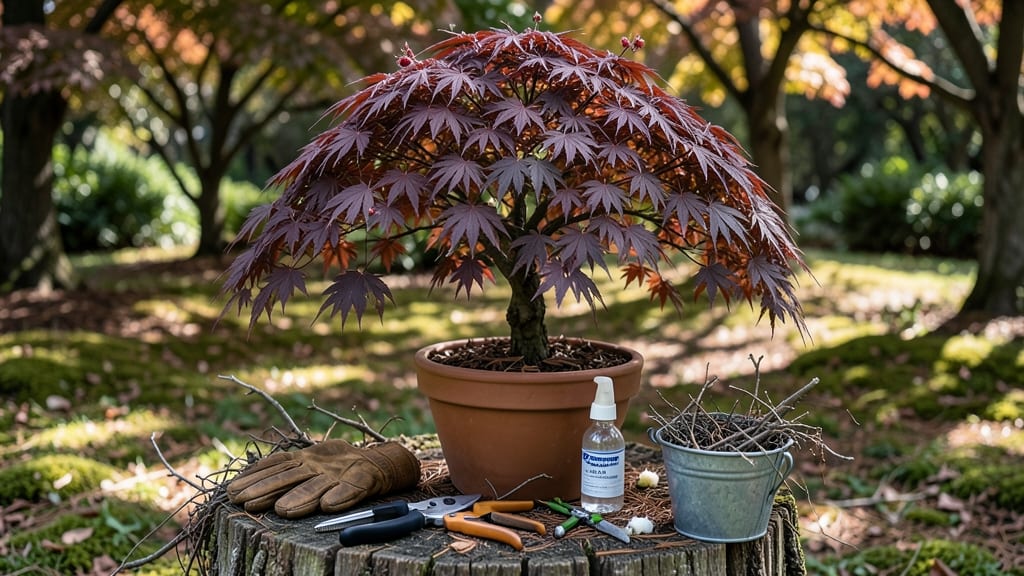
Pruning weeping Japanese maples in late winter reveals their hidden structure—where delicate branches need gentle guidance, not aggressive cuts. ✂️ I’ve shaped mine for years, and the difference between a scraggly mess and a cascading masterpiece comes down to timing, technique, and respect for the tree’s natural form.
One wrong snip, and you’ll stunt growth or invite disease; do it right, and you’ll encourage lush, graceful branches that sway in the breeze all season long.
The key is working when the tree is dormant but just waking up—late February to early March—before new growth starts. You’ll need sharp bypass pruners (never dull shears), rubbing alcohol to sterilize cuts, and a ladder if your tree stands taller than your reach.
Start by removing dead or crossing branches first, then thin out crowded growth to improve airflow. The goal isn’t to hack back foliage but to refine the silhouette, letting light filter through to the center where shade breeds disease.
After pruning, your weeping maple will reward you with fresh green shoots within weeks, and by summer, the branches will fill out more evenly. To keep it thriving, water deeply once a month during dry spells and apply a light layer of mulch to protect roots.
Avoid heavy pruning in fall—it stresses the tree before winter—and never prune when the sap is flowing heavily in spring, or you’ll risk sap bleeding and weak growth.
This method works for both young saplings and mature trees, though larger specimens may need two light pruning sessions spaced a month apart. The secret? Patience. Weeping Japanese maples grow slowly, and their beauty lies in their natural elegance—so prune with purpose, not perfection.
Your tree will thank you with years of graceful, disease-free growth if you treat it like the delicate masterpiece it is.
📚 In This Guide
- What you need
- Instructions
- Tips and common mistakes
- Wrapping up and next steps
What you need
- ● Bypass pruners – Sharp, clean bypass pruners (not anvil-type) for clean cuts on branches up to ½ inch thick. ⚠️ Must be sterilized with rubbing alcohol or bleach solution (1 part bleach to 9 parts water).
- ● Loppers – For thicker branches (½ to 1½ inches). Choose bypass-style loppers for precision.
- ● Hand saw – A pruning saw with fine teeth for branches over 1½ inches in diameter.
- ● Gloves – Garden gloves (nitrile or leather) to protect from thorns and sap.
- ● Disinfectant – Rubbing alcohol (70%+) or bleach solution (1:9 ratio) to sterilize tools between cuts.
- ○ Sealing wax or pruning paste – Optional but helpful for sealing large cuts (>½ inch) to prevent disease.
- ○ Extension pole – Optional for hard-to-reach branches (3–6 feet long).
- ● Timing – Prune during late winter to early spring (just before buds swell) for best results.
- ● Weather – Choose a dry, overcast day (avoid pruning if rain is forecasted within 24 hours).
- ○ Safety gear – Safety glasses (optional but recommended) to shield from debris.
- ● Cleanup supplies – Garden bag or bucket for debris and paper towels for wiping tools.
Instructions for pruning weeping Japanese maple
Here's how to shape your weeping maple with confidence—spring is the perfect time to guide its graceful form.
✂️ Step 1: Assess the Tree’s Natural Shape
Start by examining your weeping Japanese maple from all sides. Look for the tree's natural growth patterns—the way branches cascade downward and where they thin out. This helps you identify which branches need encouragement and which might need removal to maintain balance. Hold your pruning shears at a 45-degree angle about ¼ inch above a bud or where a branch naturally tapers.
Weeping maples grow best when their branches flow downward elegantly. If you notice any branches growing upward or outward, these are prime candidates for pruning. I always step back every few cuts to check the overall silhouette—this prevents over-trimming and keeps the tree's natural beauty intact.
✂️ Step 2: Remove Dead, Diseased, or Crossing Branches
Begin by cutting out any dead, diseased, or damaged branches first. These are easy to spot—they’ll be brown, brittle, or lacking leaves. Use clean, sharp pruning shears to make a smooth cut just outside the branch collar (the swollen area where the branch meets the trunk). This ensures the tree heals properly and reduces the risk of infection.
Next, look for branches that cross or rub against each other. These can damage the bark and create entry points for pests or disease. Remove the smaller of the two branches or the one growing inward. I like to make these cuts on a dry day when the tree isn’t stressed—this helps it recover faster.
✂️ Step 3: Thin Out Overcrowded Areas
Weeping Japanese maples thrive when they have good airflow and light penetration. Focus on thinning out the center of the tree first, where branches may be too dense. Aim to remove about 20-30% of the foliage in crowded areas to improve airflow and reduce disease risk. Look for branches that are growing straight up or outward—they’re often the culprits causing congestion.
When thinning, cut branches back to a lateral branch or bud, always making your cut just outside the bud. Avoid leaving stubs, as they can invite decay. If you’re unsure which branch to remove, I recommend cutting the smaller or weaker branch to maintain the tree’s natural balance.
✂️ Step 4: Shape the Tree’s Silhouette
Now it’s time to refine the tree’s shape. Weeping Japanese maples are known for their graceful, cascading branches, so your goal is to enhance this natural form. Start by trimming the outer edges of the tree to create a soft, rounded shape. Use your shears to shorten branches that are growing too long or leggy, cutting them back to a point where the branch naturally bends downward.
Pay attention to the tree’s growth habits—some branches may grow faster than others, so you’ll need to adjust your cuts accordingly. I like to step back frequently to visualize the tree’s final shape. Avoid over-pruning; weeping maples are sensitive to heavy cuts, and too much pruning can stress the tree or even kill it.
✂️ Step 5: Clean Up and Monitor Recovery
Once you’ve finished pruning, clean your tools with rubbing alcohol to prevent the spread of disease. Remove any fallen branches or debris from the base of the tree to keep the area tidy. Water the tree deeply after pruning to help it recover, especially if the weather has been dry. Avoid fertilizing immediately after pruning, as the tree needs time to heal before putting energy into new growth.
Keep an eye on your weeping Japanese maple in the weeks following pruning. Look for signs of new growth, which should appear within 4-6 weeks. If you notice any unusual browning or wilting, it could be a sign of stress or disease. In this case, avoid pruning further and focus on providing the tree with proper care—water, sunlight, and mulch—to help it recover.
Tips & tricks for pruning weeping Japanese maple
Spring pruning transforms your weeping maple into a stunning focal point—here’s how to avoid common mistakes and elevate your results.
Step 1 Angle Matters: That 45-degree angle in Step 1 isn’t just a suggestion—it’s critical for proper healing. Imagine slicing a pie at an angle rather than straight down. The angled cut prevents water from pooling, which reduces rot risk. I’ve seen too many pruning jobs go wrong because people cut straight across, leaving ugly stubs that never heal properly.
Tool Sharpness is Non-Negotiable: Dull shears tear bark instead of making clean cuts, which stresses the tree. I sharpen my pruning shears every spring before starting—it takes 5 minutes with a file and makes all the difference. For larger branches, use a pruning saw with a fine-tooth blade to avoid splintering the wood. Clean tools also prevent disease spread between cuts.
Visualize the Final Shape: Before making any cuts, step back and study your tree’s natural form. Weeping maples should look like a graceful waterfall, not a bush. In Step 4, when shaping the silhouette, focus on creating gentle curves rather than sharp lines. I often sketch a rough outline on paper first—it helps me see where branches need adjustment without over-trimming.
Timing is Everything: The 4-6 week recovery window in Step 5 is your guide for when to prune next year. If you notice new growth appearing sooner, your tree is thriving. But if it takes longer than 6 weeks, that’s a sign you may have pruned too aggressively. Early spring (just as buds swell) is ideal—avoid pruning in fall or winter when the tree is dormant.
Pro Tips for Pruning Weeping Japanese Maple
- Spring pruning transforms your weeping maple into a stunning focal point—here’s how to avoid common mistakes and elevate your results.
- Step 1 Angle Matters: That 45-degree angle in Step 1 isn’t just a suggestion—it’s critical for proper healing.
- Tool Sharpness is Non-Negotiable: Dull shears tear bark instead of making clean cuts, which stresses the tree.
Frequently asked questions
Got questions about pruning your weeping Japanese maple? You’re not alone! Here are answers to the most common concerns—so you can keep your tree thriving with confidence.
When is the best time to prune a weeping Japanese maple?
The ideal window is late winter to early spring (just before buds swell). Avoid pruning in fall or winter, as cold stress can harm the tree. If you must prune outside this window, do so only in mild weather to minimize shock. Pro tip: Never prune in summer or early fall—this can stimulate weak growth before winter.
How much can I trim back my weeping Japanese maple?
For healthy growth, limit pruning to no more than 25% of the tree’s foliage per year. Weeping varieties are delicate—over-pruning can stress the tree or disrupt its graceful shape. Focus on removing dead/diseased branches first, then lightly shape the canopy. If your tree looks leggy, prune selectively to encourage bushier growth.
What should I do if my weeping Japanese maple bleeds sap after pruning?
Sap bleeding is normal but can be messy! To minimize it, prune on a dry day and use sharp, clean tools. Seal cuts with pruning sealant (optional for small cuts) or let them heal naturally. Avoid heavy pruning in very cold or windy conditions, as this can worsen sap flow. Most trees recover fully—just keep an eye on the wound for signs of infection.
Can I prune a weeping Japanese maple in pots or containers?
Yes, but with extra care! Container-grown maples need lighter pruning—focus on removing only dead or crossing branches to avoid stress. Since roots are confined, prune minimally (10-15% max) and water deeply after pruning to help recovery. If your tree is root-bound, consider repotting in early spring before pruning.
What’s a good alternative if my weeping Japanese maple won’t recover after pruning?
If your tree shows wilted leaves, dieback, or no new growth after pruning, it may be over-stressed. Try these fixes:
- Improve soil drainage—maples hate soggy roots.
- Fertilize lightly with acidic, slow-release fertilizer.
- Mulch properly (2-3 inches, keeping mulch away from the trunk).
- Consider a growth regulator (like paclobutrazol) if overgrowth is the issue.
Wrapping up and next steps
Pruning your weeping Japanese maple in spring isn’t just about maintaining its stunning shape—it’s about nurturing its future beauty and health. 🌿 With the right tools, timing, and technique, you’ll unlock years of graceful, vibrant growth.
Now that you’re armed with expert tips, take that first confident step: grab your pruners, step outside, and give your tree the care it deserves!
Your Next Step:
- 📅 Mark your calendar for early spring—before new growth appears—to start pruning.
- 👀 Observe your tree weekly to spot any lingering dead or crossing branches.
- 🌱 Celebrate small wins! Even minor adjustments make a big difference over time.