
Pruning
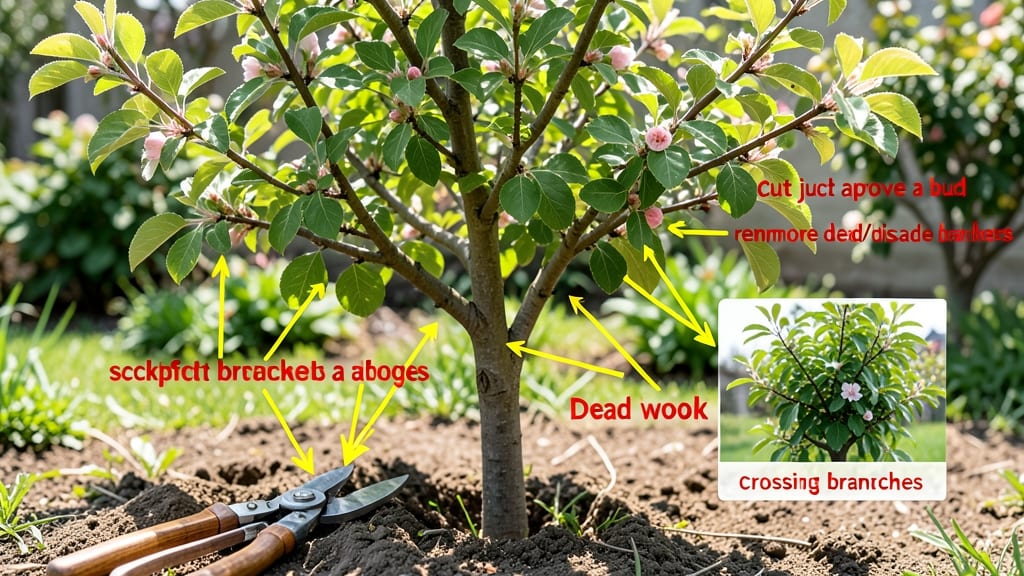
Pruning your small peach tree using a small peach tree pruning diagram unlocks its full potential—healthier branches, more fruit, and a shape that makes harvesting easier. 🌿 I’ve pruned mine for years, and the difference between a neglected tree and one that thrives comes down to a few strategic cuts at the right time.
The key is removing dead wood, opening the canopy for sunlight, and encouraging strong fruiting branches.
You’ll need just three tools: sharp pruning shears, loppers for thicker branches, and a clean rag to disinfect cuts. Timing matters too—prune 2-3 weeks before buds swell in late winter, when the tree is still dormant but about to wake up.
This gives it time to heal before spring growth starts.
Start by cutting out dead, crossing, or diseased branches—these steal energy from the tree. Then shape the canopy by removing suckers (shoots growing from the base) and thinning out crowded branches to let light reach the center. The goal is a balanced, open structure where fruit can ripen evenly.
After pruning, your tree should look more like an airy umbrella than a dense bush. This isn’t just about looks—it’s about stronger growth, fewer pests, and bigger harvests next season. The diagram below shows exactly where to make each cut, with clear labels for every step.
📚 In This Guide
- What you need
- Instructions
- Tips and common mistakes
- Wrapping up and next steps
What you need
- ● Pruning shears (bypass or anvil type) – Choose sharp, clean shears with a 6-8 inch blade for precision cuts.
- ● Loppers – For thicker branches (½ inch or larger), opt for bypass loppers to avoid crushing.
- ● Pruning saw – For branches too thick for loppers (1-2 inches in diameter).
- ● Garden gloves – Heavy-duty, cut-resistant gloves to protect your hands from thorns and sharp tools.
- ● Disinfectant (70% rubbing alcohol or bleach solution) – Clean tools between cuts to prevent disease spread.
- ● Twine or zip ties – For securing branches if needed (e.g., training young trees).
- ● Small rags or paper towels – For wiping tools and hands during pruning.
- ● Pruning diagram or sketch – Print or reference our small peach tree pruning diagram for guidance!
- ● Hand pruners with a built-in sharpener – Keeps blades in top shape for cleaner cuts.
- ● Tree wound dressing – Only use if pruning large wounds (controversial—research first!).
- ● Ladder or step stool – For taller trees (ensure stability and safety!).
- ● Trash bags – For collecting pruned branches and debris.
Step-by-step pruning for a healthy small peach tree
Pruning isn't just cutting—it's sculpting your tree's future. Here's how to shape a thriving small peach tree with precision cuts that boost fruit production and airflow.
🌱 Step 1: Time Your Pruning for Maximum Healing
Prune during late winter or early spring—right before buds swell but before new growth begins. This timing ensures cuts heal quickly before summer pests arrive. Avoid pruning in fall; open wounds invite disease when winter rains come. I mark my calendar for February in colder climates or March in warmer zones—this gives branches 6-8 weeks to seal before active growth.
Check the weather forecast first. Prune on a dry, overcast day—sunlight can stress newly cut branches. If rain is forecast within 48 hours, delay your session. You'll know you've timed it right when you see fresh, sticky sap oozing from cuts within minutes of making them.
✂️ Step 2: Remove Dead, Diseased, and Crossing Branches First
Start with sanitation cuts—these are your tree's health foundation. Use clean, sharp pruners to remove any branches that are dead (brown, brittle), diseased (fungus spots, oozing sap), or crossing (rubbing against others). Cut back to a bud or lateral branch at a 45-degree angle, leaving a 1/4-inch stub—this prevents water pooling. I always work from the bottom up to avoid damaging good branches with my tools.
Watch for sucker growth (vigorous shoots at the base) and water sprouts (vertical shoots with no leaves)—these steal energy from fruit production. Cut these out completely at the base. You'll notice the tree's structure opens up immediately, letting sunlight reach the center where fruit develops.
☀️ Step 3: Thin the Canopy for Better Airflow and Light
Step back and visualize your tree's open-center shape. Your goal is 50-60% light penetration to the center. Remove 1/3 of the smallest branches first—these are often the oldest and least productive. Cut just above an outward-facing bud to encourage growth away from the center. For thicker branches over 1/2 inch, use loppers and make cuts 1/8 inch above a bud on the underside of the branch.
Look for branches growing inward—these create dense shade where fruit rots. Also target branches growing straight up (called "vertical dominants") unless they're the main trunk. You'll see the tree's skeleton emerge as you work, with a clear central leader and evenly spaced scaffold branches.
🌿 Step 4: Shape for Fruit Production and Structure
Now focus on fruitwood development. Peach trees bear fruit on 1-year-old wood, so preserve last year's growth. Cut back overly vigorous shoots to 12-18 inches to redirect energy to fruiting spurs. For fruit spurs (short, stubby branches with clusters of buds), leave them intact—they're your tree's future harvest. Thin clusters so 6-8 inches separate fruit spurs—this prevents overcrowding and improves fruit size.
Pay attention to the tree's natural growth pattern. If branches are growing too upright, make a heading cut just above a bud angled outward. For branches growing at 45-degree angles, you can leave them longer. Step back frequently to check your progress—your goal is a balanced, vase-like shape with no dense clusters.
⏰ Step 5: Clean Up and Protect Your Tree
After pruning, sterilize your tools with rubbing alcohol to prevent disease spread. Collect all pruned branches and dispose of them in a sealed bag—never leave them under the tree. This removes potential hiding spots for pests. I also apply a wound dressing (like pruning sealant) only to cuts larger than 1/2 inch—smaller cuts heal faster without it.
Water deeply right after pruning to help the tree recover. Then, monitor for new shoots at the pruning cuts—these are called epicormic shoots and should be removed in 6-8 weeks if they're growing vigorously. Your tree will show signs of recovery in 4-6 weeks with fresh, green leaf growth at the pruned ends.
Tips & tricks for perfect small peach tree pruning
Here's what nobody tells you about pruning—these are the details that separate a healthy tree from a struggling one.
Timing is Everything: The 6-8 week healing window after pruning is non-negotiable. In colder climates, I've seen trees pruned in March develop epicormic shoots by May—this is your tree's way of compensating for late cuts. If you're in a warmer zone, don't rush—wait until those buds are visibly swelling but haven't yet burst open. The sap flow test is your best indicator: when you make a clean cut and see immediate sap oozing, that's your perfect window.
Tool Prep Makes All the Difference: Sterilizing your pruners between cuts isn't just about disease prevention—it's about giving your tree the best chance. I keep a small bottle of rubbing alcohol in my pruning kit and wipe down blades after every 3-4 cuts, especially when moving between branches. For larger cuts over 1/2 inch, I use a dedicated pair of loppers to avoid dulling my pruners. Sharp tools make cleaner cuts that heal faster, and you'll notice the difference in how quickly your tree responds.
Visualizing the Final Shape: Before making any cuts, step back and mentally trace the open-center shape you're aiming for. I find it helps to sketch a rough diagram on paper first—mark where your scaffold branches should be spaced and how much light should penetrate the center. This prevents over-thinning in one area while leaving dense clusters elsewhere. Remember, you're aiming for that 50-60% light penetration—this isn't about removing everything, but strategically opening up the tree's structure.
Post-Pruning Care is Critical: That deep watering right after pruning isn't just a suggestion—it's essential. I've seen trees recover beautifully when given this immediate hydration, especially in dry climates. Then, the 4-6 week recovery period is your tree's time to show its resilience. Watch for those new shoots at pruning cuts—they're your tree's way of telling you it's healing. If they grow vigorously (more than 6 inches in 6-8 weeks), remove them completely to maintain your desired shape.
Pro Tips for Small Peach Tree Pruning Diagram
- Here's what nobody tells you about pruning—these are the details that separate a healthy tree from a struggling one.
- Timing is Everything: The 6-8 week healing window after pruning is non-negotiable.
- Tool Prep Makes All the Difference: Sterilizing your pruners between cuts isn't just about disease prevention—it's about giving your tree the best chance.
Frequently asked questions
about small peach tree pruning—because even the best gardeners need a little extra guidance! Here’s what you’ve been wondering:When is the best time to prune a small peach tree?
Prune your peach tree in late winter or early spring (before buds swell) for dormant-season shaping. Avoid heavy pruning in fall—it can invite disease. Light maintenance (removing dead branches) is fine anytime, but never prune in frost or extreme heat.
Can I prune a peach tree in winter if it’s already dormant?
Yes! Winter is ideal for major structural pruning since the tree is dormant. Focus on removing dead wood, crossing branches, and thinning the canopy. Just avoid pruning during hard freezes—wait until temps stabilize above 40°F (4°C).
What if I accidentally prune too much? Can I fix it?
Don’t panic! If you’ve over-pruned, stop cutting immediately—you can’t reverse damage, but the tree may recover. Water deeply, fertilize lightly (with nitrogen), and monitor for stress signs (yellowing leaves, weak growth). Next year, prune minimally to encourage regrowth.
Do I need to sterilize my pruners between cuts?
Absolutely!
Use rubbing alcohol (70%+) or a 10% bleach solution to sterilize blades between cuts, especially if your tree has signs of disease (like brown spots or oozing sap). This prevents spreading bacteria/fungi. Wipe tools dry after cleaning to prolong their life.
Should I prune peach trees the same way as apple trees?
Nope! Peach trees are more sensitive to heavy pruning than apples. They bloom on last year’s growth, so avoid cutting back too aggressively—it reduces fruit production. Focus on opening the center for airflow and removing suckers/water sprouts.
How do I tell if a cut is “right” or too aggressive?
A “right” cut:
- Removes dead, diseased, or crossing branches cleanly (just outside the branch collar).
- Opens the canopy for sunlight and airflow (aim for an “open vase” shape).
- Leaves at least ⅔ of the tree’s foliage—never thin more than 25% in one year.
Wrapping up and next steps
Pruning your small peach tree doesn’t have to be intimidating—with the right diagram and techniques, you’ll encourage healthier growth, better fruit production, and a stronger tree for years to come! 🌱 Remember to always use clean, sharp tools, follow the 3-D cuts rule, and prioritize airflow and sunlight.
Now that you’re armed with knowledge, grab your pruners and give your tree the care it deserves.
Ready to take the next step? Mark your calendar for late winter or early spring—the perfect time to prune—and watch your peach tree thrive! 🍑✨