
Pruning
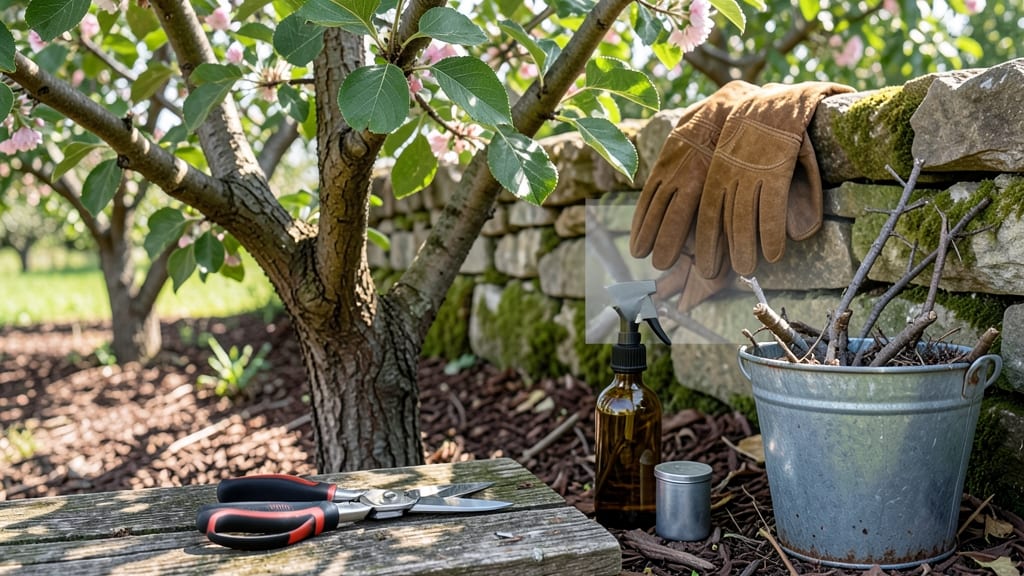
Pruning apple trees should occur during late winter or early spring, just before buds swell but before new growth begins, to promote healthy fruit production and shape the tree without stressing it. Avoid pruning in fall to prevent disease risk.
Timing matters because dormant trees heal faster and disease risks drop when the weather's cool but not freezing. 🌱 I've seen firsthand how pruning too late in spring can stress trees as they start flowering—it's all about finding that sweet spot between bud swell and active growth.
For young trees, focus on removing dead wood first, while mature trees benefit from thinning out crowded branches to improve airflow and sunlight penetration.
If you must prune outside the ideal window, late summer after harvest is the next best option, but avoid fall entirely—wet conditions and fungal spores make this season particularly risky.
Always use sharp, clean tools to prevent spreading disease, and never remove more than 25% of the tree's canopy in a single session to avoid shocking the plant.
💡 In This Article
- Optimal Pruning Seasons for Apple Tree Health
- Step-by-Step Apple Tree Pruning Guide by Season
Optimal pruning seasons for apple tree health
Apple trees enter a natural dormant state during late winter when temperatures consistently stay below 40°F but before buds begin swelling in early spring. This period, typically between January and March in most growing zones, is ideal because the tree's reduced metabolic activity allows cuts to heal faster.
The sap flow remains minimal, reducing stress and bleeding from wounds—something you'll notice if you prune too late in the season when sap starts moving again.
Dormancy also minimizes disease risks since fungal spores like Venturia inaequalis (the apple scab pathogen) are less active in cold weather. Wet conditions in spring can still pose challenges, but pruning before buds swell ensures fresh cuts aren't exposed to prolonged moisture.
What's fascinating is how the tree's cambium layer—just beneath the bark—becomes more active as temperatures rise, which is why pruning too early (like in deep winter) can leave wounds vulnerable to frost damage or fungal invasion.
Fall pruning is particularly risky because it coincides with the peak activity of many plant pathogens. Wet autumn leaves create a perfect environment for spores to spread, and any open wounds from pruning become direct entry points.
I've seen apple trees develop severe cankers from fall pruning where the bark failed to seal properly before winter. The exception is late summer pruning (August-September) after harvest, which helps shape the tree for next year's growth while avoiding winter stress.
Temperature plays a critical role too. Pruning when daytime highs reach 50-60°F ensures the tree isn't shocked by sudden cold snaps. The healing process accelerates in these conditions, with callus tissue forming within 2-4 weeks on properly made cuts.
This is why professional orchardists often schedule pruning during calm, dry periods in late winter—they're not just avoiding disease but optimizing the tree's recovery window.
Consider this comparison: A tree pruned in February (ideal timing) will show fresh, sealed cuts by spring, while one pruned in October may develop ragged edges that take months to heal—or never fully close.
The difference in wound closure speed can mean the difference between a healthy tree and one susceptible to pests like borers or diseases like silver leaf fungus. 🌿
For young trees (3-5 years old), the priority is establishing a strong structure, so pruning during dormancy helps direct energy toward root and trunk development. Mature trees benefit from more selective pruning to improve light penetration and fruit quality.
The key is always working with the tree's natural rhythms rather than against them.