
Pruning
Pruning roses in Utah at the right time ensures your 🌹 thrives through the state’s dramatic seasonal shifts, from freezing winters to scorching summers.
Utah’s unique climate—with its cold winters and hot summers—demands precise timing when pruning roses to maximize blooms and plant health. Get it wrong, and you risk stunted growth or frost damage; get it right, and your garden will reward you with vibrant flowers all season.
Most Utah gardeners wait until late winter or early spring, after the last frost date, to prune hybrid teas and floribundas. But shrub roses and climbers often need a second trim in summer to maintain shape and encourage new growth.
In this guide, I’ll walk you through the exact months to prune based on your USDA zone, the tools you’ll need, and how to avoid common mistakes that can set your roses back.
Utah’s best pruning windows for roses by type (climate-Zone guide)
Utah’s USDA zones 5b-8 create a unique challenge for rose pruning, where elevation shifts can change frost dates by weeks. In lowland areas like St. George (Zone 8), you might prune hybrid teas in February, while high-altitude Salt Lake City (Zone 5b) gardeners should wait until mid-April.
Understanding these variations ensures your roses bloom healthily and abundantly.
Most Utah gardeners focus on late-winter to early-spring pruning, but fall pruning in September works for shrub roses to reduce winter dieback. The key is timing cuts 4-6 weeks before your area’s average last frost date.
For example, Park City (Zone 5) should prune by April 1, while Moab (Zone 7) can start as early as February 15.
Here’s how to adjust pruning for Utah’s three main rose types—hybrid teas, floribundas, and shrub roses—plus climbing varieties, which have their own rules. Use this climate-zone guide to match your location’s frost patterns and elevation.
For climbing roses, Utah’s dry climate means you’ll want to prune after the main bloom cycle to avoid stressing the plant.
In Zone 7 (e.g., Cedar City), this often means waiting until May or June, while Zone 5 gardeners (e.g., Logan) should delay until June 1 to prevent frost damage to new growth.
If you live above 6,000 feet, like in Park City or Heber, account for a 2-3 week delay in your pruning schedule. For example, what St. George gardeners do in February, you should wait until March 15.
Monitor local frost forecasts and adjust—new growth after frost is deadly.
In fall, only shrub roses and floribundas benefit from light pruning in September. Remove dead or diseased canes and thin out crowded branches to improve airflow. This reduces winter dieback in Utah’s freeze-thaw cycles, which can stress roses.
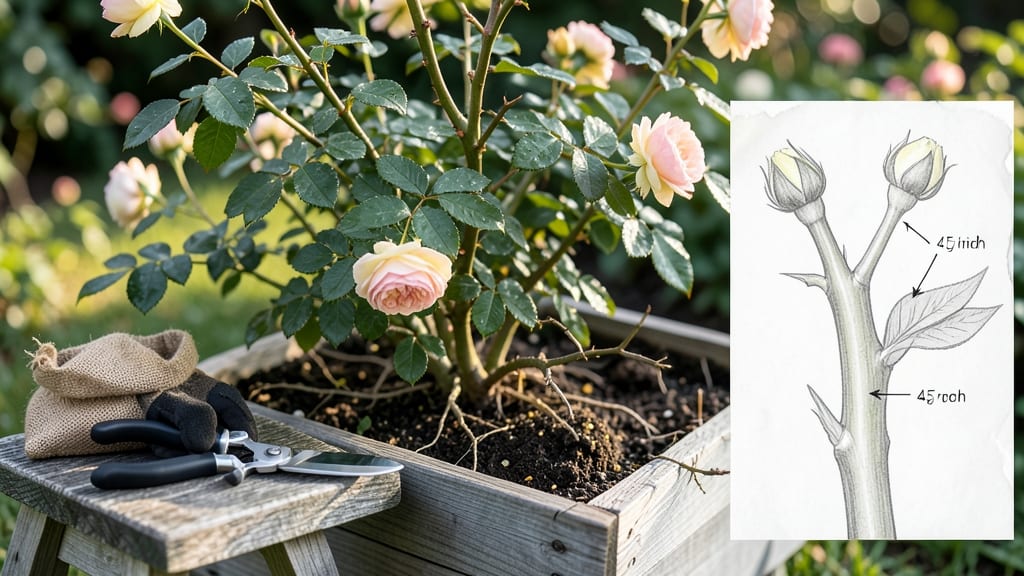
Pro tip: Use a sharp bypass pruner and sterilize tools with rubbing alcohol to prevent black spot disease, which thrives in Utah’s humid summers. Always make cuts at a 45-degree angle just above an outward-facing bud to encourage healthy regrowth.
Remember, over-pruning can stunt blooms, while under-pruning leads to weak, leggy growth. Utah’s variable microclimates mean your neighbor’s perfect timing might not work for you—always check local frost dates and adjust accordingly. With the right timing, your roses will thrive and reward you with stunning blooms all season.
🌹
Step-by-step pruning checklist for Utah gardeners (tools + techniques)
Pruning roses in Utah requires careful timing and technique to avoid frost damage and encourage strong regrowth. Since Utah’s USDA zones 5b-7b experience late frosts, wait until after the last frost date (typically mid-April) to prune.
If you prune too early, new growth can be killed by unexpected cold snaps, while waiting too long reduces next year’s blooms.
Before you begin, gather your tools: sharp bypass pruners, sterilized alcohol, rubbing alcohol, and disposable gloves. Utah’s dry climate means diseases like black spot spread quickly—sterilizing tools between cuts is a must.
I always wipe my blades with rubbing alcohol after every 5-10 cuts to prevent contamination.
Now, let’s break down the process into clear steps to ensure clean, precise cuts that promote healthy growth.
Utah Rose Pruning Step-by-Step
- 1 Inspect canes for dead/diseased wood: Look for blackened, shriveled, or mushy canes—these should be removed immediately. In Utah’s dry heat, diseased canes can harbor fungal spores that spread rapidly.
- 2 Use the 3-cut method: Make your first cut about 6 inches above the ground at a 45-degree angle. Then, cut again 1 inch above the first cut at a 90-degree angle. Finally, make a third cut just outside the first ring of buds.
- 3 Remove suckers and watershoots: These shoots growing from the base or along the stem steal energy from your roses. Snip them off at the base with clean pruners.
- 4 Thin out crowded canes: Aim for 3-5 strong canes per bush, spaced evenly. This improves air circulation, reducing disease risk in Utah’s dry, windy conditions.
- 5 Apply fungicide if needed: After pruning, spray with a copper-based fungicide to prevent black spot and powdery mildew, common in Utah’s fluctuating spring temperatures.
- 6 Mulch and water deeply: Add 2-3 inches of mulch around the base to retain moisture and protect roots. Water deeply once a week to encourage strong root growth before summer heat arrives.
After pruning, monitor your roses closely for the first 2-3 weeks. Utah’s spring temperature swings can stress newly pruned plants, so keep an eye out for wilting or yellowing leaves.
If you notice these signs, adjust your watering or provide temporary shade with a lightweight fabric until the plant stabilizes.
For shrub roses, which are hardier, you can prune slightly later in late April if frost risk has passed. But for hybrid teas and climbing roses, stick to early April to avoid missing the critical growth window.
Remember, Utah’s high desert climate means drought stress can set in quickly—prioritize deep watering after pruning to help roots recover.
With these steps, your Utah roses will thrive, producing vibrant blooms from early summer through fall. Happy pruning! 🌹