
Pruning
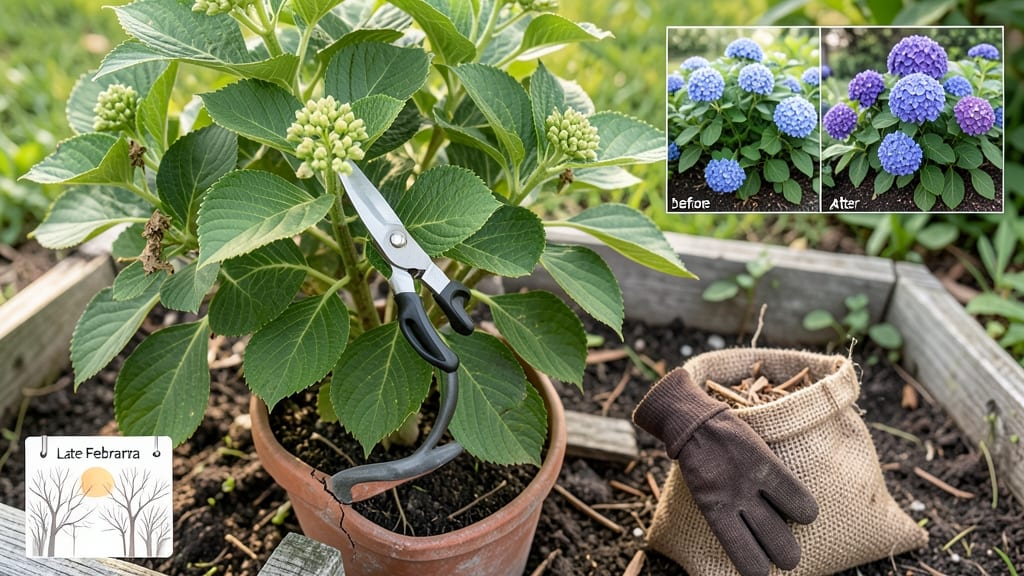
The best time to prune hydrangea plants is late spring—just as new growth emerges—when you can shape them for a showstopping summer display.
Picture this: you’ve waited all winter for your 🌸 hydrangeas to burst into color, only to realize they’re blooming on last year’s growth—and now you’re stuck with bare branches.
Pruning at the wrong time can turn your dream shrub into a disappointment, but timing it right unlocks lush, vibrant blooms year after year.
Not all hydrangeas follow the same rules. Mophead and lacecap varieties need a late-spring trim to encourage fresh flowers, while panicle types thrive with a different approach. Regional climate—like USDA Zone 6a—also shifts the ideal window, often between April and May when frost risks fade.
Get it wrong, and you might end up with fewer blooms or even stunted growth.
In this guide, I’ll break down the exact steps to prune your hydrangeas for maximum impact, from the tools you’ll need to the game-changer techniques that keep your plants healthy and blooming. No more guesswork—just a foolproof plan for hydrangeas that steal the show.
When to prune hydrangeas by variety: late-spring timing explained
Timing your hydrangea pruning correctly is crucial for summer blooms, but the best time to prune hydrangea plants depends entirely on their variety. Late-spring pruning triggers new growth that leads to lush summer flowers, but only if you know which types need it—and when.
Some hydrangeas bloom on old wood (last year's growth), while others thrive on new wood (current season's growth).
For example, mophead hydrangeas (like 'Endless Summer') and lacecap hydrangeas produce flowers on old wood, so pruning too early can mean no blooms that season. Meanwhile, panicle hydrangeas (like 'Limelight') and oakleaf hydrangeas bloom on new wood, making late-spring pruning ideal for them.
Let’s break it down by variety so you can prune with confidence.
Key late-spring trigger for pruning: Wait until after the last frost date in your zone (typically mid-April to May in most regions) and when you spot new leaf buds forming—this signals it’s safe to prune without risking frost damage. In USDA Zone 6a, aim for April 15 or later.
| Variety | Bloom Type | Best Pruning Time | Late-Spring Action |
|---|---|---|---|
| Mophead (e.g., 'Endless Summer') | Old Wood | After blooming (late summer/fall) | Minimal pruning; remove dead/diseased wood only |
| Lacecap (e.g., 'Annabelle') | Old Wood | After blooming (late summer/fall) | Light pruning; shape in late spring if needed |
| Panicle (e.g., 'Limelight') | New Wood | Late spring (April-May) | Prune back by 1/3 to encourage dense blooms |
| Oakleaf (e.g., 'Snow Queen') | Old & New Wood | Late spring (April-May) | Prune lightly to shape; remove dead wood |
Notice how panicle hydrangeas are the only variety that thrive with late-spring pruning. Their new wood blooms mean you can cut them back aggressively in April or May to encourage bigger, fuller flowers later in the season.
For oakleaf hydrangeas, late-spring pruning is ideal because they produce flowers on both old and new wood, giving you flexibility.
If you’re unsure which type you have, look for these clues: Mophead varieties have large, rounded flower heads, while lacecaps have flatter, lacy blooms. Panicle hydrangeas have cone-shaped flowers that often turn pink or burgundy in fall. Oakleaf hydrangeas have distinctive oak-shaped leaves and exfoliating bark.
One common mistake is pruning old wood bloomers too early. If you cut back mophead or lacecap hydrangeas in late spring, you’ll sacrifice that year’s summer flowers. Instead, wait until late summer or fall after they’ve bloomed to prune.
For panicle types, the opposite is true—prune in late spring to maximize next season’s blooms.
For regional adjustments, gardeners in warmer climates (Zones 8-10) can prune 1-2 weeks earlier than those in cooler zones (Zones 3-6). Always wait until the soil is warm (at least 50°F) and new growth has started.
In Zone 6a, this usually aligns with mid-April to early May.
Pro tip: After pruning, apply a layer of mulch around the base of your hydrangeas to retain moisture and protect roots as they recover. This is especially important for panicle hydrangeas, which may look bare for a few weeks after pruning but will rebound with vigorous growth.
Finally, sterilize your pruners with rubbing alcohol between cuts to prevent spreading disease. Hydrangeas are susceptible to powdery mildew and bacterial leaf spot, so clean
Step-by-step late-spring pruning guide: tools, techniques, and mistakes to avoid
Late-spring pruning is your chance to shape hydrangeas for bigger blooms and healthier growth—but timing and technique matter. After the last frost (typically mid-April in USDA Zone 6a), your hydrangeas will signal readiness with fresh spring leaves and buds.
This is when you should act, but only if you’ve identified your variety first—some bloom on old wood, while others thrive on new growth.
Grab your pruning shears and gloves—clean, sharp tools are non-negotiable. Dull blades tear stems, inviting disease. Start by removing dead or crossing branches first; these compete for nutrients and block sunlight.
Next, thin out overcrowded stems to improve airflow, which prevents fungal issues like powdery mildew. The goal? A balanced shape that encourages energy toward flowers, not just foliage.
⚠️ callout warning ⚠️
Mophead (Hydrangea macrophylla) and lacecap varieties bloom on last year’s growth. If you prune after June 1, you risk removing next season’s flower buds—already formed but invisible. Wait until after blooms fade (late summer/fall) for these types. For panicle (Hydrangea paniculata) and oakleaf (Hydrangea quercifolia), late-spring cuts are safe—they bloom on new wood.
🔍 Pro Tip: Snap a stem—if it’s green and flexible, it’s new growth. If it’s brown and brittle, it’s old wood. Protect the former!
For panicle hydrangeas, cut back 1/3 of the oldest stems to the ground. This forces vigorous new shoots that produce larger blooms later.
Label stems with flags if needed—some varieties can look chaotic post-prune! Oakleaf hydrangeas respond well to light shaping; focus on opening the center to let sunlight penetrate. Always cut just above a leaf bud or node, angled slightly downward to shed water.
Never prune in wet weather—damp conditions spread disease. Sterilize your shears with rubbing alcohol between cuts, especially if your hydrangea shows signs of bacterial wilt or powdery mildew. After pruning, apply a 2-inch layer of mulch around the base to retain moisture and regulate soil temperature.
This step is crucial in hot climates where roots can dry out quickly.
Watch for these red flags: Yellowing leaves post-prune? You may have cut too aggressively. No buds by mid-June? Your hydrangea might need balanced fertilizer (10-10-10) to recover. Panicle types often produce white blooms that turn pink—pruning in late spring can deepen this color shift.
For blue-pink color control, adjust soil pH (add lime for blue, sulfur for pink) after pruning.
Your hydrangeas will thank you with bold summer blooms if you prune at the right time with the right cuts. Schedule this task for a clear morning when you can work slowly. And remember: patience pays off—hydrangeas reward careful pruning with years of spectacular displays. 🌸