
Pruning
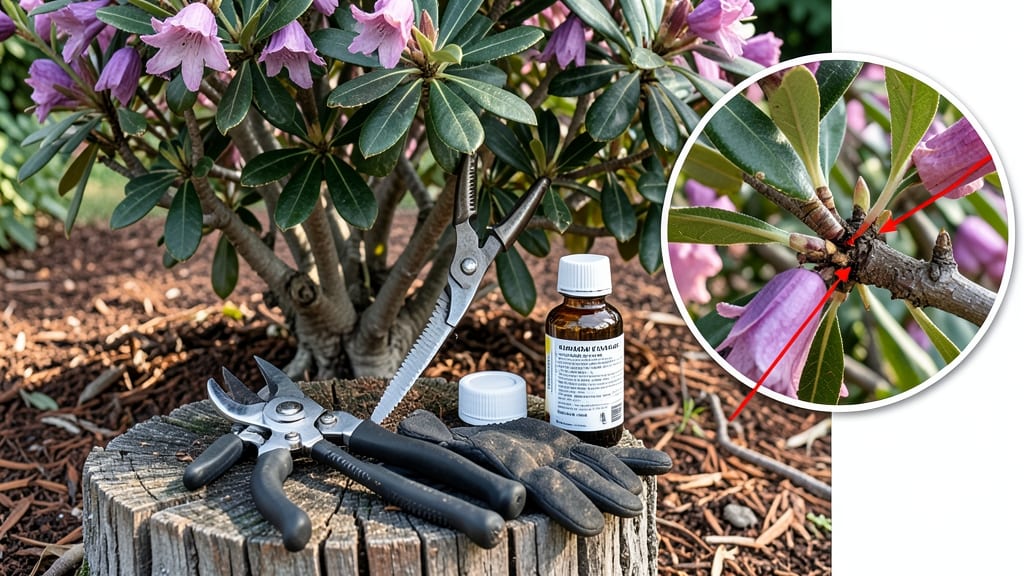
Late-winter pruning turns your rhododendron from a tangle into next year’s blooming superstar. ✂️ I’ve watched my own bushes go from leggy messes to vibrant, flower-covered giants after just one careful cut—it’s all about timing and technique.
The key? Pruning right after blooms fade but before new growth starts, when the plant’s energy shifts from flowers to foliage.
You’ll need sharp bypass pruners, a pair of gloves (rhododendrons have thorns!), and a bucket for clippings. The goal is to open up the center, removing any dead or crossing branches while keeping the natural shape.
Think of it like giving your bush a spa day—less clutter, more room for air and sunlight to reach the inner stems.
After pruning, your rhododendron will reward you with denser growth and more abundant blooms next spring. The secret’s in the cuts: always prune just above a leaf bud or side branch, never leaving stubs.
This encourages new shoots to grow in the right direction, and the plant stays healthy without stress.
Works for both mature bushes and young plants, and the same method applies whether you’re shaping a hedge or a standalone specimen. Just avoid pruning in fall or early spring—those cuts can damage the plant before it’s ready.
Let’s get those shears sharp and make next year your best blooming season yet!
📚 In This Guide
- What you need
- Instructions
- Tips and common mistakes
- Wrapping up and next steps
What you need
- ● Bypass pruners – Sharp, high-quality pruners (e.g., Felco or Fiskars) with 4- to 6-inch blades for cutting stems up to ½-inch thick.
- ● Loppers – For thicker branches (½- to 1½-inch diameter); opt for bypass loppers for precision.
- ● Hand saw or pruning saw – For stubborn, thick stems (1½+ inches); choose a curved-tooth saw to avoid tearing.
- ● Garden gloves – Heavy-duty, cut-resistant gloves (e.g., Mechanix Wear or Filon) to protect hands from thorns and rough branches.
- ● Disinfectant (70% isopropyl alcohol or bleach solution) – 1 part bleach to 10 parts water to sterilize tools between cuts (prevents disease spread).
- ● Trash bags or bucket – For collecting pruned branches (consider a 5-gallon bucket with a lid for easy transport).
- ● Sharpie or permanent marker – To mark branches for removal if needed.
- ● Pruning shears with anvil blades – Only for dead or diseased wood (not ideal for live cuts).
- ● Knee pads or stool – For comfort if your bush is tall or dense.
- ● Rake or leaf blower – To clear debris after pruning.
- ● Mulch (pine needles or wood chips) – 2-3 inches to protect roots post-pruning.
- ● Safety glasses – If working with large branches or near your face.
Step-by-Step instructions for pruning rhododendron bushes
Here’s the straightforward method I use every late winter to keep my rhododendrons healthy and blooming like crazy.
✂️ Step 1: Gather Tools and Inspect the Bush
Start with clean, sharp pruning shears—dull blades tear stems and invite disease. I also grab a small bucket for trimmings and a pair of gloves to protect my hands from the occasional sharp thorn. Before cutting, scan the bush for dead, crossing, or crowded branches. These are your first targets—they rob energy from the plant and reduce next year’s blooms.
Look for branches that are grayish-brown and brittle to the touch (dead wood) or those rubbing against neighbors (crossing). I make a mental note of where the blooms emerged last year—this helps me avoid cutting back into old wood where next year’s buds form. Rhododendrons bloom on last year’s growth, so precision matters.
✂️ Step 2: Remove Dead and Damaged Branches First
Cut out any dead, diseased, or broken branches at their base, making the cut just outside the branch collar where it meets the main stem. This prevents unsightly stubs and encourages clean healing. If a branch is larger than ½ inch in diameter, use loppers instead of shears to avoid crushing the stem.
Next, thin out crowded branches to improve airflow. Focus on the center of the bush where light struggles to reach. I aim to remove about 20-30% of the oldest wood—this rejuvenates the plant without shocking it. You’ll see a noticeable difference in how open and airy the bush feels after just a few cuts.
✂️ Step 3: Shape the Bush for Balance and Form
Step back and assess the bush’s natural shape. Rhododendrons grow best with a slightly rounded, open form. Use your shears to trim back any branches that spoil the symmetry or grow inward. Cut just above a leaf bud or lateral branch to encourage new growth in the right direction.
For larger branches, make your cut at a 45-degree angle about ¼ inch above a bud. This prevents water from pooling on the wound. Avoid cutting into old wood where last year’s blooms emerged—those buds are already set for next season. If you accidentally cut into a bloom stem, don’t panic; the plant will still produce flowers elsewhere.
✂️ Step 4: Lighten the Canopy for Better Blooms
Now’s the time to thin out some of the older growth to let sunlight reach the center of the bush. Focus on branches that are 3-4 years old—these are past their prime for flowering. Cut them back to a younger, more vigorous branch or to the ground if they’re no longer producing well.
You’ll know you’ve done enough when you can see light filtering through the center of the bush. This encourages new growth and ensures next year’s flowers get plenty of sunlight. Avoid over-pruning—never remove more than ⅓ of the bush’s total foliage in one season. The goal is to refresh, not to strip.
💧 Step 5: Clean Up and Apply Mulch
After pruning, rake up all the trimmings and dispose of them—don’t leave them under the bush, as they can harbor pests and diseases. Give the base of the plant a light layer of fresh mulch (about 2-3 inches deep) to retain moisture and protect roots from temperature swings.
Water the bush deeply right after pruning to help it recover. You’ll notice new growth emerging from the cut branches within a few weeks—that’s your sign the plant is happy and ready for spring. Avoid fertilizing immediately after pruning; wait until new growth appears to give the plant time to heal.
Tips & tricks for pruning rhododendron bushes
Late-winter pruning sets the stage for stunning spring blooms—here’s how to avoid common pitfalls and get it right the first time.
Tool Prep Matters: Sterilize your pruning shears with rubbing alcohol before you start—this prevents spreading disease between cuts. I also sharpen my blades with a file to make clean cuts that heal faster. A dull blade crushes stems instead of cutting them cleanly, which stresses the plant and invites infection.
The 20-30% Rule: When thinning crowded branches in Step 2, focus on removing about 20-30% of the oldest wood. This might seem counterintuitive, but rhododendrons respond best to gradual renewal. I learned this the hard way after over-pruning a bush and watching it struggle to recover for two growing seasons. Start small—you can always remove more next year if needed.
Bud Placement is Everything: In Step 3, when shaping the bush, always cut just above a leaf bud or lateral branch. This simple detail ensures new growth emerges in the right direction. I mark the bud with my fingernail before cutting to avoid accidentally severing it. The ¼-inch rule above the bud prevents water from pooling on the wound, which could lead to rot.
Mulch Depth Matters: After pruning, apply 2-3 inches of fresh mulch—but don’t pile it against the stem. Keep it 2-3 inches away from the trunk to prevent moisture buildup that can cause rot. I use pine bark mulch because it’s slow to decompose and maintains consistent moisture levels. This step is often overlooked, but proper mulching helps the plant recover faster and protects roots from temperature swings.
Pro Tips for Prune A Rhododendron Bush
- Late-winter pruning sets the stage for stunning spring blooms—here’s how to avoid common pitfalls and get it right the first time.
- Tool Prep Matters: Sterilize your pruning shears with rubbing alcohol before you start—this prevents spreading disease between cuts.
- The 20-30% Rule: When thinning crowded branches in Step 2, focus on removing about 20-30% of the oldest wood.
Frequently asked questions
Got questions about pruning rhododendrons? You’re not alone! Here are answers to the most common concerns—so you can confidently shape your bushes for stunning blooms next season.
When is the absolute best time to prune a rhododendron?
Late winter (just after flowering) is ideal—typically February to early March in most climates. This timing lets you trim spent blooms while avoiding disturbing new growth. Never prune in fall, as it can leave branches vulnerable to winter damage. Pro tip: Wait until after the first frost if your area has harsh winters!
Can I prune rhododendrons in summer?
While you can prune in summer, it’s not recommended unless removing dead or diseased branches. Heavy summer cuts can stress the plant and reduce next year’s blooms. If you must prune, do it early summer (June) and keep it light—focus on shaping, not heavy thinning.
What if I prune at the wrong time and the bush looks sad?
Don’t panic! Rhododendrons are resilient. If pruned too late (spring/summer), simply reduce watering and avoid fertilizing until fall. Focus on keeping soil moist but well-drained. By next year, your bush should bounce back—just expect fewer blooms that season.
How much can I cut back without killing my rhododendron?
Never remove more than 1/3 of the plant’s total growth in a single year. For mature bushes, aim to trim only dead, crossing, or overcrowded branches. Over-pruning can weaken the plant and reduce flowering. Think of it like a haircut—shape, don’t shear!
Why do my rhododendron leaves look yellow after pruning?
Yellowing leaves after pruning are usually normal—especially if you cut into old wood. However, if it’s widespread or paired with wilting or brown spots, check for:
- Overwatering (root rot risk)
- Pests (like lace bugs or spider mites)
- Nutrient deficiency (add acidic fertilizer in spring)
Wrapping up and next steps
Pruning your rhododendron bush in late winter is a simple yet powerful way to boost next year’s blooms and keep your plant healthy. Remember to use sharp tools, focus on dead or overcrowded growth, and avoid over-pruning—your rhododendron will thank you with vibrant, lush foliage!
Now that you’re armed with the know-how, grab your shears and give your bush the TLC it deserves—you’ve got this! 🌿✨