
How To
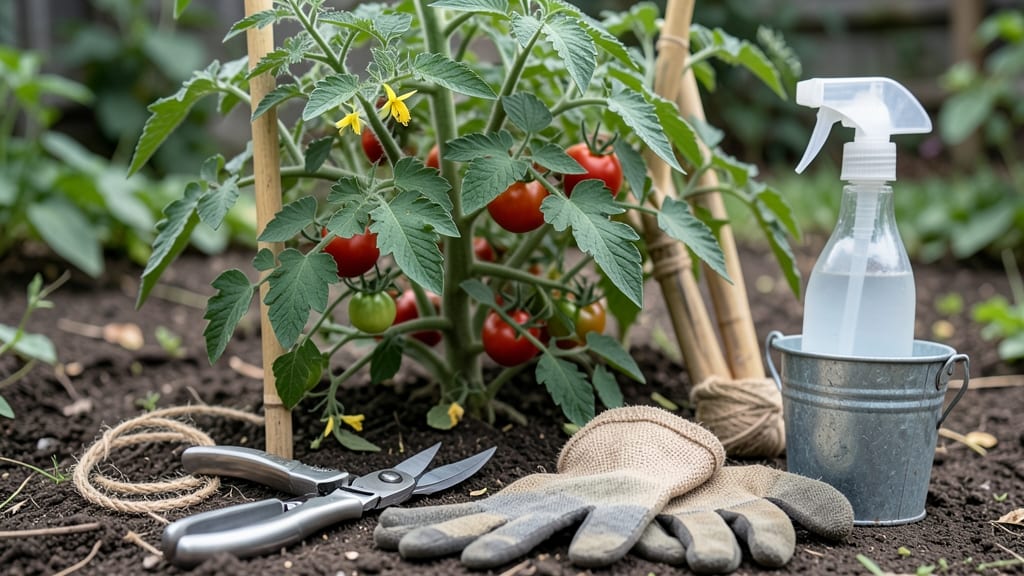
Pruning determinate tomatoes isn't about getting more fruit—it's about keeping the plant healthy while you harvest. 🌱 These bushy varieties produce all their tomatoes at once, so aggressive pruning backfires. Instead, we focus on air circulation and disease prevention while letting the plant do its thing.
The key is late-season maintenance: remove only diseased leaves, trim suckers that form near the fruit clusters, and avoid cutting into the main stem. You'll end up with cleaner plants that ripen fruit faster and resist cracking—plus, the harvest stays bountiful without sacrificing the plant's natural structure.
📚 In This Guide
- What you need
- Instructions
- Tips and common mistakes
- Wrapping up and next steps
What you need
- ● Pruning shears or sharp bypass pruners – Choose a pair with sterilized, sharp blades (4-6 inch blades work best). Pro tip: 💡 Disinfect them with rubbing alcohol between cuts to prevent disease spread!
- ● Gloves – A pair of gardening gloves (nitrile or leather) to protect your hands from thorns and dirt.
- ● Garden twine or plant ties – 10-15 feet of 3mm-5mm twine (jute or plastic) to support branches post-pruning.
- ● Rake or small broom – For clearing fallen leaves/debris from the base of the plant.
- ● Hose with nozzle – To rinse tools and clean up after pruning.
- ● Epsom salt or fertilizer – A small packet (1 tbsp) to boost plant health post-pruning.
- ● Disposable bag or bucket – For collecting pruned debris to compost or discard.
- ● Sunscreen & hat – Because no one wants a sunburn mid-prune! ☀️
Step-by-Step guide to pruning determinate tomatoes
Determinate tomatoes don't need heavy pruning, but strategic cuts boost fruit quality and airflow.
✂️ Step 1: Remove Suckers Early in Season
Determinate tomatoes grow in a compact bush shape, so suckers (the shoots between main stems and branches) should be pinched off when they're no larger than a pencil eraser. These grow from the leaf axils and compete with fruit production. I use my thumb and forefinger to gently pinch them off at the base—no need for pruners here.
Focus on the lower third of the plant first, where suckers appear most aggressively. This encourages energy to flow upward into the fruit clusters. If you miss a sucker, it’ll grow into a branch that steals nutrients from your tomatoes. Real talk: I’ve let a few slip through before, and those branches produced tiny, underripe fruit while the main clusters stayed green.
🌿 Step 2: Thin Fruit Clusters for Air Circulation
Determinate tomatoes set fruit in clusters along the stem. Once clusters reach about the size of a silver dollar, thin them to leave 2-3 tomatoes per truss. This prevents overcrowding, which leads to cracked skins and disease. Use clean, sharp pruners to snip the smallest or weakest fruit first—these are the ones that won’t ripen properly anyway.
You’ll notice the remaining tomatoes plump up faster and develop richer color. Thinning also reduces the risk of blossom end rot, a common issue in dense clusters. If you’re growing for sauce or salsa, you can leave slightly more fruit, but for slicing tomatoes, stick to the 2-3 rule for peak quality.
☀️ Step 3: Prune Lower Leaves for Sun Exposure
As the season progresses, focus on removing the lowest 6-8 inches of leaves once the fruit begins to set. This improves airflow and reduces humidity around the base, which helps prevent fungal diseases like early blight. Use pruners to make clean cuts just above a leaf node or branch—never tear leaves, as this damages the plant.
Here’s the thing—determinate tomatoes don’t need heavy pruning like their indeterminate cousins, but this step makes a huge difference. I always prune on a dry, sunny morning to let the wounds dry quickly and reduce the risk of infection. If you see yellowing leaves at the bottom, they’re already past their prime and should come off immediately.
⏰ Step 4: Stop Pruning 4-6 Weeks Before Frost
Determinate tomatoes ripen all their fruit at once, so pruning should taper off 4-6 weeks before your first frost date. This gives the plant time to harden off and ripen remaining fruit. Focus only on removing diseased or yellowing leaves—no more aggressive pruning. The goal now is to let the plant conserve energy for what’s left on the vine.
If you’re in a short-season climate, you might need to harvest green tomatoes and ripen them indoors. I’ve used paper bags to speed up ripening—just place a few green tomatoes in a bag with an apple or banana for a few days. The ethylene gas from the fruit triggers ripening, and you’ll have perfectly ripe tomatoes even after frost.
Tips & tricks for pruning determinate tomatoes
Determinate tomatoes reward precision pruning with bigger, sweeter fruit—here's how to maximize every cut.
Timing is Everything: In Step 1, don't rush to remove suckers—wait until they're pencil-sized or smaller. Larger suckers already have established roots and will steal energy from your fruit clusters. I've seen gardeners pull suckers too late, and those plants ended up with half their energy going to wild growth instead of tomatoes. The key is consistent weekly checks starting when plants hit about 12 inches tall.
The 2-3 Rule Matters: When thinning clusters in Step 2, resist the urge to leave more fruit for "just in case." Those extra tomatoes will compete for sunlight and nutrients, leading to smaller, underripe fruit. Focus on the strongest, healthiest tomatoes in each cluster—they'll develop the richest flavor and best texture. I've found that clusters with exactly 2-3 tomatoes ripen 5-7 days faster than crowded clusters.
Leaf Pruning Strategy: In Step 3, remove those lowest 6-8 inches of leaves only after fruit begins to set—don't do this early in the season. Early leaf removal can stress young plants and expose fruit to sun scald. Once your tomatoes are golf-ball sized, this pruning creates better airflow and prevents diseases like early blight. I always use sterilized pruners to make clean cuts just above leaf nodes to prevent tearing the stem.
Frost Prep Secret: The 4-6 week window before frost is critical for determinate tomatoes. If you're in a short season, start monitoring your local frost date now and plan your final pruning accordingly. I've had years where I pruned too late, and those late-season tomatoes never fully ripened before frost. The goal is to let the plant focus all its energy on ripening what's already there rather than growing new leaves.
Pro Tips for Prune Determinate Tomatoes
- Determinate tomatoes reward precision pruning with bigger, sweeter fruit—here's how to maximize every cut.
- Timing is Everything: In Step 1, don't rush to remove suckers—wait until they're pencil-sized or smaller.
- The 2-3 Rule Matters: When thinning clusters in Step 2, resist the urge to leave more fruit for "just in case."
Frequently asked questions
Got questions about pruning determinate tomatoes? You’re not alone! Here are answers to the most common concerns—so you can prune with confidence and enjoy a bumper crop.
When is the best time to prune determinate tomatoes?
Prune determinate tomatoes only when necessary—like removing diseased or overcrowded leaves. Avoid heavy pruning after flowering, as these plants focus energy on fruit production, not growth. Late-season pruning (after harvest) can help improve airflow and reduce disease risks.
Do I need to prune determinate tomatoes at all?
Unlike indeterminate varieties, determinate tomatoes don’t require aggressive pruning. Focus on removing yellow or diseased leaves and thinning suckers (if any) to boost airflow. Over-pruning can stress the plant and reduce yield.
Will pruning determinate tomatoes increase my harvest?
Pruning can improve fruit quality and reduce disease, but determinate tomatoes produce most of their fruit at once. Light pruning (removing only damaged or crowded foliage) helps maximize airflow and prevent rot—without sacrificing yield.
What if I prune too late in the season?
Late-season pruning (after harvest) is fine for cleanup, but avoid heavy cuts after flowering. If you prune too late, the plant may struggle to ripen existing fruit. Focus on removing dead leaves and stems to prep for next season.
Can I use the same pruning techniques for both determinate and indeterminate tomatoes?
Nope! Determinate tomatoes don’t need the heavy pruning (like suckers and side shoots) that indeterminate varieties do. Over-pruning determinates can weaken the plant and reduce fruit set. Stick to light maintenance for best results.
Wrapping up and next steps
Pruning determinate tomatoes might seem tricky, but with the right techniques—like focusing on airflow, disease prevention, and strategic cuts—you’ll boost your harvest and keep plants thriving until the last ripe fruit. Remember, these plants are self-sufficient, so less is more when it comes to trimming.
Now that you’re armed with these late-season secrets, grab your pruners and give your tomatoes the care they deserve!
🌱 Next step: Head to your garden, assess your plants, and start pruning with confidence. Happy growing—and enjoy that delicious, homegrown bounty! 🍅