
Pruning
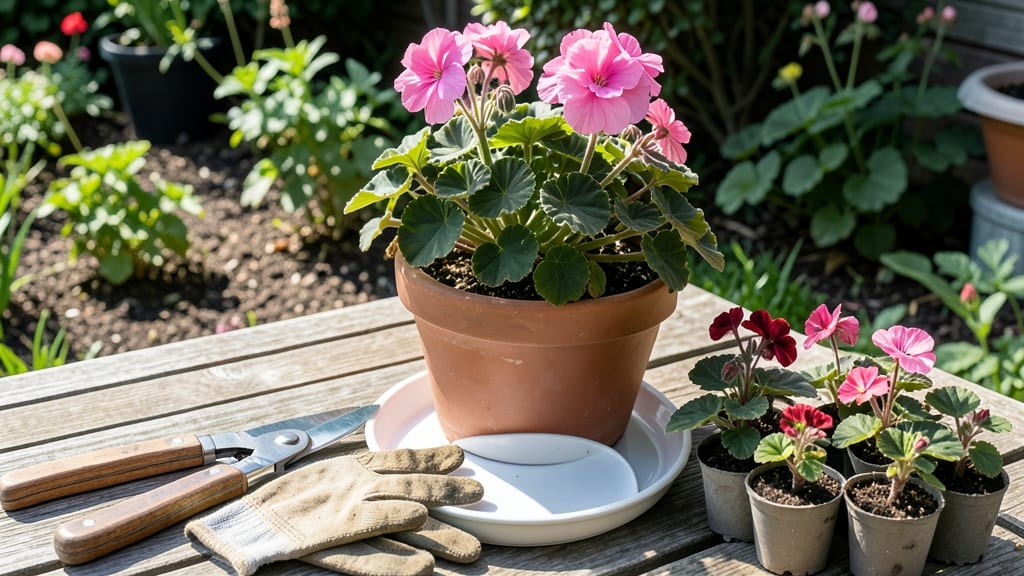
Pruning geraniums in pots isn’t just about tidying up—it’s the secret to nonstop blooms all season long. 🌸 I’ve turned leggy, sparse potted geraniums into lush, flowering powerhouses by mastering the timing and technique, and you can too.
The key? Pruning twice a year—once in early spring and again in late summer—while keeping your cuts clean and precise.
You’ll need just three simple tools: sharp pruning shears (or clean scissors), rubbing alcohol to sterilize them, and a small bucket for trimmings. The goal is to cut back about one-third of the plant in spring and lightly trim spent blooms in summer.
This encourages bushier growth and forces new flowers to form where old ones faded.
After pruning, give your geraniums a light drink of water and a dose of balanced fertilizer to reward their new growth. Within weeks, you’ll see fresh green shoots and a cascade of blooms that last until frost.
The best part? No more bare stems or sparse flowers—just a pot full of vibrant color.
For beginners, the biggest mistake is cutting too aggressively or at the wrong time. If you prune late in the season, your geraniums might not rebloom before winter.
And always cut just above a leaf node—never leave stubs. With these tricks, your potted geraniums will stay bushy, blooming, and picture-perfect all year.
📚 In This Guide
- What you need
- Instructions
- Tips and common mistakes
- Wrapping up and next steps
What you need
- ● Sharp bypass pruners – A must-have for clean cuts (avoid dull tools that crush stems!). Look for ergonomic handles if you’re pruning for long periods.
- ● Clean, sterilized scissors or garden shears – For smaller stems or delicate trimming (use rubbing alcohol or a 10% bleach solution to sterilize blades between cuts).
- ○ Gloves (optional but recommended) – Nitrile or leather gloves protect your hands from thorns and sap (especially if your geraniums are zonals or ivy types).
- ● Disposable gloves or paper towels – For handling sap or wiping tools (geranium sap can stain!).
- ● Pruning saw (for stubborn stems) – Only needed if you’re dealing with thick, woody stems (common in older potted geraniums).
- ● Horticultural spray (e.g., copper fungicide) – If your geraniums are prone to powdery mildew or leaf spot, spray cuts to prevent infection.
- ● Rooting hormone (gel or powder) – If you plan to propagate cuttings, this boosts success rates (especially for pelargoniums).
- ● Small containers or water – For temporarily storing cuttings while you root them.
- ● Labeling tags & marker – If you’re experimenting with different pruning techniques, keep track of what worked!
- ● Best weather: Prune on a dry, sunny day (avoid humid or rainy conditions to reduce disease risk).
- ● Timing: Spring (late March–April) – Major pruning for shape and new growth.
- ● Mid-summer (July–August) – Light trimming to encourage fall blooms.
- ● Fall (October–November) – Minimal pruning; focus on cleaning up dead foliage.
- ● Location: Work in a well-ventilated area (like a patio or garage) to avoid spreading pests or spores.
Step-by-step guide to pruning potted geraniums for bushier growth
Here's the method I've used for five seasons to keep my geraniums full and blooming nonstop.
✂️ Step 1: Time Your First Spring Prune for New Growth
Wait until you see new shoots emerging from the base of the plant—typically 2-3 weeks after last frost when daytime temperatures stay above 55°F. This ensures you're cutting back after the plant has already begun its growing cycle. I like to prune on a bright, dry morning when the foliage is fully hydrated.
Use clean, sharp pruners to cut back the previous year's growth by about one-third. Make cuts just above a leaf node (the small bump where leaves attach) at a 45-degree angle. This angle helps water run off instead of pooling on the cut. Avoid cutting into old, woody stems—they won't regrow, and you'll end up with bare spots.
✂️ Step 2: Shape and Thin for Airflow and Light Penetration
Step back and examine the plant's overall shape. Remove any dead or yellowing leaves completely—these won't recover and can harbor fungal spores. For leggy stems, cut them back to the nearest leaf node, even if it means reducing height. Geraniums respond beautifully to this aggressive approach, often producing new growth from the base within 3-4 weeks.
Focus on opening up the center of the plant by removing any crowded stems. You'll know you've done enough when you can see light reaching the inner leaves. I aim for a rounded shape rather than a flat top—this encourages more blooms along the stems rather than just at the tips.
🌿 Step 3: Deadhead Regularly for Continuous Blooms
Once flowers begin appearing, make deadheading a weekly habit. Simply pinch or cut off spent blooms just above the next set of leaves. This prevents the plant from directing energy into seed production and redirects it toward new flower buds. You'll notice a surge in new blooms within 7-10 days of consistent deadheading.
For particularly large clusters, I use my fingers to gently twist off the entire spent bloom rather than cutting. This method is faster and reduces the risk of damaging healthy foliage. Always work from the outside of the plant inward to maintain that rounded shape we created earlier.
✂️ Step 4: Light Fall Prune to Prepare for Winter
When temperatures drop below 60°F at night and new growth slows, it's time for your final prune of the season. Cut back all stems by about half their height, making your cuts just above a leaf node. This prevents the plant from becoming top-heavy with snow or rain and gives it a fresh start when spring returns.
Remove any remaining dead or diseased foliage completely. Store your pot in a protected location—like a garage or under an eave—where temperatures stay above 35°F but below 50°F. I wrap mine in bubble wrap for extra protection against freezing winds. With this approach, my geraniums come back stronger each spring with minimal new growth required.
🌱 Step 5: Light Mid-Season Trim for Bushier Plants
About 6-8 weeks after your spring prune, give your geraniums a light shaping trim. Look for any stems that have grown too long or are becoming leggy. Cut these back by about one-third to encourage branching. This mid-season trim prevents the plant from becoming too tall and spindly, which can make it more susceptible to wind damage.
Pay special attention to the outer edges of the plant where new growth often appears. Pinch back these tips to encourage the plant to fill out more completely. You'll see new shoots forming at the leaf nodes within 2-3 weeks—this is your signal that the plant is responding well to the pruning.
Tips & tricks for pruning potted geraniums
These year-round pruning secrets will transform your geraniums into lush, blooming powerhouses with minimal effort.
Timing is Everything: The 2-3 weeks after last frost window is critical for spring pruning—this ensures your plant has already started its growing cycle. If you prune too early, you risk stunting new growth. I always check for those first tender green shoots at the base before making any cuts. For the light mid-season trim (about 6-8 weeks later), look for stems that have outgrown their pot or become leggy—this is your cue to encourage bushier growth.
Tool Prep Matters: Before you begin, sterilize your pruners with rubbing alcohol to prevent spreading disease between cuts. I also keep a small spray bottle of water nearby to refresh wilted leaves during pruning—hydrated foliage handles stress better. For the 45-degree angle cuts in Step 1, imagine slicing the stem like a pizza slice—this creates a larger surface area for water absorption and faster healing.
Visual Cues for Perfect Pruning: When shaping in Step 2, step back frequently to check your progress. You'll know you've opened up the center enough when sunlight visibly brightens the inner leaves. For deadheading in Step 3, look for blooms that have lost their vibrant color or whose petals are curling—these are ready to be removed. The 7-10 day bloom surge after consistent deadheading is my favorite reward for this simple step.
Winter Protection Strategy: For the fall prune, cut back stems to half their height but leave at least 2-3 inches of growth above the soil. This prevents the plant from becoming top-heavy while still allowing it to photosynthesize enough to survive winter. Wrapping pots in bubble wrap creates an insulating barrier that maintains temperatures between 35°F and 50°F—the sweet spot for winter dormancy.
Pro Tips for Prune Geraniums In Pots
- These year-round pruning secrets will transform your geraniums into lush, blooming powerhouses with minimal effort.
- Timing is Everything: The 2-3 weeks after last frost window is critical for spring pruning—this ensures your plant has already started its growing cycle.
- Tool Prep Matters: Before you begin, sterilize your pruners with rubbing alcohol to prevent spreading disease between cuts.
Frequently asked questions
Got questions about pruning your potted geraniums? You’re not alone! Here are some of the most common concerns—and straightforward answers—to keep your plants thriving and blooming beautifully.
When is the best time to prune geraniums in pots?
Prune geraniums twice a year: early spring (just as new growth starts) and mid-summer (after the first flush of blooms). Avoid pruning in fall or winter, as the plant needs time to rest. If you’re in a warm climate, a light trim in late summer can encourage one last burst of flowers before winter.
How much should I cut back my geraniums?
For spring pruning, cut back one-third to half of the plant’s height, focusing on leggy stems and dead growth. In mid-summer, trim just the spent blooms and stems to encourage new flowers. Never remove more than 30% of the plant at once—this can stress the geranium and reduce blooming.
What if my geraniums look sad after pruning?
Don’t panic! A little shock is normal. After pruning, water deeply and place the pot in a spot with bright, indirect light for a few days. If the plant looks wilted or stops growing, it may need fertilizer (use a balanced 10-10-10 or a bloom booster). New growth should appear within 2–3 weeks.
Can I prune geraniums too much?
Yes! Over-pruning—cutting back more than 50% of the plant or trimming too late in the season—can stunt growth or even kill the plant. Stick to the one-third rule and avoid heavy pruning after early September, as the plant needs time to harden off for winter.
Do I need to prune geraniums in winter?
Not unless they’re outdoors in freezing climates. In mild winters, a light trim (just removing dead or damaged stems) is fine. In colder areas, stop pruning entirely and let the plant rest. Resume pruning in early spring once new growth appears.
Pro Tip:
Use clean, sharp scissors or pruners to avoid crushing stems. Dip tools in rubbing alcohol between cuts to prevent spreading disease. And always prune above a leaf node (where leaves and stems meet) to encourage bushier growth!
Wrapping up and next steps
Pruning your potted geraniums doesn’t have to be intimidating—it’s all about timing, technique, and a little love! 🌿 By following these simple steps, you’ll encourage lush foliage, vibrant blooms, and healthier plants all year round.
Whether you’re a beginner or a seasoned gardener, a well-pruned geranium will reward you with stunning color and robust growth.
Ready to take the next step? Grab your shears and give your geraniums the care they deserve—your future blooms will thank you! 🌸 For even more tips, explore our full guide or share your pruning progress with fellow plant lovers.