
Pruning
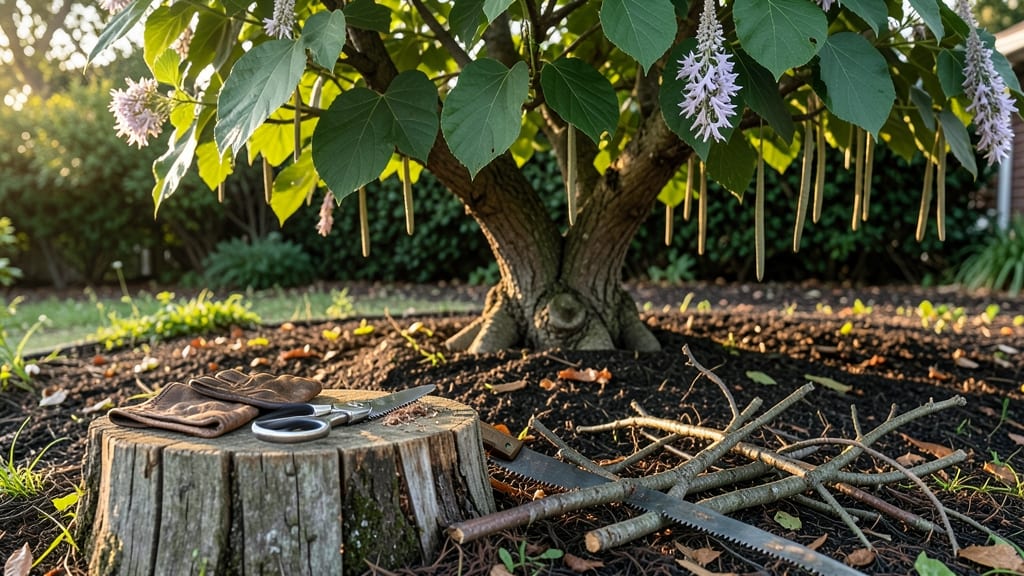
Pruning your catalpa tree isn’t just about shaping—it’s about restoring its natural balance after years of wild, tangled growth. 🌳 I’ve learned that three strategic cuts in late winter reveal the sturdy, thorn-free structure beneath the chaos, and the tree rewards you with stronger branches and more abundant blooms by spring.
The key? Timing, technique, and knowing which branches to trust—and which to remove.
You’ll need sharp bypass pruners for clean cuts, a sturdy ladder for higher branches, and a bucket to collect debris. Safety first: wear gloves (catalpa sap can stain) and inspect branches for disease before cutting.
The goal is to open the canopy to sunlight while maintaining the tree’s natural shape—no radical thinning, just thoughtful pruning.
Start by removing dead, diseased, or crossing branches first; these are the weak links that invite pests. Next, trim back any suckers at the base and thin out crowded growth from the center.
The final step is shaping the outer canopy to encourage airflow—this prevents future rot and makes future pruning easier. By summer, you’ll see new growth filling in gaps where light now reaches the soil.
This method works for catalpas in zones 4-9, whether they’re young saplings or mature giants. The tree’s resilience means you can prune aggressively if needed, but consistency matters more than intensity.
Master these cuts, and your catalpa will stand taller, healthier, and far less prone to storm damage. Ready to transform that tangled mess?
📚 In This Guide
- What you need
- Instructions
- Tips and common mistakes
- Wrapping up and next steps
What you need
- ● Pruning shears (bypass or anvil type) – For smaller branches (up to ½ inch thick). Sharpness is key!
- ● Loppers (long-handled) – For branches ½ to 1½ inches thick. Look for a 20-24 inch reach.
- ● Pruning saw (folding or curved blade) – For branches thicker than 1½ inches. Choose a 14-16 inch blade for precision.
- ○ Extension pole pruner – For high branches (optional but handy!). Extend your reach safely!
- ● Work gloves (cut-resistant) – Protect your hands from thorns and rough bark. Leather or synthetic blends work best.
- ● Safety glasses – Shield your eyes from debris. Non-negotiable!
- ● Heavy-duty trash bags (2-3) – For collecting branches and debris.
- ● Rake or leaf blower – To clear fallen leaves and small twigs.
- ● Ladder (if needed) – For taller trees (ensure it’s stable and rated for your weight). 3-4 aluminum or fiberglass sections should suffice.
- ● First-aid kit – Just in case! Bandages and antiseptic wipes are a must.
- ● Choose the right season – Late winter or early spring (when the tree is dormant). Avoid pruning during wet or stormy weather.
- ● Check local regulations – Some areas require permits for tree pruning. When in doubt, call your local arborist!
- ● Assess the tree’s health – Look for signs of disease (e.g., oozing sap, discolored leaves). Skip pruning if the tree is already stressed.
- ● Tree wound dressing – Controversial but some swear by it for larger cuts.
- ● Pruning sealant – Only use if your tree is prone to disease (consult a pro first!).
- ● Disinfectant (70% rubbing alcohol or bleach solution) – To clean tools between cuts and prevent disease spread.
- ● Camera or sketchbook – Document the tree’s shape before pruning for reference.
Step-by-step instructions for pruning a catalpa tree
Here's how to transform your catalpa's tangled mess into a healthy, thorn-free canopy with just three focused cuts.
✂️ Step 1: Remove Dead or Diseased Branches First
Start by scanning the tree for any branches that are brown, brittle, or showing signs of disease like oozing sap or fungal growth. These are your top priority—catalpas are prone to wood rot, and leaving dead wood invites pests. Use sharp, clean pruning shears to make a smooth cut just outside the branch collar (that swollen area where the branch meets the trunk).
I always work from the bottom up, removing smaller branches first. This prevents larger limbs from breaking under the tree's weight as you work. If a branch is thicker than 3 inches, use a pruning saw instead of shears—you'll know you're doing it right when the cut is clean and doesn't tear the bark. Never leave stubs; they're entry points for infections.
✂️ Step 2: Thin the Canopy to Improve Airflow
Catalpas grow fast and can get congested, which leads to those pesky thorns and weak wood. Look for branches that cross each other or grow inward—they'll rub against one another and create wounds. Remove about 25% of the canopy in this step, focusing on branches that are thinner than 1 inch in diameter. Start at the outer edges and work your way in.
Here's the thing—you want sunlight to reach all parts of the tree, not just the outer leaves. Cut branches back to their point of origin (where they branch from another limb) rather than just hacking them off. This encourages new growth in the right places. If you're unsure which branches to remove, imagine looking at the tree from above—you're creating an open, vase-like shape.
✂️ Step 3: Shape the Tree for a Balanced Look
Now it's time to refine the tree's structure. Catalpas respond well to pruning when you remove branches that are growing straight up or downward—these are called "water sprouts" and "suckers," and they weaken the tree. Use your pruners to cut these back to a lateral branch (a side branch) that's growing at a 45-degree angle or less. This encourages a more natural, rounded shape.
Pay attention to the tree's natural growth patterns. If one side is significantly heavier than the other, focus on thinning that side first. You'll know you're on the right track when you can see light filtering through the canopy evenly. Avoid cutting more than 25% of the tree's foliage in a single season—this can stress the catalpa and lead to dieback.
⏰ Step 4: Clean Up and Monitor the Tree
After pruning, rake up all the debris from the ground—this prevents fungal spores from infecting the tree or spreading to other plants. Sterilize your pruning tools with a 10% bleach solution (1 part bleach to 9 parts water) to kill any lingering pathogens. Now's also a good time to apply a balanced, slow-release fertilizer (like 10-10-10) to help the tree recover.
Keep an eye on the tree over the next few weeks. If you see new growth emerging from the pruning cuts, that's a good sign! Water the tree deeply if your area experiences a dry spell, but avoid overwatering—catalpas are drought-tolerant once established. If you notice any signs of stress, like yellowing leaves or wilting, hold off on further pruning until the tree has had time to recover.
Tips & tricks for pruning a catalpa tree
These simple tricks will help you transform that tangled mess into a thriving, thorn-free beauty without stressing the tree.
Tool Prep is Everything: Before you begin, sharpen your pruning shears and sterilize them with rubbing alcohol—dull blades tear bark and create wounds that invite infections. For branches thicker than 3 inches, invest in a good pruning saw; it's worth the extra effort to avoid damaging the tree. I always check my tools first because a clean cut heals better than a jagged one.
Visualize Your Cuts: In Step 2, when thinning the canopy, grab a pair of binoculars to examine the tree from above. This bird's-eye view helps you spot crossing branches and identify which ones to remove for that perfect vase shape. You'll notice how sunlight filters through when you're done—this is your goal right there. Think of it like editing a photograph: you're removing the parts that don't contribute to the overall beauty.
Season Timing Matters: The best time to prune catalpas is late winter or early spring, just before new growth begins. This gives the tree time to heal before summer heat arrives. If you must prune in summer, do it on a cool, overcast day to reduce stress on the tree. I've learned this the hard way—summer pruning can lead to dieback if the tree is already dealing with heat stress.
Post-Pruning Care: After cleaning up, mix a tablespoon of cinnamon into your 10-10-10 fertilizer—it's a natural fungicide that helps protect the fresh cuts. Water the tree deeply but only if the top 2 inches of soil are dry. Catalpas are tough, but they appreciate a little extra care after such a big transformation. This simple step has made a noticeable difference in how quickly my trees recover.
Pro Tips for Prune Catalpa Tree
- These simple tricks will help you transform that tangled mess into a thriving, thorn-free beauty without stressing the tree.
- Tool Prep is Everything: Before you begin, sharpen your pruning shears and sterilize them with rubbing alcohol—dull blades tear bark and create wounds that invite infections.
- Visualize Your Cuts: In Step 2, when thinning the canopy, grab a pair of binoculars to examine the tree from above.
Frequently asked questions
Got questions about pruning your catalpa tree? You're not alone! Here are some common concerns—plus expert-backed answers to keep your tree thriving.
When is the best time to prune a catalpa tree?
The ideal window is late winter to early spring (before buds swell), or right after the tree finishes blooming in spring. Avoid pruning in fall—it can stimulate late-season growth vulnerable to frost damage. For heavy pruning, late winter is best to minimize stress.
Will pruning harm my catalpa tree?
Not if done correctly! Catalpas handle pruning well, but never remove more than 25% of the canopy at once. Over-pruning can weaken the tree or invite pests. Focus on thinning (removing inward branches) and structural shaping to maintain airflow and sunlight.
How do I know which branches to cut?
Target branches that:
- Cross or rub against others (create wounds)
- Grow inward (block sunlight to the center)
- Are dead, diseased, or broken
- Are too close to the ground (encourage weak growth)
Are there alternatives to pruning for a mess-free catalpa?
If you dislike the pods (not branches!), try these tricks:
- Timely cleanup: Remove seed pods before they dry (wear gloves—they’re fuzzy!).
- Encourage natural decomposition: Leave pods on the ground to mulch—just rake them into flower beds.
- Prune strategically: Focus cuts on branches below dense foliage to reduce pod production.
My catalpa has weird growth after pruning—what’s wrong?
Common issues and fixes:
Issue
Cause
Solution
Sprouts at the base
Tree reacting to stress or over-pruning
Leave them—they’ll weaken over time. Prune only if they’re blocking walkways.
Yellowing leaves
Too much pruning or fungal infection
Fertilize lightly (balanced 10-10-10) and prune less aggressively next time.
Dieback (dead branches)
Bacterial canker or poor cuts
Sterilize tools with rubbing alcohol and remove dead wood down to live tissue.
Wrapping up and next steps
Pruning your catalpa tree doesn’t have to be a daunting task—just a few strategic cuts can transform it into a thriving, thorn-free beauty! 🌿 With the right tools, timing, and techniques, you’ll encourage healthier growth, better airflow, and a stunning canopy that’s easy to maintain.
Remember, consistency is key, so mark your calendar for seasonal trims and enjoy the rewards of your hard work.
Ready to take action? Grab your pruners, dust off your gloves, and get started today! Your catalpa tree—and your future self—will thank you. For more pruning tips, check out our guide on mastering the art of tree care.