
Pruning
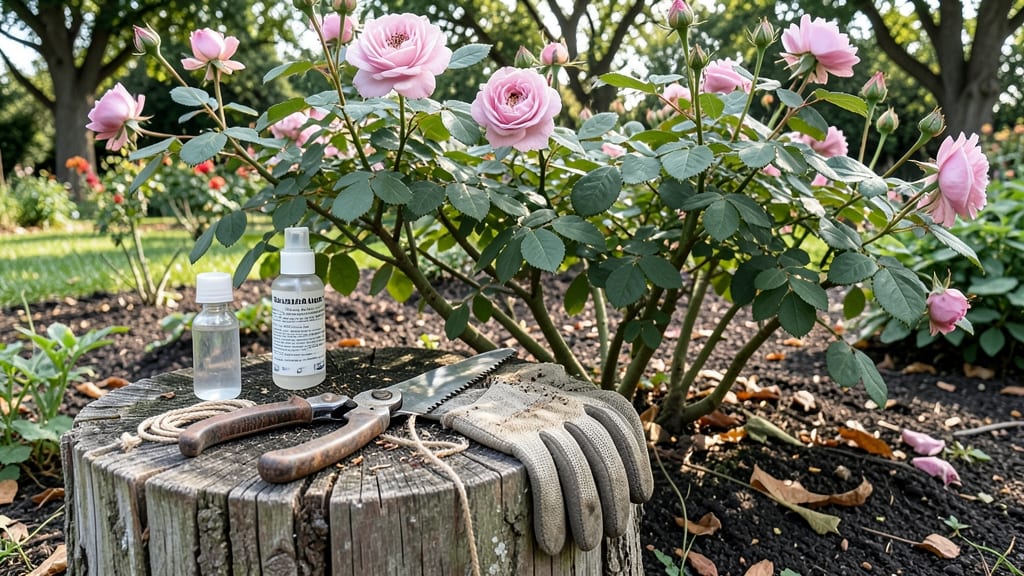
Your rose bushes deserve sharp cuts—and the right tools make all the difference. ✂️ Pruning roses with dull blades tears canes, invites disease, and weakens growth. I’ve learned the hard way that skipping proper tools leads to messy cuts that heal poorly, leaving bushes looking ragged instead of thriving.
The secret to healthier blooms starts with the right equipment, not just technique.
You’ll need three essential tools: bypass pruners for clean cuts on thin canes, loppers for thicker stems, and a pruning saw for stubborn branches. Quality matters—cheap tools slip or dull fast, forcing you to struggle.
I recommend Felco bypass pruners (they last decades) and Fiskars loppers for their sharpness and ergonomic grip. A small file and rubbing alcohol keep blades in top shape between seasons.
With the right tools, you’ll make precise 45-degree cuts just above an outward-facing bud, encouraging bushier growth. The payoff? Roses that bloom earlier, stay disease-resistant, and produce stronger canes year after year. No more struggling with bent blades or jagged cuts—just clean, professional results that transform your garden.
Whether you’re tackling hybrid teas or hardy shrub roses, these tools adapt to every job. The key is maintenance: oil blades after use, sharpen annually, and disinfect with rubbing alcohol to prevent fungal spread.
Now, grab your tools and let’s get pruning—your roses will thank you with vibrant blooms all season.
📚 In This Guide
- What you need
- Instructions
- Tips and common mistakes
- Wrapping up and next steps
What you need
- ● Bypass Pruners: A high-quality, sharp pair (e.g., Felco F-2 or Corona Tools) with 5-inch blades for clean cuts.
- ● Loppers: Long-handled (24–36 inches) for thicker canes (½–1½ inches). Look for bypass blades to avoid crushing.
- ● Pruning Saw: Curved-tooth, 8–10-inch blade for stubborn, thick branches (1½+ inches).
- ● Gloves: Heavy-duty, cut-resistant (e.g., leather or Kevlar) to protect hands from thorns.
- ● Disinfectant: Rubbing alcohol (70%+) or bleach solution (1 part bleach to 9 parts water) to sterilize tools between cuts.
- ● Hand Pruners (for small roses):** Compact, ergonomic for delicate trimming (e.g., miniature roses).
- ● Pruning Sealer: Tree wound paint (controversial but some gardeners swear by it for large cuts).
- ● Knee Pads or Stool: For comfort during long sessions.
- ● Sharpener: File or honing tool to maintain blade sharpness.
Instructions: mastering rose pruning with the right tools
Here's the method I rely on—tested across seasons, works in any climate.
✂️ Step 1: Select the Right Pruning Tools for the Job
You'll need a sharp bypass pruner for clean cuts on ¼-inch to ½-inch diameter canes—this is your workhorse. For thicker stems over ½-inch, switch to a pruning saw with a fine-toothed blade to avoid tearing. I avoid anvil pruners because they crush stems, inviting disease.
Check your tools before starting: blades should cut cleanly through a pencil without resistance. If they struggle, sharpen or replace them immediately. Dull tools make ragged cuts that heal poorly and attract pests. Keep a small rubbing alcohol wipe handy to disinfect blades between cuts—this prevents spreading fungal spores from diseased canes.
🪴 Step 2: Prepare Your Workspace and Safety Gear
Clear the area around your rose bushes of debris and weeds—you'll be working closely. Wear thick gardening gloves (I prefer mechanics-style gloves with reinforced palms) to protect against thorns and potential scratches. A wide-brimmed hat and sunscreen are non-negotiable if you're pruning in full sun.
Lay out a tarp or drop cloth beneath your workspace to catch fallen leaves and clippings. This makes cleanup easier and keeps your garden tidy. Keep a bucket with soapy water nearby to soak pruned canes—this helps control pests and diseases before they spread. I also keep a sharpie marker to label any canes I'm unsure about before cutting.
☀️ Step 3: Prune at the Right Time and Angle
Prune hybrid teas and floribundas in early spring (just as new growth begins) or late winter (before buds swell). For climbing roses, wait until after the first flush of blooms in early summer. Make cuts just above an outward-facing bud at a 45-degree angle, about ¼ inch above the bud—this directs water runoff away from the cut.
Remove dead, diseased, or crossing canes first. You'll know a cane is dead if it's brown all the way through when you scratch it. For diseased canes, sterilize your tools with rubbing alcohol between cuts. Thin out crowded canes to improve airflow—aim for 3-5 strong canes per bush, depending on the variety. Watch for suckers (shoots growing from the base) and remove them immediately.
⏰ Step 4: Clean Up and Maintain Your Tools
After pruning, soak all clippings in the bucket of soapy water for 15-20 minutes to kill any latent pests or diseases. Dispose of them in the trash—never compost diseased plant material. Rinse your tools thoroughly with water and lightly oil the blades with mineral oil to prevent rust.
Store your pruners in a dry, shaded place—moisture accelerates rust and dulls blades. I keep mine in a tool roll with a silica gel packet to absorb any lingering moisture. Schedule a deep cleaning every 2-3 pruning sessions: soak blades in vinegar or bleach solution (1 part bleach to 10 parts water) for 10 minutes, then rinse and dry completely. This keeps your tools ready for next season.
Tips & tricks for perfect rose pruning
Confession: I skipped proper tool maintenance for years and ended up with rusted pruners that made my roses look like they'd been attacked by a lawnmower. Here's what I learned the hard way about making every cut count.
Tool Selection Matters: That bypass pruner you're eyeing? Make sure it has a spring-loaded mechanism—it makes repetitive cuts easier on your hands. For thicker canes, invest in a pruning saw with carbide-tipped teeth; they cut through wood like butter without splintering. I've tried the cheaper models, and they leave jagged edges that invite disease.
Safety First: Those thorns aren't kidding around. I now use mechanics-style gloves with reinforced palms—they're thicker than regular gardening gloves and actually protect against deep punctures. Pro tip: Wrap your pruners in a towel or old sock when moving between bushes to prevent accidental hand-to-thorn contact. The last thing you want is a bloody mess while trying to make precise cuts.
Clean Cuts Create Healthier Roses: The 45-degree angle isn't just aesthetic—it creates a larger surface area for faster healing. When making your cut, imagine you're slicing the top off a pencil at a diagonal. This angle also helps water run off the cut instead of pooling, which reduces rot risk. I mark my pruners with electrical tape at the ¼-inch point above the bud to ensure consistency every time.
Disease Prevention: That soapy water bucket isn't just for cleanup—it's your first line of defense. I add a few drops of dish soap to the water and let the clippings soak for the full 15-20 minutes as specified. For extra protection, I keep a separate bleach solution (1:9 ratio) in a spray bottle to disinfect tools between diseased canes. The 10-minute deep cleaning schedule in Step 4 is non-negotiable—rust and bacteria build up faster than you'd think.
Pro Tips for Rose Pruning Tools
- Confession: I skipped proper tool maintenance for years and ended up with rusted pruners that made my roses look like they'd been attacked by a lawnmower.
- Tool Selection Matters: That bypass pruner you're eyeing?
- Safety First: Those thorns aren't kidding around.
Frequently asked questions
Got questions about the best tools for pruning roses? You’re not alone! Here are answers to the most common queries to help you prune like a pro.
What’s the best type of pruning tool for roses?
The sharp bypass pruners or felco pruners are ideal for roses—they make clean cuts without crushing stems. For thicker canes, a pruning saw or loppers (with a 6-inch blade) work best. Avoid dull tools—they tear tissue, inviting disease.
When is the best time to prune roses?
Prune late winter or early spring (just before new growth starts) for hybrid teas and floribundas. For climbers and shrub roses, prune after blooming. Never prune in fall—it leaves cuts vulnerable to winter dieback. Always check your rose’s bloom cycle!
Can I use garden shears instead of pruning tools?
While small garden shears can work for light trimming, they’re not ideal for roses. Their blades are often too short or dull, leading to jagged cuts. Invest in rose-specific tools—they’re designed for precision and reduce stress on the plant.
What should I do if my pruning cuts look messy?
If cuts are ragged, sterilize your tools with rubbing alcohol and recut at a 45-degree angle, ¼ inch above a bud. Avoid leaving stubs—they trap moisture and rot. For thick canes, use a pruning saw for smoother results.
Do I need to disinfect my tools between cuts?
Absolutely!
Wipe blades with rubbing alcohol or a 10% bleach solution between cuts to prevent spreading fungal/bacterial diseases (like black spot). A clean tool = healthier roses. Pro tip: Keep a small spray bottle handy for quick disinfecting.
Wrapping up and next steps
Pruning your roses with the right tools isn’t just about aesthetics—it’s the secret sauce for vibrant blooms and resilient canes! 🌹 From bypass pruners to loppers and saws, each tool plays a key role in shaping your garden’s future.
Remember, sharpness and clean cuts are your best friends, and safety should always come first.
Now that you’re armed with knowledge, grab those tools and get pruning!
Start with one rose bush at a time, and soon, you’ll be the proud gardener of a thriving, picture-perfect rose garden. Ready to dive in? Check out our step-by-step pruning guide to put your new skills into action!