
Pruning
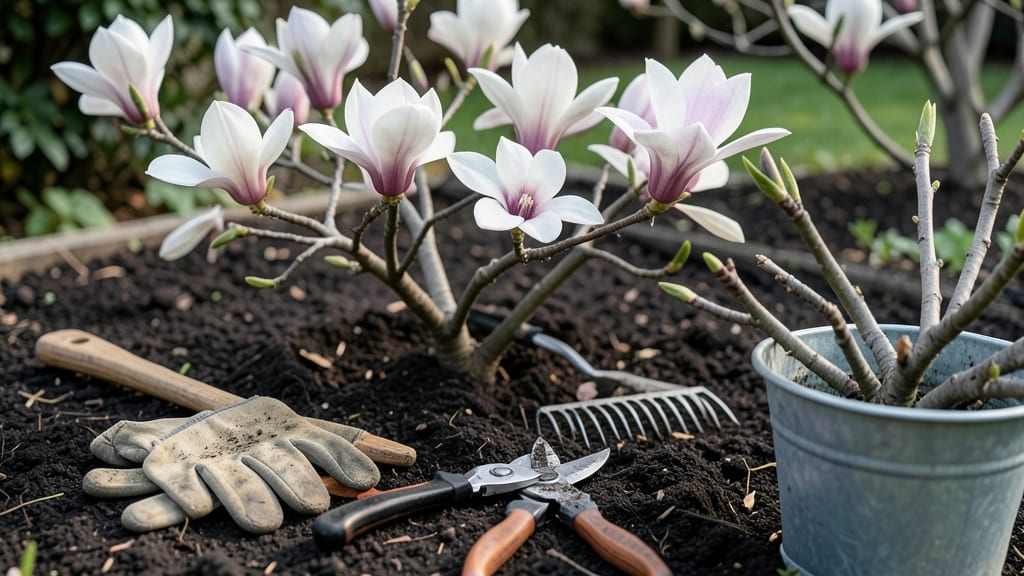
Pruning your star magnolia in late winter reveals the secret to its year-round health—and those showstopping blooms. ✂️ I’ve watched my own Magnolia stellata transform from a tangled mess into a graceful, flowering centerpiece after just one careful session.
The key? Timing it right, before buds swell but after the worst cold passes.
You’ll need just three essentials: sharp bypass pruners (dull blades tear wood), heavy-duty gloves (thorns are no joke), and a bottle of 70% rubbing alcohol to disinfect cuts between branches.
Skip the fancy tools—this isn’t about perfection, it’s about strengthening your tree’s structure so it thrives for decades. Most pruning happens in 20-30 minutes, even for mature trees.
Start by removing dead, crossing, or rubbing branches—these are the weak points that invite disease. Then, thin out the center to let light and air circulate, which keeps foliage lush and blooms abundant.
Avoid cutting more than 25% of the canopy at once, or you’ll shock the tree into stress. My first attempt over-pruned, and it took two years for the blooms to bounce back.
After pruning, give your magnolia a deep watering and a light fertilizer application (use a balanced 10-10-10 mix) to support new growth. Watch for fresh, vibrant leaves by spring—a sure sign you’ve done it right.
The best part? With proper care, your star magnolia will reward you with earlier, more abundant blooms every year.
📚 In This Guide
- What you need
- Instructions
- Tips and common mistakes
- Wrapping up and next steps
What you need
- ● Pruning shears: Bypass pruners (sharp, clean, and disinfected with rubbing alcohol). For thicker branches (½"–1" diameter), upgrade to loppers or a pruning saw.
- ● Gloves: Heavy-duty gardening gloves (cut-resistant, like mechanics’ gloves or pruning-specific options).
- ● Disinfectant: 10% bleach solution (1 part bleach to 9 parts water) or hydrogen peroxide (3%) to sterilize tools between cuts.
- ● Rags or paper towels: For wiping down tools and hands.
- ○ Marking twine or flags: (Optional but helpful) To tag branches for removal or shaping.
- ● Heavy-duty trash bags: For collecting pruned branches (2–3 bags, depending on tree size).
- ● Ladder or step stool: Extendable or sturdy (ensure it’s rated for your weight and placed on level ground).
- ● Safety gear: Sunglasses (to shield from debris) and closed-toe shoes.
- ● Hand pruners: For precision trimming of smaller branches.
- ● Pole saw: If your magnolia is tall (15+ feet), a foldable or extendable saw saves time.
- ● Tree wound dressing: (Controversial but some swear by it!) Use pruning sealant only* on large cuts (>2" diameter).
- ● Notebook & pencil: To sketch a quick map of cuts before you start.
- ● Hose with nozzle: For rinsing tools post-pruning and cleaning up sap.
Step-by-step guide to pruning star magnolia trees
Here’s how to refresh your star magnolia’s shape and encourage vibrant blooms—without sacrificing next year’s flowers.
✂️ Step 1: Time Your Pruning for Dormant Season
Prune your star magnolia late winter to early spring, just as buds begin to swell but before new growth starts. This timing—typically February to March in most climates—ensures you don’t cut off next year’s flower buds, which form on last year’s wood. If you live in a warmer zone, wait until late winter when temperatures hover around 40-50°F for a few weeks.
I always check the buds first: if they’re still tight and haven’t started to plump up, it’s safe to prune. If you see any green showing, hold off for another week. Star magnolias bloom on old wood, so timing matters—prune too early, and you risk removing next season’s flowers.
🌿 Step 2: Assess the Canopy for Dead or Weak Branches
Start by removing dead, diseased, or crossing branches first. Dead wood is easy to spot—it’s brittle, lacks leaves, and often has a dark or hollow center when cut. Diseased branches may have discolored bark, oozing sap, or fungal growth. Snip these out at the branch collar (the swollen area where the branch meets the trunk) using clean, sharp pruners.
Next, look for branches that rub against each other or grow inward. These compete for sunlight and can create wounds where pests or diseases enter. I like to step back and visualize the tree’s natural shape—remove any branches that disrupt that flow. Always cut back to an outward-facing bud to encourage healthy growth.
✂️ Step 3: Thin Out and Shape the Canopy
Thin the canopy by removing 10-20% of the oldest or thickest branches to improve airflow and light penetration. Focus on branches that are thicker than a pencil—these can become too heavy and snap in storms. Cut these back to a lateral branch or bud, making sure your cut is just above the bud at a 45-degree angle to shed water.
For shaping, aim to open up the center of the tree so light reaches the inner branches. Star magnolias naturally grow with a rounded shape, so avoid heavy pruning that turns them into a flat-topped hedge. If you’re unsure, prune conservatively—you can always remove more next year.
🌱 Step 4: Clean Up and Protect the Tree
After pruning, sterilize your tools with rubbing alcohol to prevent spreading disease. Remove all clippings from the base of the tree—leaving them can harbor pests or fungi. If your tree has large wounds (over ½ inch in diameter), seal them with pruning sealant to reduce the risk of infection.
Water the tree deeply after pruning to help it recover, especially if the weather is dry. Mulch around the base with 2-3 inches of organic mulch, keeping it 6 inches away from the trunk to prevent rot. Avoid fertilizing immediately—let the tree focus on healing before adding nutrients.
⏰ Step 5: Monitor and Maintain Through the Season
Keep an eye on the tree in the weeks after pruning. New growth should appear within 2-4 weeks, signaling the tree is healing well. If you notice any yellowing leaves, wilting, or oozing sap at the pruning sites, it could indicate stress or infection. In that case, treat with a fungicide and adjust your watering.
Plan to do light maintenance pruning in late summer (after flowering) to remove any water sprouts or suckers that appear. But save the major shaping for next dormant season—star magnolias respond best to gradual, strategic pruning rather than drastic cuts.
Tips & tricks for pruning star magnolias
These precision-focused tips will help you prune your star magnolia like a seasoned arborist—without risking next year’s stunning blooms.
Timing is Everything: The February-to-March window isn’t just a suggestion—it’s when star magnolias are in their deepest dormancy. I’ve learned the hard way that pruning too early can remove flower buds that formed on last year’s wood. If you’re in a warmer climate, wait until those cold snaps drop temperatures to consistently 40-50°F for at least a week. This ensures the tree isn’t stressed from temperature fluctuations during recovery.
Bud Inspection Matters: Before making any cuts, examine the buds closely. Healthy buds should be tight and firm—like unopened green peas. If you see any green showing or buds beginning to plump up, wait another week. I always test by gently pressing a bud with my thumbnail; if it feels slightly spongy, it’s not ready for pruning. This simple check prevents the heartbreak of removing next season’s blooms.
Cutting Technique for Healthy Growth: When removing branches in Step 3, always cut just above an outward-facing bud at a 45-degree angle. This angle helps water run off rather than pool in the wound. I use my pruners to make a clean cut that doesn’t tear the bark—ragged cuts invite disease. For branches thicker than a pencil, make a second cut slightly above the first to avoid tearing. The goal is to leave a smooth surface that can heal properly.
Post-Pruning Care Prevents Stress: After finishing all cuts, don’t just walk away—your tree needs immediate attention. Water deeply right after pruning to help it recover, especially if temperatures are warm. I always apply a 2-3 inch layer of organic mulch (keeping it 6 inches from the trunk) to retain moisture and regulate soil temperature. This simple step makes a huge difference in how quickly your magnolia recovers and prepares for spring growth.
Pro Tips for Prune Star Magnolia
- These precision-focused tips will help you prune your star magnolia like a seasoned arborist—without risking next year’s stunning blooms.
- Timing is Everything: The February-to-March window isn’t just a suggestion—it’s when star magnolias are in their deepest dormancy.
- Bud Inspection Matters: Before making any cuts, examine the buds closely.
Frequently asked questions
When is the best time to prune a Star Magnolia?
Prune your Star Magnolia (Magnolia stellata) during late winter or early spring, ideally before buds swell but after the worst cold snaps (typically February–March in most climates). This timing ensures minimal stress and maximizes bloom potential. Avoid pruning in fall or summer, as it can disrupt flowering cycles or invite pests.
How much can I trim back my Star Magnolia?
You can safely remove up to one-third of the tree’s growth per year, but for Star Magnolias, focus on light shaping (10–20%) to maintain its natural form. Over-pruning can reduce next year’s flowers. Target dead, crossing, or overcrowded branches first—never cut into old wood, as it won’t regrow.
Will pruning reduce my Star Magnolia’s flowers?
Pruning correctly won’t harm blooms—in fact, it can enhance them! Since Star Magnolias flower on old wood, avoid heavy cuts to last year’s growth. Instead, prune after flowering to shape without sacrificing next season’s star-shaped blossoms. Think of it as a haircut: trim strategically, not drastically!
What should I do if my Star Magnolia has brown or dying branches?
Remove any branches with brown, mushy wood or no leaves—these are dead and won’t recover. Use sterilized pruners and cut just outside the branch collar (the swollen area where the branch meets the trunk). If many branches are affected, check for pests (like scale) or disease (like powdery mildew) and treat accordingly.
Are there alternatives if I miss the dormant-season window?
If you miss late winter/early spring, wait until after flowering (late March–April) for light maintenance pruning. Avoid heavy cuts—focus on removing only dead or damaged branches. Summer pruning is not recommended, as it stresses the tree and can stunt growth or reduce winter hardiness.
Pro Tip:
Mark your calendar! Star Magnolias are finicky about timing—prune within 2–3 weeks of bud swell for the best results. And always clean your tools with rubbing alcohol between cuts to prevent spreading disease.
Wrapping up and next steps
Pruning your Prune Star Magnolia in late winter or early spring isn’t just about shaping—it’s about setting the stage for a vibrant, healthy canopy all year. By following the right techniques, you’ll encourage lush blooms, better airflow, and stronger growth.
Now that you’re armed with the know-how, there’s no better time to grab your pruners and get to work!
Ready to transform your magnolia? Mark your calendar for the next dormant season and take action—your tree (and your future shade!) will thank you. 🌿✨