
Shrubs
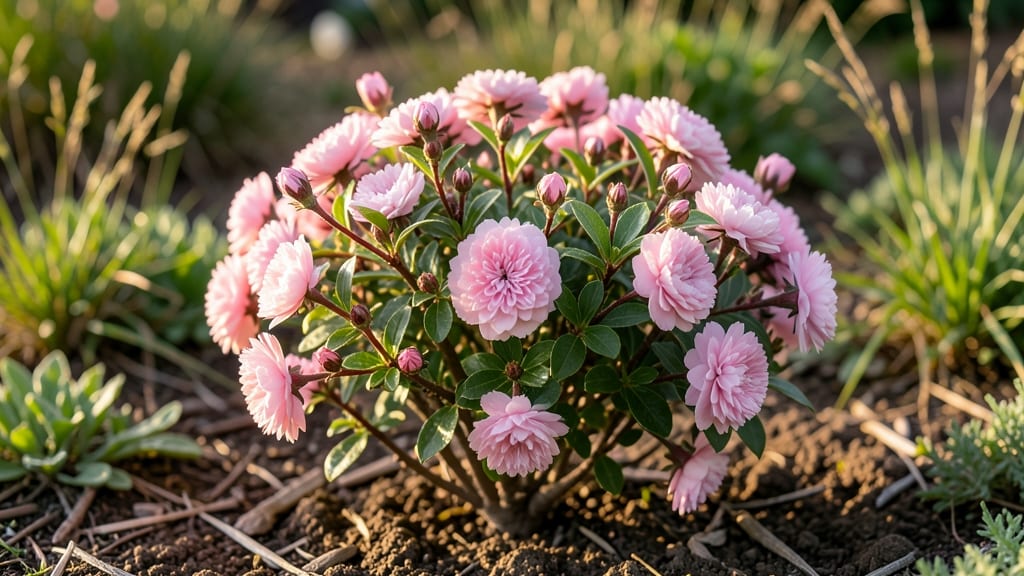
Late-winter pruning transforms your Prunus glandulosa 'Rosea Plena' into a fragrant cloud of pink double blooms by spring. 🌸 I've watched this dwarf flowering almond go from leggy winter branches to a showstopper in just six weeks after a single late-February pruning session—here's exactly how to replicate that magic in your garden.
The secret lies in timing and technique: prune when buds swell but before new growth starts, and always cut at a 45-degree angle just above an outward-facing bud. This encourages dense, bushy growth and maximates those signature clove-scented flowers that appear weeks before most spring bloomers.
Most gardeners over-prune, but this plant thrives with minimal shaping—just remove dead wood and thin crowded branches. What you end up with is a compact shrub covered in 2-inch double blooms that perfume the air for weeks. The flowers attract early pollinators, and the glossy green foliage provides year-round interest.
My neighbors now ask for cuttings every spring—once you see how easy this is, you'll understand why. Works beautifully in USDA zones 5-8, whether planted as a specimen, in shrub borders, or even in large containers. The key is patience—these plants reward careful pruning with decades of reliable blooms.
📚 In This Guide
- What you need
- Instructions
- Tips and common mistakes
- Wrapping up and next steps
What you need
- ● Pruning shears: Sharp, bypass-style shears (for clean cuts). 1 pair (invest in high-quality tools like Felco or Fiskars for precision).
- ● Loppers: For thicker branches (up to 2 inches in diameter). 1 pair (e.g., Gonicc or Corona loppers).
- ● Hand pruners: For smaller, detailed cuts. 1 pair (sterilize with rubbing alcohol between cuts to prevent disease).
- ● Gloves: Heavy-duty, cut-resistant gloves (e.g., Workrite or Tough Outdoors) to protect hands from thorns.
- ● Disinfectant: 70% isopropyl alcohol or a 10% bleach solution (1 part bleach to 9 parts water) to sterilize tools.
- ○ Pruning sealant: Optional but helpful for larger cuts (e.g., Tanglefoot Tree Wound Pruning Sealer).
- ● Trash bag or bucket: For collecting pruned branches. 1 medium-sized (20+ gallon capacity).
- ● Notebook & pen: To jot down notes on branch placement or growth patterns.
- ● Extension pole: For high branches (e.g., 24-inch pruning saw or pole pruner).
- ● Ladder: If your shrub is over 6 feet tall (ensure it’s stable and non-slip).
- ● Pruning saw: For stubborn, woody stems (e.g., Fiskars curved blade saw).
- ● Garden kneeler: For comfort if you’re working close to the ground.
- ● Camera: To document your shrub’s shape before/after pruning.
- ● Timing: Prune in late winter (just before new growth starts, typically February–March in most climates). Avoid pruning after April to protect blooms.
- ● Weather: Choose a dry, overcast day (rain can spread disease, and wet branches are harder to handle).
- ● Safety first: Wear closed-toe shoes and avoid loose clothing near thorny branches!
- ● Know your shrub: Familiarize yourself with Prunus glandulosa’s growth habits—it blooms on old wood, so avoid heavy pruning of last year’s stems.
Step-by-Step guide to pruning Prunus glandulosa 'Rosea Plena'
This late-winter pruning method transforms your shrub into a fragrant, bushy powerhouse—just follow these precise cuts.
✂️ Step 1: Time Your Pruning for Optimal Growth
Prune your Prunus glandulosa 'Rosea Plena' in late winter, just as new growth begins but before buds swell. The ideal window is February to early March in most climates, when the shrub is still dormant but the air warms slightly. You'll know it's time when you see tiny green buds forming at the stem tips—these signal the plant is ready to respond to pruning with vigorous spring growth.
Never prune after buds break or during active growth. Cutting too early risks frost damage to fresh cuts, while pruning too late removes potential blooms. In colder regions, wait until after the last hard frost date—typically when nighttime temperatures consistently stay above 32°F. Use a sharp pruning saw for thick branches and bypass pruners for smaller stems to make clean cuts that heal faster.
🌿 Step 2: Remove Dead, Diseased, or Weak Wood
Start by inspecting the entire shrub for dead branches—these appear grayish-brown, brittle, and snap easily when bent. Cut these out first, removing them back to the main stem or outward-growing bud to maintain the plant's natural shape. Next, look for diseased wood (blackened, oozing, or fungal spots) or crossing branches that rub together. These compete for energy and invite pests.
For diseased branches, sterilize your pruners with rubbing alcohol between cuts to prevent spreading pathogens. Remove weak, spindly growth that grows inward toward the center—these rarely bloom well and create dense, shaded areas where mildew thrives. Aim to open up the shrub's center by 20-30% to improve airflow and sunlight penetration. You'll see a dramatic difference in next year's bloom density after this step.
✂️ Step 3: Shape for Airflow and Bloom Structure
Prune to create an open vase shape—this encourages strong, outward growth and maximizes bloom exposure. Start by thinning out 1/3 of the oldest stems at the base, cutting them back to the ground. These stems have already produced blooms and are less productive. Then, shorten remaining branches by 1/3 to 1/2 their length, cutting just above an outward-facing bud (about 1/8 inch above it). This ensures new growth emerges away from the center.
For multi-stemmed shrubs, avoid "heading back" (cutting the tip to encourage bushiness)—this method works poorly for Prunus glandulosa, which blooms on old wood. Instead, focus on selective thinning to maintain an airy structure. After pruning, step back and visualize sunlight reaching all branches. If shadows remain in the center, remove additional inward-growing stems until light can penetrate evenly.
🌱 Step 4: Clean Up and Apply Post-Pruning Care
Rake up and dispose of all pruned material (don't compost diseased wood). Sterilize your tools again with bleach solution (1 part bleach to 9 parts water) or alcohol to prevent pathogen spread. Now, water deeply to help the shrub recover from the stress of pruning. Follow up with a balanced fertilizer (10-10-10) applied at half-strength to encourage strong new growth without excessive leaf production at the expense of blooms.
Mulch the base with 2-3 inches of organic mulch (like shredded bark) to retain moisture and regulate soil temperature. Keep mulch 6 inches away from the trunk to prevent rot. In the following weeks, monitor for new shoots emerging from the base—these are your future blooming stems. If any branches grow too vigorously, prune them back in early summer to redirect energy into flower production.
⏰ Step 5: Monitor and Adjust for Next Year
Watch the shrub closely in early spring as buds swell. If you notice too many leafy shoots and few flower buds, you may have pruned too aggressively. Next year, reduce cuts by 10-15%. Conversely, if the shrub looks overgrown with sparse blooms, increase thinning slightly. Prunus glandulosa 'Rosea Plena' thrives with regular, light pruning—avoid drastic annual cuts, which stress the plant and reduce fragrance.
By late summer, assess the shrub's structure again. Remove any suckers (shoots growing from the base) and spent blooms (deadheading isn't critical for this variety, but it keeps the shrub tidy). The goal is to maintain a balanced, open shape that allows sunlight to reach all branches. With consistent pruning, your shrub will reward you with prolific, intensely fragrant blooms for decades.
Tips & tricks for pruning Prunus glandulosa 'Rosea Plena'
These practical insights will help you master the art of late-winter pruning for a fragrant, healthy shrub every year.
The Bud Test: When timing your pruning in Step 1, focus on those tiny green buds forming at stem tips—they're your clearest indicator of readiness. I learned this the hard way after pruning too early and watching my cuts blacken from late frost. If you're unsure, wait another week—better to delay than risk frost damage to fresh wounds. The shrub's natural dormancy makes this window forgiving, but those buds are your best guide.
Cutting Precision: In Step 3, when shortening branches by 1/3 to 1/2 length, make your cuts just above an outward-facing bud at about 1/8 inch above. This angle prevents water from pooling on the cut surface, which can cause rot. I use a small white pencil to mark the exact spot before cutting—it saves time and ensures consistency. Remember, the goal is to direct new growth outward, not inward toward the center.
Tool Maintenance: Between cuts in Step 2, especially when dealing with diseased wood, sterilize your pruners with rubbing alcohol. I carry a small spray bottle of 70% isopropyl alcohol in my gardening toolkit for this purpose. Clean tools prevent cross-contamination that could spread fungal infections to healthy branches. After finishing, give them a thorough wipe with bleach solution (1:9 ratio) to eliminate any lingering pathogens.
Post-Pruning Observation: After completing Step 4, mark your calendar for early spring to assess new growth patterns. I've found that taking a "before and after" photo helps track progress year over year. If you notice excessive leafy growth with few buds, your pruning was likely too aggressive. The shrub's natural balance will guide you—aim for 60-70% of new shoots showing bud development by late spring.
Pro Tips for Prunus Glandulosa Rosea Plena
- These practical insights will help you master the art of late-winter pruning for a fragrant, healthy shrub every year.
- The Bud Test: When timing your pruning in Step 1, focus on those tiny green buds forming at stem tips—they're your clearest indicator of readiness.
- Cutting Precision: In Step 3, when shortening branches by 1/3 to 1/2 length, make your cuts just above an outward-facing bud at about 1/8 inch above.
Frequently asked questions
When is the best time to prune Prunus glandulosa 'Rosea Plena' for late-winter blooms?
The ideal time is late winter to early spring (February–March), just before new growth begins. This timing ensures you remove dead wood while preserving buds for those stunning pink, double blooms. Avoid pruning in fall—it can stimulate tender growth vulnerable to frost.
How much should I trim back my Prunus glandulosa each year?
Aim for 1/3 of the plant’s oldest stems to encourage fresh growth. For example, if your shrub is 3 feet tall, trim back to about 1–2 feet. Never remove more than 1/3—this can stress the plant. Focus on thinning out crowded branches for airflow and light.
What do I do if my Prunus glandulosa isn’t blooming as much as it should?
Check these fixes:
- Pruning timing: If you pruned too late (after buds formed), you may have cut off flowers. Next year, prune before buds swell.
- Sunlight: Ensure it gets 6+ hours of sun daily—shady spots reduce blooms.
- Fertilizer: Apply a balanced, acid-loving shrub fertilizer in early spring to boost vigor.
- Age: Young plants (under 2 years) may bloom lightly—be patient!
Can I shape Prunus glandulosa 'Rosea Plena' into a hedge or topiary?
Yes! It’s highly adaptable to shaping, thanks to its flexible branches. Use hand pruners or shears to trim new growth regularly (every 4–6 weeks in spring/summer). For topiary, prune just after flowering to maintain form. Pro tip: Wear gloves—its stems can be thorny!
Are there pests or diseases I should watch for with this shrub?
This variety is generally pest-resistant, but keep an eye out for:
- Scale insects: Look for sticky residue or white bumps on stems. Treat with neem oil or insecticidal soap.
- Powdery mildew: If leaves develop white powder, improve airflow and avoid overhead watering.
- Japanese beetles: Rare but possible—handpick or use milky spore for prevention.
Most issues stem from overcrowding or poor drainage, so prune and mulch properly!
Wrapping up and next steps
Prunus glandulosa 'Rosea Plena' 🌸 is a fragrant gem that rewards patience and care with stunning blooms—especially when pruned just right in late winter. By following the steps outlined, you’ll encourage healthier growth, more abundant flowers, and that signature intoxicating scent that makes this shrub a standout in any garden.
Ready to transform your garden? Grab your pruners, roll up your sleeves, and give this beauty the attention it deserves. Your future blooms will thank you!
Next step: Mark your calendar for late winter (just before buds swell) and start pruning—your Prunus glandulosa will shine brighter than ever! 🌿✨