
Trees
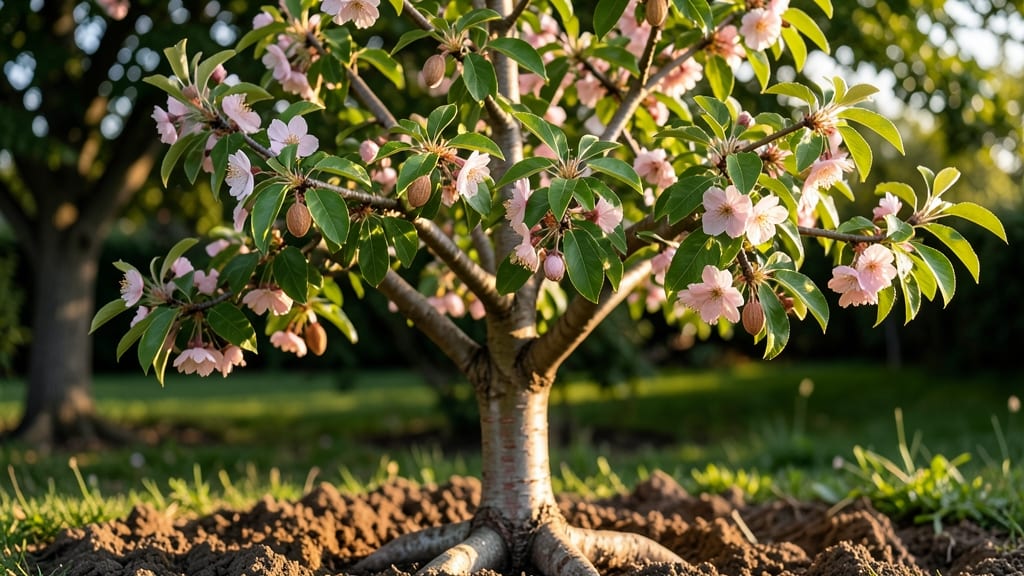
Your peach tree’s health starts with the right cuts—Prunus persica var. nucipersica (nectarines and flat peaches) thrive when pruned like a pro. ✂️ I’ve spent years refining my approach, and the difference between a struggling tree and a fruit-loaded beauty comes down to timing, technique, and knowing which branches to keep (and which to sacrifice).
The key is working with the tree’s natural shape while opening up the canopy for sunlight and airflow. Most gardeners over-prune in winter, but the real magic happens in late winter before buds swell—when the tree’s dormant but ready to respond.
You’ll remove deadwood, thin crowded branches, and encourage strong scaffold limbs that support heavy fruit. By summer’s end, your tree will reward you with vibrant green foliage and a framework primed for next year’s harvest.
The pruning you do now determines how many perfect nectarines or flat peaches you’ll pick in July—so grab those loppers and let’s get started. Cold-hardy varieties like ‘Flatiron’ or ‘Summergrand’ need extra winter protection in Zone 5 and below, while heat-lovers like ‘Fantasia’ thrive in Southern climates.
We’ll cover regional tweaks so your tree stays productive no matter where you garden.
📚 In This Guide
- What you need
- Instructions
- Tips and common mistakes
- Wrapping up and next steps
What you need
- ● Pruning shears: Sharp, bypass-style shears (for cuts under ½ inch thick). Quantity: 1 pair.
- ● Loppers: For thicker branches (½ to 1½ inches). Quantity: 1 pair.
- ● Pruning saw: For branches over 1½ inches. Quantity: 1 (handheld or folding).
- ● Disinfectant (70% isopropyl alcohol or bleach solution): To sterilize tools between cuts. Quantity: Small bottle or spray.
- ● Garden gloves: Heavy-duty, cut-resistant (to protect from thorns!). Quantity: 1 pair.
- ○ Pruning sealant (optional but helpful): For large cuts to prevent disease. Quantity: Small tube.
- ● Ladder or step stool: For tall trees (ensure stability!). Quantity: 1 (if needed).
- ● Marking twine or flags: To tag branches for removal.
- ● Heavy-duty trash bags: For collecting pruned branches.
- ● Safety glasses: To shield eyes from debris.
- ● Tree wound paint: For sealing cuts (controversial but some swear by it!).
- ● Notebook & pen: To sketch your tree’s structure before pruning.
Step-by-step pruning guide for Prunus persica var nucipersica
Here's how I prune peach trees for strong growth and abundant fruit.
✂️ Step 1: Prune in Late Winter Before Bud Break
Timing is critical—wait until late winter when the tree is still dormant but just before bud swell (around February-March in most climates). I always check for first signs of green in buds before starting. This ensures the tree isn't stressed by heavy pruning while still healing before spring growth.
Use clean, sharp pruning shears to make cuts at a 45-degree angle, about ¼ inch above an outward-facing bud. This angle helps water run off the cut and prevents rot. I mark my cuts first with a piece of chalk to visualize the final shape before making any snips.
✂️ Step 2: Remove Dead, Diseased, or Crossing Branches
Start by eliminating any dead wood (branches with no bark or hollow centers) and diseased branches (blackened cankers or oozing sap). These should be cut back to healthy wood. Next, remove branches that cross or rub against others—they create wounds that invite pests and disease.
I always prune back to the parent branch rather than leaving stubs. Stub cuts weaken the tree and create entry points for pathogens. If a branch is larger than ½ inch, I use loppers and seal larger cuts with pruning paint to prevent moisture loss.
☀️ Step 3: Thin the Canopy for Light Penetration
Peach trees need sunlight to reach all branches for proper fruit development. I focus on removing suckers (vigorous shoots from the base) and water sprouts (vertical shoots from the trunk or branches). These compete with fruit-bearing wood for energy.
For the canopy, I aim to create an open center by removing branches that grow inward. This improves air circulation, which is crucial for preventing fungal diseases like brown rot. Watch for leaf clusters growing toward the center—these are your targets. A well-pruned tree will have light filtering through the outer branches.
⏰ Step 4: Light Summer Pruning After Harvest
After the main harvest (typically June-July), do a light pruning to remove any suckers that appeared during the season and dead or diseased wood. This keeps the tree focused on storing energy for next year's fruit rather than supporting unnecessary growth.
I also trim back any overly vigorous branches that grew too quickly during spring. These often have long, thin leaves and few fruit buds. Cutting them back by ⅓ of their length encourages a more balanced growth pattern. Avoid heavy pruning now—it stresses the tree when it's already working hard to ripen fruit.
✂️ Step 5: Clean Up and Sanitize Tools
After pruning, sterilize your tools with a 10% bleach solution (1 part bleach to 9 parts water) or rubbing alcohol to prevent spreading disease between cuts. I also remove all pruned branches and debris from the area to reduce pest and fungal overwintering.
Finally, I apply a layer of mulch (about 2-3 inches deep) around the base of the tree, keeping it 6 inches away from the trunk. This helps retain moisture and regulate soil temperature. A well-maintained peach tree will reward you with healthier branches and better fruit production for years to come.
Tips & tricks for perfect peach tree pruning
These pro techniques will help you prune like a seasoned arborist—keeping your peach tree thriving for years.
The Timing Secret: The February-March window is non-negotiable for late winter pruning. I've learned the hard way that pruning too early can expose fresh cuts to harsh winter winds, while waiting too long risks stressing the tree as buds swell. Check for those first green buds—when you see them, it's time to act. For colder climates, wait until after the last hard frost to avoid cold damage to fresh cuts.
Cutting Technique That Changed Everything: That 45-degree angle isn't just for looks—it's about water runoff. When you make your cuts just above an outward-facing bud, you're ensuring proper healing and future growth direction. I use a small piece of chalk to mark my cuts before making them; this helps visualize the final shape and prevents over-pruning. For branches larger than ½ inch, I always use loppers and seal the cuts immediately with pruning paint to prevent moisture loss.
Seasonal Strategy for Year-Round Health: The light summer pruning after harvest (June-July) is often overlooked, but it's crucial for maintaining energy balance. Focus on removing only the suckers and overly vigorous branches—never more than ⅓ of any branch's length. This keeps the tree from diverting energy away from fruit production. I've seen trees go from sparse harvests to abundant fruit production after implementing this summer maintenance.
Sanitation That Prevents Disaster: That 10% bleach solution isn't just a suggestion—it's essential. I sterilize my tools between every cut when dealing with diseased branches, and I never reuse pruning paint on multiple trees without cleaning the brush. The mulch application (2-3 inches deep, 6 inches from the trunk) creates a moisture barrier that prevents soil-borne diseases from reaching the trunk. These small steps have saved my trees from multiple fungal infections over the years.
Pro Tips for Prunus Persica Var Nucipersica
- These pro techniques will help you prune like a seasoned arborist—keeping your peach tree thriving for years.
- The Timing Secret: The February-March window is non-negotiable for late winter pruning.
- Cutting Technique That Changed Everything: That 45-degree angle isn't just for looks—it's about water runoff.
Frequently asked questions
about Prunus persica var. nucipersica (peach tree pruning) can help you avoid common pitfalls. Here are some answers to your burning questions!When is the best time to prune my peach tree?
The ideal time to prune is late winter or early spring (before buds swell but after severe cold snaps). Avoid pruning in fall—it invites disease, and pruning too early in winter can stress the tree. For light shaping, you can do minimal pruning in summer after harvest.
How much should I prune my peach tree?
Remove 15-25% of the tree’s canopy annually for young trees, and 10-15% for mature trees. Focus on:
- Dead, diseased, or crossing branches
- Suckers (shoots growing from the base)
- Water sprouts (fast-growing vertical shoots)
- Overcrowded branches to improve airflow
What if my peach tree starts bleeding sap after pruning?
Sap bleeding is normal in Prunus persica varieties, especially in warm, wet weather after pruning. To minimize it:
- Prune on cooler, dry days
- Avoid thick cuts—use sharp tools for clean cuts
- Apply pruning sealant (optional) to large wounds
Can I prune my peach tree the same way as an apple tree?
No! Peach trees (including nucipersica varieties) are more sensitive to disease from heavy pruning. Unlike apple trees, avoid:
- Over-thinning the center (peaches need some shade)
- Leaving stubs (cut just outside the branch collar)
- Pruning during wet conditions (increases fungal risk)
My peach tree isn’t fruiting after pruning—what went wrong?
Poor fruiting often stems from:
- Over-pruning (too many cuts reduce flowering wood)
- Pruning at the wrong time (late spring cuts remove next year’s blooms)
- Lack of sunlight (thick canopies shade fruit)
- Nutrient deficiency (add balanced fertilizer in early spring)
Wrapping up and next steps
Pruning your Prunus persica var. nucipersica (peach tree) is the secret to unlocking its full potential—promoting vibrant blooms, bountiful fruit, and long-term resilience. 🌿 By mastering the right techniques, timing, and tools, you’re not just trimming branches; you’re nurturing a thriving, productive tree that rewards you year after year.
Ready to take the next step? Start small: observe your tree’s growth patterns, then gradually refine your pruning skills. With patience and practice, your peach tree will flourish—and so will your gardening confidence!