
Pruning
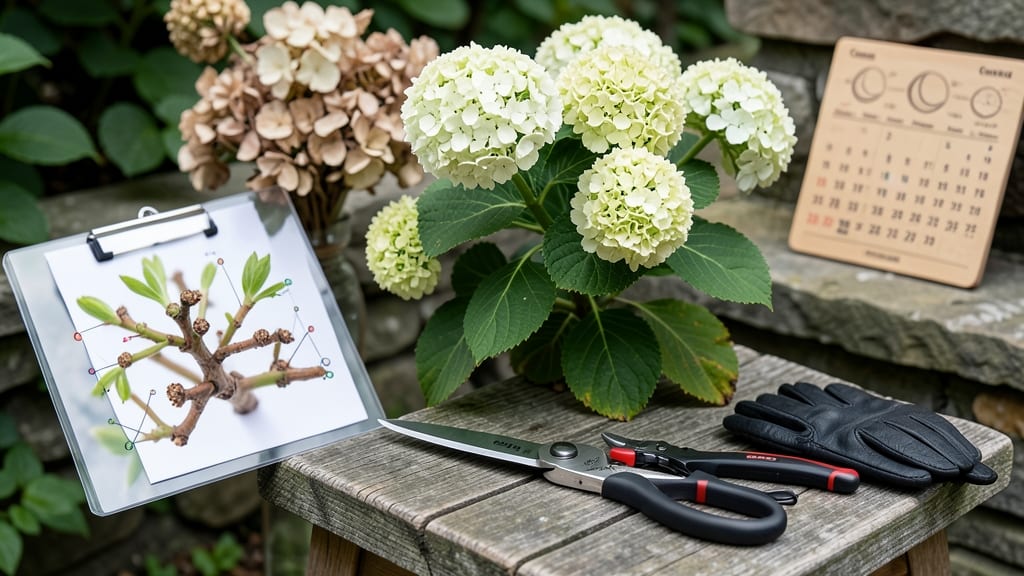
To prune hydrangea blooms, timing depends on the variety: prune old-wood types (like bigleaf and oakleaf) after flowering in late summer or early fall, while new-wood types (such as panicle and smooth hydrangeas) should be trimmed in late winter or early spring before buds swell. Always use clean, sharp tools for precision cuts.
Pruning at the wrong time can mean the difference between stunning summer blooms and a bare bush. Old-wood varieties produce flowers on last year's growth, so cutting too early removes next season's buds. New-wood types, however, bloom on current season's stems, giving you more flexibility.
I always mark my calendar with reminders—late summer for bigleaf hydrangeas and late winter for panicle types—to avoid missing the critical window. The key is observing your plant's growth patterns and adjusting your schedule accordingly. 🌸
For old-wood types, wait until after the first hard frost when the foliage has browned but before new growth appears. This gives you a clear view of which stems to cut back to just above a set of buds.
With new-wood varieties, you can be more aggressive in late winter, removing up to one-third of the plant's oldest stems to encourage fresh growth. The goal is to maintain an open center that allows sunlight to reach all parts of the bush, promoting healthier blooms.
Always sterilize your pruners between cuts to prevent spreading disease.
💡 In This Article
- Old-Wood vs New-Wood Hydrangeas: Key Pruning Differences
- Step-by-Step Hydrangea Pruning Guide by Season
Old-wood vs new-wood hydrangeas: key pruning differences
The botanical distinction between old-wood and new-wood hydrangeas lies in where they produce flowers. Old-wood types like bigleaf (Hydrangea macrophylla) and oakleaf (Hydrangea quercifolia) form flower buds on stems from the previous growing season.
These buds develop in late summer or early fall, meaning any pruning done before this window removes next year's blooms entirely. The flower clusters you admire in summer actually started forming on last year's growth—this is why late pruning is critical for these varieties. 🌿
New-wood types, including panicle (Hydrangea paniculata) and smooth hydrangeas (Hydrangea arborescens), produce flowers on current season's growth. Their buds form at the tips of new stems each spring, giving you more flexibility to prune in late winter or early spring.
For example, panicle hydrangeas like 'Limelight' or 'Little Lime' can handle aggressive pruning in March, while smooth hydrangeas like 'Annabelle' bloom on new growth that emerges from the base. This difference explains why some hydrangeas rebound quickly after pruning while others need careful timing.
The timing impacts flower production through a process called apical dominance. In old-wood types, removing stems too early disrupts the plant's ability to form flower buds for the following season. The buds require a period of cold dormancy (typically 4-6 weeks below 40°F) to properly develop.
New-wood varieties, however, can compensate by producing multiple flower stems from the base, making them more forgiving when pruned correctly. This is why panicle hydrangeas often produce even more dramatic blooms after proper late-winter pruning.
Visual cues help distinguish these types. Old-wood hydrangeas often have larger, showier flowers that appear on stems from last year, while new-wood types may have smaller initial blooms that develop into larger clusters as the season progresses.
For instance, a bigleaf hydrangea might have 3-inch flower heads on last year's growth, while a panicle hydrangea starts with 1-inch buds that grow into 12-inch cones by summer. Understanding these differences helps you match pruning timing to each variety's natural growth cycle.
Another key factor is the plant's growth habit. Old-wood types tend to have woody, mature stems that produce flowers along their length, while new-wood varieties often grow more bushy and upright, with flowers emerging from current season's growth.
This structural difference means old-wood varieties benefit from selective pruning to maintain framework, while new-wood types can handle renewal pruning to encourage fresh, vigorous growth.
For example, an overgrown oakleaf hydrangea might need 50% of its oldest stems removed every few years, while a smooth hydrangea can tolerate up to 70% pruning in late winter.
What most gardeners don't realize is how light exposure affects bloom formation. Old-wood hydrangeas need full sun to partial shade (4-6 hours of direct light) to properly develop flower buds, while new-wood types can handle more shade (3-4 hours) because they bloom on current growth.
This is why a bigleaf hydrangea in deep shade might produce fewer blooms—it's struggling to form next year's buds. Understanding these light requirements helps you position your plants for optimal bloom production. 💫